PM Modi’s Work From Home Advice 2026 Sparks Nationwide Buzz — Is India Preparing for a Bigger Economic Crisis?
In our today’s blog, we are going to discuss why PM Modi Work From Home Advice 2026 has suddenly become one of the biggest talking points across India amid rising fuel prices, global tensions, and fears of a wider economic crisis.
PM Modi’s Work From Home Advice 2026: Why India Is Suddenly Talking About Fuel Saving Again
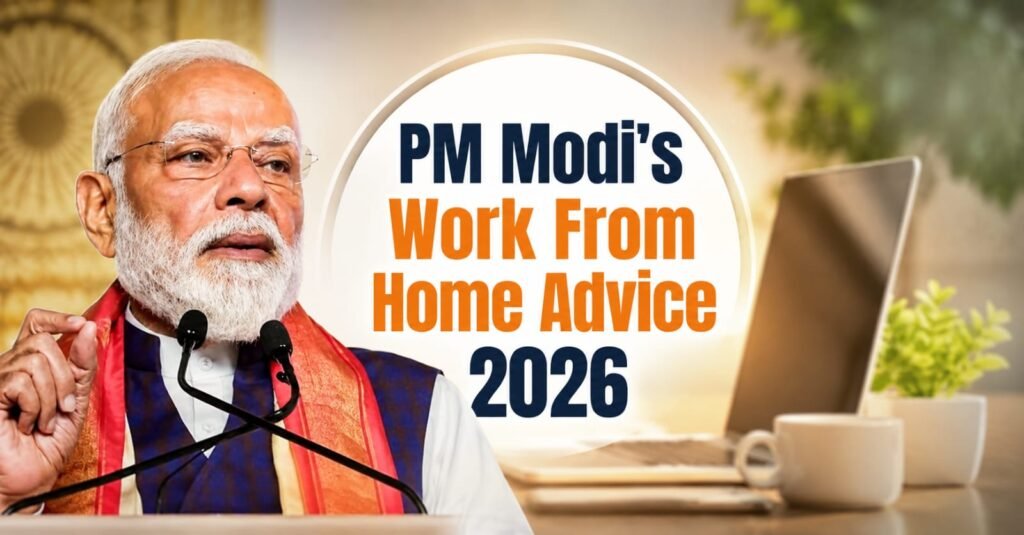
Prime Minister Narendra Modi advised a revival of work-from-home (WFH) practices and increased use of online meetings on May 10, 2026, primarily as an economic measure to conserve fuel and save foreign exchange amid a severe global energy crisis.
Speaking at a public event in Secunderabad, Narendra Modi urged citizens to adopt a “Nation First” approach to reduce the economic impact caused by escalating conflicts in West Asia.
The PM Modi’s Work From Home Advice 2026 quickly became one of the most discussed national topics as people compared the suggestions to the COVID-era restrictions and emergency economic measures.
Why PM Modi Gave the Work From Home Advice in 2026
The Prime Minister’s remarks came at a time when the global energy market is facing major instability due to the escalation of the US-Iran conflict and rising geopolitical tensions in West Asia.
Fuel Conservation Becomes Top Priority
According to the Prime Minister, the ongoing conflict has caused global crude oil prices to surge sharply, creating pressure on India’s fuel supply chains and increasing import costs.
The government now wants citizens to reduce unnecessary travel, prefer online meetings, and revive remote work wherever possible to cut petrol and diesel consumption.
The PM Modi’s Work From Home Advice 2026 is being viewed as part of a larger national effort to conserve energy before the crisis worsens further.
Saving Foreign Exchange Is the Main Goal of PM Modi’s Work From Home Advice 2026
India imports a major portion of its crude oil requirements, and rising oil prices directly affect the country’s foreign exchange reserves.
By reducing fuel usage through work-from-home arrangements, carpooling, metro travel, and public transport, the government hopes to lower the pressure on foreign exchange reserves used for petroleum imports.
The Prime Minister emphasized that even small lifestyle changes can collectively help India stay economically stable during uncertain global conditions.
PM Modi Suggests COVID-Era Practices Again
During the speech, the Prime Minister encouraged companies and institutions to increase the use of virtual meetings and remote work practices wherever possible.
This instantly reminded many people of the COVID-19 pandemic period when work-from-home became common across the country.
The PM Modi’s Work From Home Advice 2026 is not being presented as a lockdown-style restriction but as a preventive economic strategy to reduce fuel dependency and avoid panic in the market.
PM Modi’s 9 Big Suggestions to Citizens
Apart from promoting work-from-home culture, the Prime Minister also shared several other suggestions aimed at strengthening India’s economic resilience.
Key Suggestions Included:
Use petrol and diesel with “great restraint”
Prefer public transport, metro services, and carpooling
Increase the use of electric vehicles (EVs)
Avoid unnecessary foreign travel for one year
Reduce destination weddings abroad
Stop buying gold for a year where possible
Promote digital transactions
Support “Vocal for Local” and “Atmanirbhar Bharat”
Encourage domestic tourism and Made-in-India products
The PM Modi’s Work From Home Advice 2026 was part of this broader message encouraging citizens to contribute collectively toward protecting the economy.
PM Modi Pushes “Nation First” Economic Mindset
The Prime Minister framed these measures as a national responsibility rather than a compulsory rule.
He stated that reducing non-essential imports, unnecessary travel, and fuel consumption can help India become more self-reliant during global uncertainty.
The speech also highlighted the importance of supporting local manufacturing and strengthening domestic industries under the “Atmanirbhar Bharat” mission.
Lifestyle, Health & Social Responsibility Also Discussed
Apart from economic measures, the Prime Minister continued emphasizing natural farming, millet consumption, cleanliness, personal fitness, and water conservation.
Citizens were also encouraged to uplift at least one economically weaker family as part of broader social responsibility initiatives.
The government’s message appears focused on encouraging disciplined consumption and collective participation during a period of global economic pressure.
Also Read: Petrol Diesel Price Hike 2026: Govt Cuts Tax but Prices Still Rising—What’s Really Happening?
Is India Preparing for Tougher Economic Times?
The sudden focus on fuel conservation, online meetings, and reduced imports has sparked speculation among citizens about whether India is preparing for a prolonged global economic challenge.
While no nationwide restrictions have been announced, the PM’s Modi Work From Home Advice 2026 clearly signals that the government is taking the global oil shock seriously and wants preventive action before the situation escalates further.
Experts believe these suggestions are aimed at avoiding panic-buying, stabilizing the economy, and protecting India from major supply-chain disruptions linked to West Asia tensions.
The Prime Minister’s latest remarks have once again pushed conversations around work-from-home, fuel saving, economic patriotism, and self-reliance into the national spotlight.
Whether these suggestions remain temporary precautions or become long-term lifestyle changes will depend largely on how the global energy crisis unfolds in the coming months.
Do you think India should seriously adopt remote work and fuel-saving habits again? Share your opinion in the comments and join the discussion.
Disclaimer: This article is published for informational purposes only. Readers are advised to verify details from official sources before making any decisions. The website is not responsible for any loss or damage arising from the use of this information.