PM Modi Work From Home Appeal 2026: Is India Preparing for a Serious Fuel Crisis?
In this blog, we will understand why the sudden PM Modi Work From Home Appeal 2026 is creating nationwide discussion. Public movement during every weekend, holidays, and long vacations increases pressure on petrol and diesel demand across India. Many people prefer nearby hill stations and tourist destinations instead of staying home, which creates an extra burden on fuel consumption. The government is now urging people to use public transport, carpooling, and work-from-home options to avoid unnecessary travel during this sensitive global situation. At the same time, this situation may also affect people whose businesses depend on tourist crowds and heavy public movement.
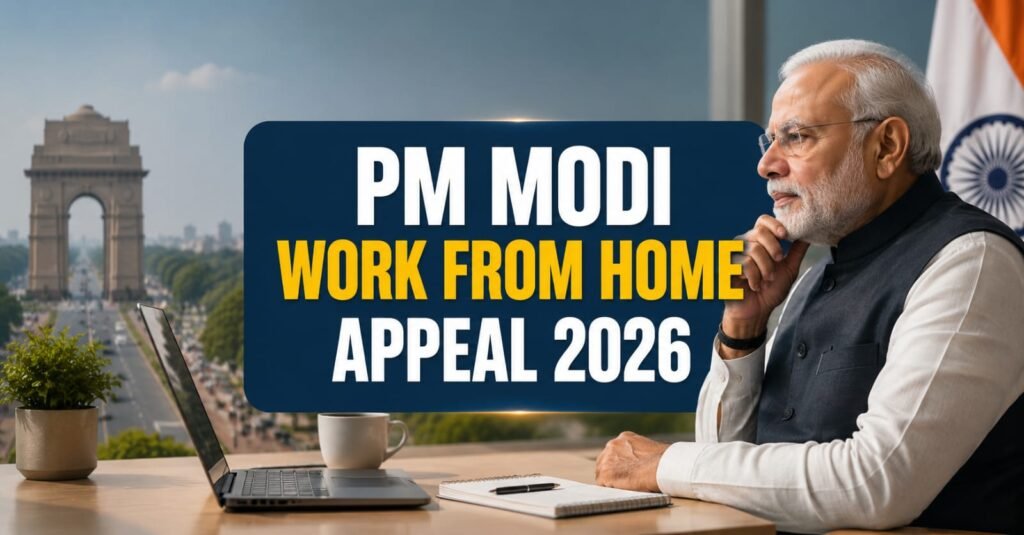
PM Modi Work From Home Appeal 2026 Sparks Nationwide Attention
Prime Minister Narendra Modi has urgently appealed for a return to work-from-home (WFH) and virtual meetings in India to drastically reduce fuel consumption and conserve foreign exchange amid the escalating Iran conflict, which has severely disrupted global energy supplies.
The PM Modi Work From Home Appeal 2026 is being seen as an emergency-level advisory aimed at reducing India’s dependence on imported oil during a critical economic phase. India currently depends on imports for nearly 90% of its crude oil requirements, making the country highly vulnerable during global conflicts and supply disruptions.
Why PM Modi Work From Home Appeal 2026 Became Necessary
The biggest reason behind the PM Modi Work From Home Appeal 2026 is the ongoing West Asia crisis. Reports suggest that the Strait of Hormuz, one of the world’s most important oil shipping routes, has been severely affected due to the escalating Iran conflict. This has triggered fears of supply disruption and rising crude oil prices worldwide.
To reduce pressure on fuel demand, the government is encouraging companies, especially in IT and service sectors, to revive remote working and hybrid office models similar to the COVID-19 period.
The government believes that reducing daily commuting by millions of office workers can significantly lower petrol and diesel consumption while also helping conserve valuable foreign exchange reserves.
No Petrol or Diesel Rationing in India Yet
Despite growing public concern after the PM Modi Work From Home Appeal 2026, petrol and diesel have not been officially limited or rationed at fuel stations across India.
Government officials have clarified that there is currently no fuel shortage in the country and there are no immediate plans for rationing at petrol pumps.
As of May 11-12, 2026, India reportedly holds around 60 days of crude oil and petroleum product reserves along with nearly 45 days of LPG supply. However, authorities are still urging citizens to use fuel with restraint due to uncertainty in global markets.
What PM Modi Suggested to Citizens
During his recent speech, PM Modi urged citizens to adopt practical fuel-saving measures to help the nation during this difficult economic period.
Suggestions included:
Using public transport and metro systems whenever possible
Adopting carpooling instead of single-occupancy vehicles
Increasing the use of electric vehicles (EVs)
Reducing unnecessary travel during weekends and holidays
Encouraging work-from-home and virtual meetings to cut fuel consumption
The PM Modi Work From Home Appeal 2026 is being viewed as a major “wake-up call” for the country regarding energy security and economic preparedness.
Corporate Sector Debates Return of Hybrid Work Culture
The appeal has triggered major discussions across the corporate sector. Several companies are reportedly considering a return to hybrid working models to balance productivity with national energy-saving efforts.
Some experts believe remote work can help reduce fuel dependency during global crises, while others argue that prolonged work-from-home culture may negatively affect businesses dependent on office crowds, travel, tourism, restaurants, and local transport systems.
At the same time, rising crude oil prices may increase transportation costs and impact household budgets if the global situation continues to worsen.
Public and Political Reactions Remain Divided
Public reactions to the PM Modi Work From Home Appeal 2026 remain mixed across the country.
Supporters are calling it a patriotic and necessary step to help India navigate a difficult global crisis through collective responsibility and fuel conservation.
Meanwhile, critics and opposition leaders are describing the appeal as a delayed warning and a sign of economic vulnerability. Some argue that such austerity measures expose India’s heavy dependence on foreign oil imports and global supply chains.
Still, the overall message from the government is clear — India must prepare for possible economic challenges and reduce unnecessary fuel consumption while global energy markets remain unstable.
The PM Modi Work From Home Appeal 2026 is not a lockdown announcement or fuel rationing order, but it clearly signals growing concern over global oil supply disruptions and rising crude prices. The coming weeks may decide whether India can successfully manage fuel demand without major economic pressure.
Do you think Indians should temporarily reduce unnecessary travel and support work-from-home efforts during this crisis? Share your opinion in the comments below.
Disclaimer: This article is published for informational purposes only. Readers are advised to verify details from official sources before making any decisions. The website is not responsible for any loss or damage arising from the use of this information.