India’s Big Disaster Plan 2026: Can These Precautions Before Natural Disaster in India Really Save Lives?
In this blog, we are going to discuss the major precautions before natural disaster in India that the government is now focusing on as floods, heatwaves, and climate-related emergencies continue to rise across the country. While nobody can stop nature, authorities are trying to reduce damage and save lives through stronger planning, faster warning systems, and emergency preparedness.
Precautions Before Natural Disaster in India: Government Pushes “Zero Casualty” Mission
On May 10, 2026, Union Home Minister Amit Shah chaired a high-level disaster preparedness meeting in New Delhi to review India’s readiness for floods and extreme heatwaves. The main goal of the meeting was clear — achieving “zero casualty” during natural disasters.
The Centre directed multiple ministries and agencies to strengthen precautions before natural disaster in India by improving forecasting systems, deploying rapid response teams, and preparing states for simultaneous climate emergencies.
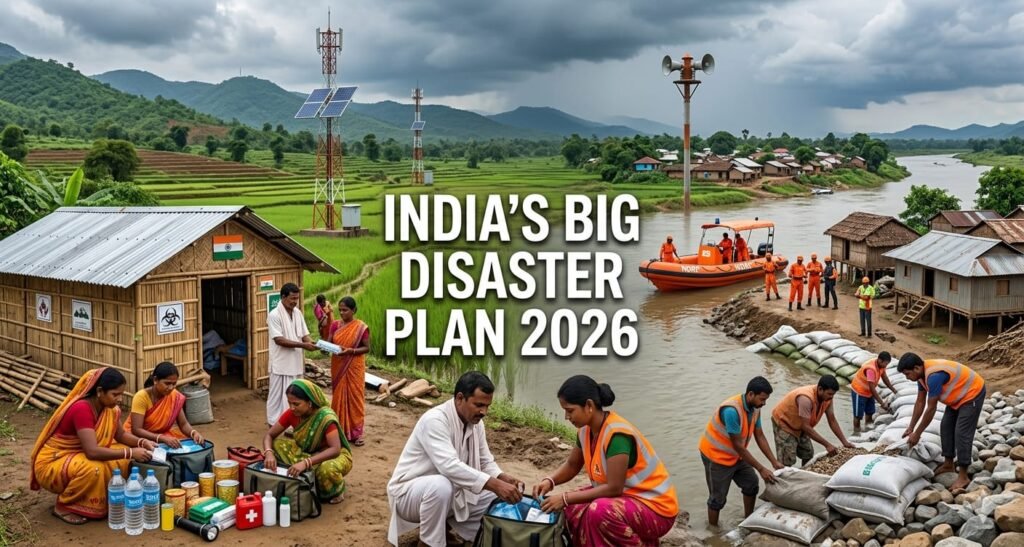
Early Warning Systems for Himalayan Lakes
One of the biggest decisions taken during the meeting was the development of early warning systems for more than 60 high-risk glacial and mountain lakes located in Jammu & Kashmir, Ladakh, Uttarakhand, Himachal Pradesh, Arunachal Pradesh, and Sikkim.
Officials warned that Glacial Lake Outburst Floods (GLOFs) remain a serious threat in Himalayan regions. The government plans to install advanced monitoring systems to provide quicker alerts to nearby populations before a disaster strikes.
This move is being seen as one of the most important precautions before natural disaster in India, especially after repeated climate-linked disasters in mountain states over the last few years.
Integrated Flood Forecasting System Planned
The Centre also emphasized building a unified flood forecasting system connecting Central and State agencies for real-time coordination. The aim is to ensure faster communication and more accurate rainfall and flood predictions.
Authorities are now relying heavily on 7-day advance forecasts from the India Meteorological Department (IMD) and the Central Water Commission (CWC). Officials believe better coordination can significantly reduce casualties during flash floods and urban flooding incidents.
The meeting also directed every state to establish and activate Flood Crisis Management Teams (FCMTs) for immediate response during emergencies.
Heatwave Preparedness Becomes Top Priority
Apart from floods, heatwave management emerged as another major focus area. Rising temperatures across India have already raised concerns about public health and worker safety.
Under the new precautions before natural disaster in India, authorities discussed increasing cooling infrastructure in crowded areas such as Old Delhi. Plans include setting up cooling zones, water kiosks, and emergency hydration points in high-footfall locations.
The government is also considering mandatory work-hour restrictions for outdoor laborers, especially construction workers. Proposed measures include stopping outdoor work between 1 PM and 4 PM during extreme heat conditions.
Hospitals are also being instructed to create dedicated “cool rooms” equipped with ORS supplies, emergency medical kits, and specialized heatstroke response teams.
“Whole of Government” Strategy Activated
The meeting strongly emphasized a “Whole of Government” approach, ensuring that disaster management responsibilities are shared between ministries, state governments, municipal authorities, and technical agencies.
Senior officials and ministers attending the meeting included Union Jal Shakti Minister CR Patil, NDMA representatives, NDRF officials, IMD experts, Central Water Commission officials, National Remote Sensing Centre representatives, and NHAI authorities.
Officials discussed improving disaster mitigation strategies to secure highways, infrastructure projects, and urban systems against floods and extreme weather conditions.
Technology to Play a Bigger Role
Technology is expected to become a major pillar in future disaster management planning. Authorities highlighted the importance of mobile alert platforms like the SACHET app for delivering real-time warnings directly to citizens.
The government is also promoting the use of Artificial Intelligence and Machine Learning under Mission Mausam to improve climate forecasting and emergency prediction systems.
Experts believe digital monitoring, satellite mapping, and real-time alerts could transform future precautions before natural disaster in India, especially in vulnerable regions.
Awareness Campaigns and Community Participation
Along with infrastructure and technology upgrades, the government is focusing on community awareness campaigns through social media, print media, and television.
Officials stressed that educating people about emergency “do’s and don’ts” can play a crucial role in reducing panic and preventing loss of life during disasters.
Authorities also want local administrations to improve last-mile communication so warnings reach even remote villages and vulnerable populations on time.
India Prepares for a Tough Climate Future
With climate-related disasters increasing every year, the government’s latest disaster preparedness strategy reflects growing concern over India’s environmental challenges. From heatwaves to flash floods, authorities are now pushing for faster action, stronger coordination, and smarter technology-driven systems.
The latest precautions before natural disaster in India show that the country is preparing for a future where extreme weather events may become more frequent and dangerous.
Do you think India is truly prepared to handle future climate disasters, or is more action still needed? Share your opinion in the comments below.
Disclaimer: This article is published for informational purposes only. Readers are advised to verify details from official sources before making any decisions. The website is not responsible for any loss or damage arising from the use of this information.