Powerful 8-Day Tricity Cab Strike 2026: Why Are Ola, Uber and Indi Drivers Demanding ₹35 Per Km Amid Rising Fuel Costs?
In this blog, we take a closer look at the ongoing Tricity Cab Strike 2026 that has affected thousands of daily commuters across Chandigarh, Mohali and Panchkula. With rising fuel prices, increasing operational expenses and growing concerns over aggregator commissions, cab drivers have launched a week-long protest demanding better earnings and stricter implementation of transport policies. The strike is not only impacting drivers but is also creating transportation challenges for office-goers, students and patients during the peak summer season.
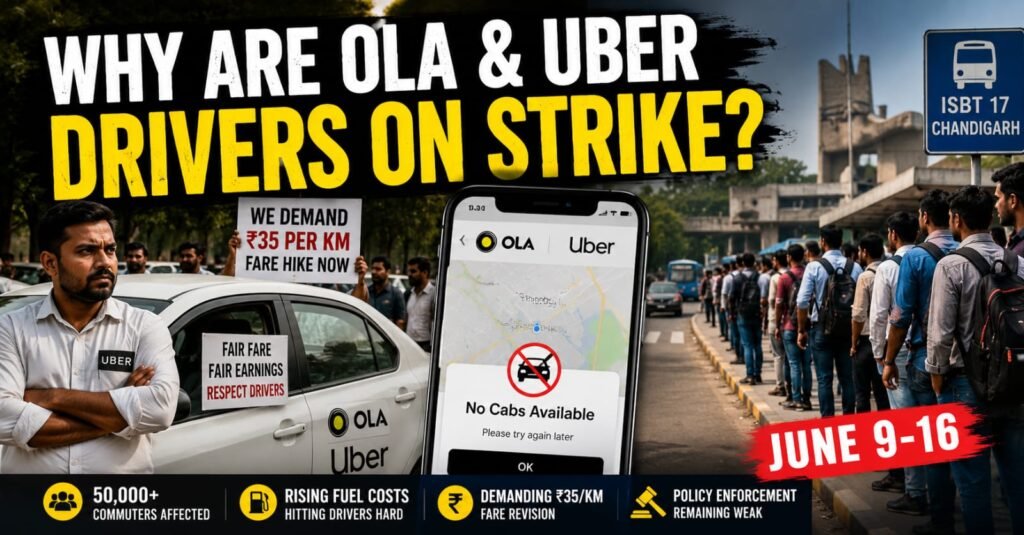
What Is the Tricity Cab Strike 2026?
The Tricity Cab Strike 2026 is a coordinated protest by drivers associated with ride-hailing platforms such as Ola, Uber and Indi. The agitation began on June 9 and is scheduled to continue until June 16, 2026.
As part of the protest, many drivers are keeping their ride-booking applications switched off daily between 10:00 a.m. and 4:00 p.m. The strike is aimed at highlighting the financial difficulties faced by drivers due to increasing fuel costs and commission deductions by aggregator platforms.
The movement is affecting Chandigarh, Mohali and Panchkula collectively known as the Tricity region, where thousands of residents depend on app-based taxi services every day.
Why Are Drivers Protesting?
The primary reason behind the Tricity Cab Strike 2026 is the growing gap between operating costs and driver earnings.
Drivers argue that fare rates have largely remained unchanged since 2025 despite significant increases in the prices of CNG, petrol and diesel. According to driver unions, the current fare structure is no longer sufficient to cover fuel expenses, vehicle maintenance costs and other operational charges.
Another major concern is the commission structure of ride-hailing platforms. Drivers claim that aggregators such as Ola and Uber deduct as much as 30% to 40% of their earnings through commissions and software-related charges, significantly reducing their take-home income.
Demand for Fare Revision
One of the key demands of the protesting drivers is a revision in fare rates.
Currently, many drivers receive approximately ₹25 per kilometre. Driver unions are demanding that fares be increased to ₹35 per kilometre to compensate for rising fuel prices and higher operating costs.
According to the unions, a fare revision is necessary to ensure that drivers can continue operating sustainably while maintaining a reasonable income for their families.
Concerns Over Illegal Operations
Apart from fare-related issues, drivers are also protesting against the alleged operation of private white-plate vehicles and unregulated bike taxis in the commercial transport sector.
Registered drivers argue that these vehicles create unfair competition because they allegedly operate commercially without meeting the same regulatory and taxation requirements as licensed taxi operators.
Driver organizations have urged authorities to take stricter action against unauthorized commercial transport services and ensure equal enforcement of transport regulations.
Questions Over Aggregator Policy Enforcement
Union representatives have also raised concerns about the implementation of the Chandigarh Administration’s aggregator policy.
Drivers claim that the policy was designed to regulate fares and protect driver welfare, but its enforcement on the ground remains weak. They are demanding stronger monitoring and stricter implementation to prevent excessive commission deductions and ensure fair treatment for drivers working with app-based platforms.
How Is the Strike Affecting Commuters?
The Tricity Cab Strike 2026 is creating significant inconvenience for daily travelers across the region.
With fewer cabs available, passengers are reporting longer waiting times, frequent ride cancellations and difficulty securing transportation during the protest hours. The disruption is particularly challenging for office employees, students and people travelling to hospitals during the daytime.
The reduced availability of app-based taxis has also increased pressure on alternative transport systems.
Alternative Travel Options During the Strike
For commuters affected by the Tricity Cab Strike 2026, public transport remains the most reliable option.
CTU buses continue to operate across approximately 65 to 70 local and suburban routes connecting major transit points, including ISBT Sector 17, ISBT Sector 43 and Chandigarh Railway Station.
Local auto-rickshaw services are also functioning normally. However, passengers are advised to negotiate and finalize fares before beginning their journey to avoid disputes or overcharging.
The ongoing Tricity Cab Strike 2026 highlights the growing concerns of drivers regarding fuel costs, commission deductions and regulatory enforcement. While drivers seek better earnings and fairer operating conditions, commuters are facing transportation challenges across Chandigarh, Mohali and Panchkula.
Whether the demands lead to policy changes or fare revisions remains to be seen, but the issue has once again brought attention to the balance between driver welfare, platform economics and public convenience.
FAQs
Stay connected with us for more timely updates like Tricity Cab Strike and important developments that directly affect your daily life and travel plans.
Disclaimer: This article is published for informational purposes only. Readers are advised to verify details from official sources before making any decisions. The website is not responsible for any loss or damage arising from the use of this information.