Massive Delhi-NCR Transport Strike Sparks Chaos: Auto, Taxi & Truck Unions Demand Relief
Delhi-NCR Transport Strike Disrupts Daily Life Across NCR
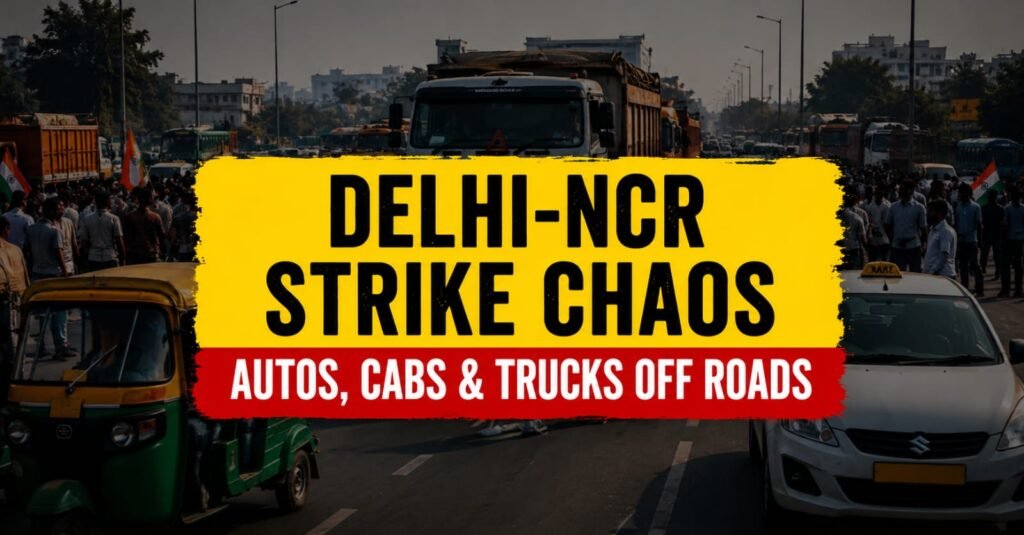
A massive Delhi-NCR transport strike has triggered major disruption across Delhi, Noida, Ghaziabad, Gurugram, and Faridabad as transporters, taxi drivers, and auto unions launched a three-day protest from May 21 to May 23. With over 68 transport associations backing the movement, commuters are expected to face delays, fewer cabs, and transportation chaos throughout the NCR region.
The strike comes amid rising fuel prices, increased Environment Compensation Charge (ECC), and years of stagnant fare structures that unions say are destroying drivers’ livelihoods. Here’s everything you need to know about the ongoing Delhi-NCR transport strike and why it could heavily impact daily commuters and businesses.
Why Has the Delhi-NCR Transport Strike Started?
Transporters, taxi drivers, and auto-rickshaw unions across the NCR region have launched the Delhi-NCR transport strike in protest against the Delhi government’s sharp increase in the Environment Compensation Charge (ECC) on commercial vehicles.
The protest is being led by the All India Motor Transport Congress (AIMTC), the All India Motor and Goods Transport Association, and the Chaalak Shakti Union.
According to transport unions, the recent policies have created severe financial pressure on drivers and transport operators already struggling with rising petrol, diesel, and CNG prices.
Key Reasons Behind the Delhi-NCR Transport Strike
Environment Compensation Charge (ECC) Hike
Transporters are demanding an immediate rollback of the “unjust” green tax hike imposed on all Delhi-bound commercial goods vehicles.
Last month, the Delhi government increased the ECC on commercial vehicles by more than 50 percent. Effective from April 19:
Charges for light commercial vehicles and two-axle trucks increased from ₹1,400 to ₹2,000
Fees for three-axle trucks and heavier vehicles rose from ₹2,600 to ₹4,000
A 5 percent annual fee hike was also introduced
Transport bodies claim the cess hike was imposed indiscriminately on all Delhi-bound vehicles instead of targeting transit vehicles using Delhi only as a corridor.
Unions Oppose BS-IV Vehicle Restrictions
Another major reason behind the Delhi-NCR transport strike is the proposed ban on non-Delhi registered BS-IV commercial goods vehicles.
Transport unions have demanded an immediate rollback of the proposed restriction scheduled to take effect from November 1, 2026. According to the unions, the move will severely impact small transport operators and drivers who depend on these vehicles for income.
In a statement, the AIMTC said these measures have caused “serious socioeconomic consequences” and have badly affected the transport sector and operators’ livelihoods.
Taxi and Auto Drivers Demand Fare Revision
Taxi and auto-rickshaw unions have also joined the Delhi-NCR transport strike, demanding immediate fare revisions after nearly 15 years without significant changes.
Driver unions argue that while fuel prices have continuously increased, auto and taxi fares have remained largely unchanged. Rising CNG, petrol, and diesel costs are making it difficult for drivers to survive financially.
The Chaalak Shakti Union stated that drivers can no longer sustain operations under the current fare structure.
App-Based Cab Aggregators Under Fire
Drivers participating in the Delhi-NCR transport strike have also accused app-based cab aggregators such as Ola, Uber, and Rapido of economic exploitation.
According to drivers, low payouts, high commission cuts, and arbitrary policies by aggregator platforms are reducing earnings significantly. Many drivers say they are struggling to cover fuel, maintenance, and daily operating costs.
What Will Be Affected During the Strike?
The Delhi-NCR transport strike is expected to affect:
Major disruption is likely across Delhi, Noida, Ghaziabad, Gurugram, and Faridabad, especially during office hours and peak traffic periods.
However, unions clarified that vehicles carrying essential commodities such as milk, vegetables, medicines, and other critical supplies are exempted from the blockade to prevent shortages.
Key Demands by Transport Unions
Transport bodies participating in the Delhi-NCR transport strike have put forward four major demands:
Withdrawal of the increased ECC on Delhi-bound goods vehicles
Rollback of the proposed ban on non-Delhi registered BS-IV commercial vehicles
Restricting ECC only to transit vehicles using Delhi as a corridor
Exemption for BS-VI vehicles carrying essential goods and empty vehicles from ECC charges
Rising Fuel Prices Add to Driver Frustration
Transport unions also linked the worsening crisis to rising fuel prices, which they say have increased sharply amid tensions linked to the US-Iran conflict in West Asia.
Drivers claim that soaring petrol, diesel, and CNG costs have made daily operations financially unsustainable, especially without updated fare structures or government relief.
The ongoing Delhi-NCR transport strike has become one of the biggest transport protests in recent years, highlighting the growing financial stress faced by drivers and transport operators across NCR. While the government focuses on environmental measures, unions argue that policies must also protect the livelihoods of lakhs of drivers dependent on the sector.
As the three-day strike continues, commuters across Delhi-NCR are likely to face heavy inconvenience and transport shortages.
Stay connected for more real-time updates, transport news, and major developments from across India.
Disclaimer: This article is published for informational purposes only. Readers are advised to verify details from official sources before making any decisions. The website is not responsible for any loss or damage arising from the use of this information.