Meta’s Jolted Work-From-Home Layoffs Trigger AI Restructuring Panic
What looked like a normal work-from-of employees woke up to remote-work orders, only to later receive layoff emails as Meta accelerated its aggressive Artificial Intelligence transformation. The sudden strategy has sparked fear, debate, and major questions about the future of jobs in Big Tech.
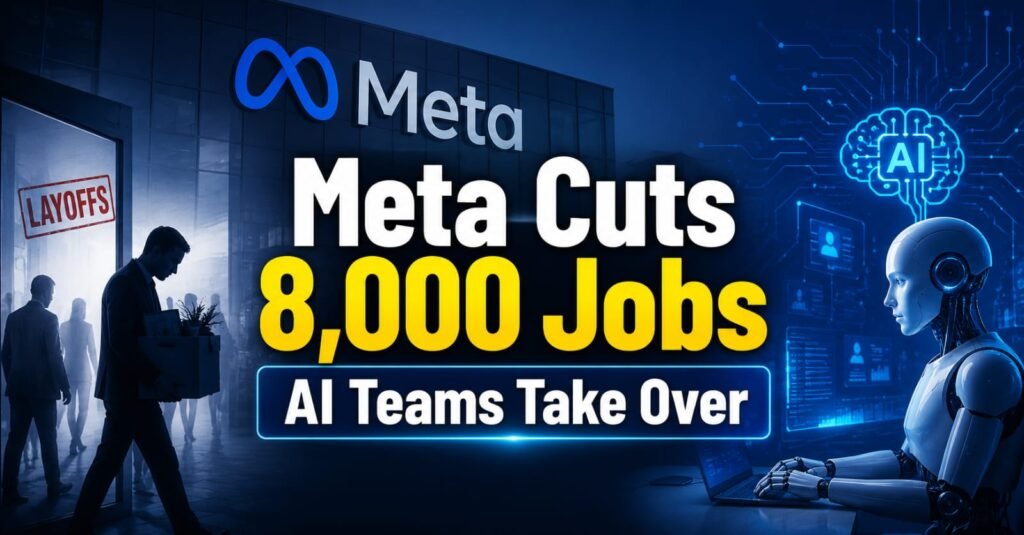
Meta Work-From-Home Layoffs Shock Thousands of Employees
Meta instructed its North American staff to work from home as it initiated a massive round of layoffs cutting approximately 8,000 roles, or 10% of its workforce. The Meta work-from-home layoffs are part of a major corporate restructuring aimed at shifting resources toward Artificial Intelligence.
The work-from-home strategy immediately drew attention because employees were asked to stay remote just hours before layoff notifications began arriving in waves.
Why Meta Work-From-Home Layoffs Happened
AI Transformation Becomes Meta’s Top Priority
CEO Mark Zuckerberg is rapidly restructuring the company to focus heavily on generative AI and AI agents. Around 7,000 retained employees are being reassigned into four new AI-focused organizations as Meta pushes toward smaller, faster, and more “AI-native” teams.
The Meta work-from-home layoffs also support the company’s broader goal of streamlining engineering operations and reducing unnecessary management layers.
The Work-From-Home Strategy Before Layoffs
Ahead of the cuts, Meta HR head Janelle Gale reportedly directed staff to work remotely. Layoff notifications were then sent out in waves beginning at 4:00 AM local time.
Many employees viewed the move as a “quiet execution” strategy designed to avoid office disruption, emotional confrontations, and public scenes during the layoffs.
The Meta work-from-home layoffs quickly became one of the biggest corporate stories in the global tech industry.
Internal Anxiety and Employee Backlash
The sudden remote-work mandate created major internal anxiety. Reports also fueled controversy after claims surfaced that Meta uses internal monitoring systems capable of tracking mouse movements and keystrokes.
Employees feared that productivity data and AI-driven efficiency analysis could play a larger role in future workforce decisions.
For many workers, the Meta work-from-home layoffs changed the perception of remote work from a workplace benefit into a warning sign of restructuring.
Also Read: Samsung Electronics Strike 2026: Shocking AI Boom Crisis Could Disrupt Global Chip Supply
Global Impact of Meta Work-From-Home Layoffs
The restructuring reportedly started from Meta’s Singapore operations before expanding into North America and Britain.
Layoff notifications arrived region by region through email, creating uncertainty across global teams. Major international media outlets, including Reuters, Bloomberg, and The New York Times, widely covered the development.
The Meta work-from-home layoffs highlight how aggressively major technology companies are reorganizing around Artificial Intelligence.
What Could Happen Next at Meta
Industry analysts believe Meta’s future workplace policies may become even stricter as the company prioritizes AI productivity and operational efficiency.
Stricter Return-To-Office Policies
Analysts predict tighter return-to-office mandates as Meta attempts to improve collaboration and speed within AI-focused teams.
Increased Workforce Surveillance
Reports suggest Meta may continue using productivity-tracking software that logs keystrokes and mouse movements to monitor workforce efficiency and optimize internal AI systems.
Smaller Teams and Office Consolidation
As Meta builds flatter organizations, satellite offices may shrink while employees are consolidated into larger metropolitan hubs.
AI-Integrated Workflows
Meta is increasingly relying on internal AI agents to assist with coding, operations, and administrative work. Employee performance may soon be evaluated more heavily through AI-assisted output and productivity metrics.
The Meta work-from-home layoffs may ultimately become a defining example of how AI is reshaping the future of work across the tech industry.
As Artificial Intelligence rapidly transforms global workplaces, Meta’s latest restructuring shows that the future of tech jobs could become faster, leaner, and far more unpredictable. Stay connected for more breaking technology updates, AI industry shifts, and workplace trends shaping the future of employment.
Disclaimer: This article is published for informational purposes only. Readers are advised to verify details from official sources before making any decisions. The website is not responsible for any loss or damage arising from the use of this information.