LPG Crisis Worsens as Strait of Hormuz Disruption Continues, Migrant Workers Struggle Before May 1 Rule Changes
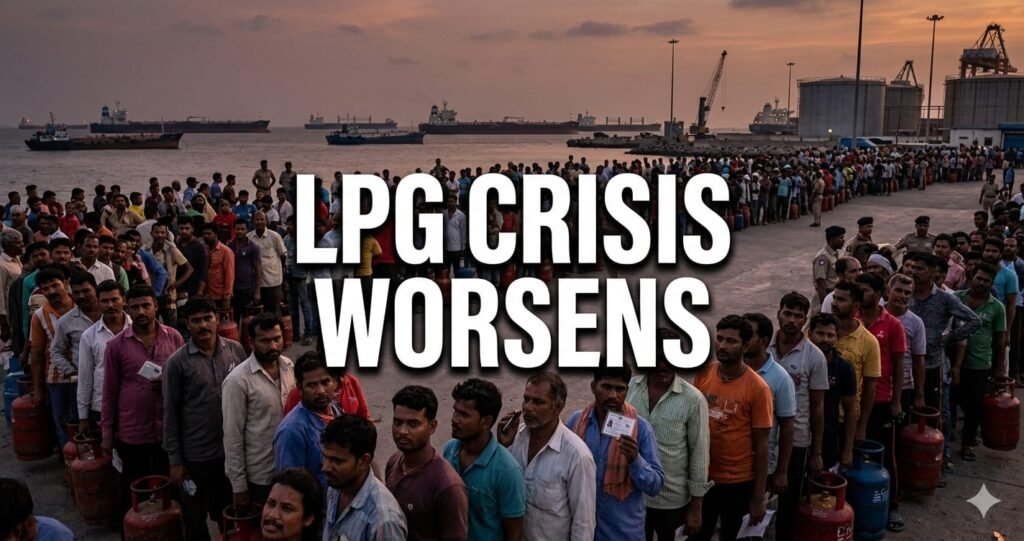
The LPG Crisis is showing no signs of easing, and its negative impacts are increasing day by day. The ongoing disruption linked to the Strait of Hormuz has tightened global fuel supply chains, pushing LPG availability and prices into a volatile zone. While the broader economic implications are being widely discussed, the most severe impact is being felt by daily wage earners and migrant workers—many of whom are now facing a basic survival crisis.
Adding to the pressure, significant changes to LPG cylinder booking and delivery rules are set to take effect from May 1, 2026, for major providers like Indane, Bharat Gas, and HP Gas. These updates aim to increase security, reduce fraud, and regulate supply, but during an ongoing LPG Crisis, they may also create new challenges for already struggling consumers.
New LPG Rules from May 1 Amid LPG Crisis
OTP-Based Delivery System (DAC):
A strict “No OTP, No Gas” policy is being implemented. When the cylinder is out for delivery, a One-Time Password (OTP) will be sent to the registered mobile number. This OTP must be shared with the delivery agent to receive the cylinder, ensuring secure delivery.
Increased Booking Gap:
The mandatory gap between LPG bookings is expected to increase from 15 days to approximately 25 days. Some reports suggest this may extend further for certain users, making access to LPG slower during urgent needs.
Monthly Price and Policy Reviews:
Gas companies may revise prices and policies on the 1st of every month. In the middle of an ongoing LPG Crisis, this introduces further uncertainty for households already dealing with fluctuating costs.
5kg “Chotu” Cylinder Availability:
To improve accessibility, smaller 5-kg cylinders are now more widely available without requiring permanent address proof, offering limited relief for migrants and temporary residents.
Urban vs Rural Booking Rules:
Clarifications suggest a 25-day booking gap in urban areas and up to 45 days in rural regions. However, implementation of the new booking cycle is still evolving and may vary.
Avoid Panic Booking:
Authorities have urged consumers not to engage in panic booking, even as concerns around supply shortages continue to grow during the LPG Crisis.
LPG Crisis Impact on Migrant Workers
The real burden of the LPG Crisis is falling heavily on migrant workers, who depend on affordable LPG for daily cooking and survival.
Reverse Migration Rising:
In cities like Mumbai, Delhi, and Surat, reverse migration is increasing. Workers are returning to their villages because they are unable to cook food or afford daily meals in cities.
Skyrocketing Cylinder Prices:
The crisis has triggered black market activity. Reports indicate that standard 14.2-kg cylinders are being sold at ₹3,200–₹4,000, while 5-kg cylinders are priced between ₹1,100–₹2,000. These rates are unaffordable for low-income workers.
Food Insecurity Deepens:
Workers who usually cook their own food are now skipping meals or switching to buying food, which is becoming increasingly expensive. This shift is leading to hunger and malnutrition.
Loss of Earnings:
The LPG Crisis is also affecting industries such as hospitality, construction, and small manufacturing. Many businesses are reducing operations or shutting down temporarily, resulting in loss of income for daily wage workers.
Return to Unsafe Fuels:
With LPG becoming inaccessible, many migrants are forced to return to traditional methods like wood-fired chulhas. These alternatives are not only inefficient but also pose health and safety risks.
Ripple Effects Across Daily Life
The LPG Crisis is not limited to migrant workers alone—it is affecting everyone connected to their ecosystem.
Street vendors, domestic helpers, small food stall owners, and service workers are all facing disruptions. As cooking becomes difficult or expensive, demand drops, incomes shrink, and the economic cycle weakens further. This chain reaction is quietly impacting millions who rely on daily consumption-based livelihoods.
What Lies Ahead in This LPG Crisis?
With global supply disruptions continuing and stricter domestic rules coming into effect, the LPG Crisis may intensify further in the coming weeks. While policy changes aim to improve transparency and control misuse, the immediate concern remains access and affordability for vulnerable groups.
The coming days will be critical in determining whether these measures stabilize the situation or add more pressure on those already struggling to meet basic needs.
Are these new LPG rules helping you or making things harder during this LPG Crisis? Share your experience in the comments—your voice could bring attention to the reality many are facing.
Disclaimer: This article is published for informational purposes only. Readers are advised to verify details from official sources before making any decisions. The website is not responsible for any loss or damage arising from the use of this information.