Why India Pharma Dependency on China Is a Serious Risk: 7 Critical Warnings by NITI Aayog
India is often called the Pharmacy of the World because it supplies affordable medicines to millions of people across the globe. But behind this success lies a major challenge that could affect the country’s healthcare security and pharmaceutical exports. In this blog, we explain why India pharma dependency on China has become a serious concern, what NITI Aayog has warned about, and what India is planning to do to reduce this risk.
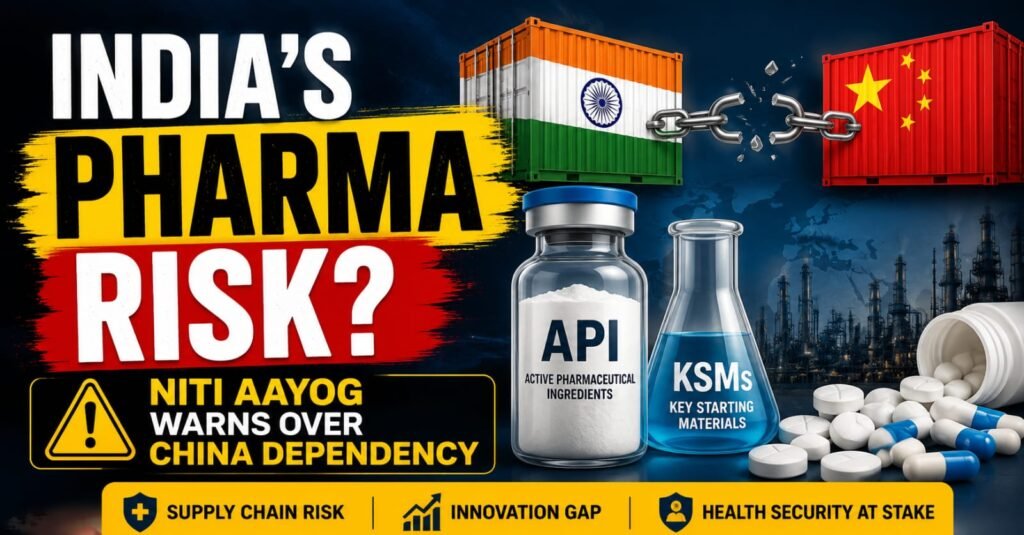
Why Is India Pharma Dependency on China Becoming a Serious Concern?
India pharma dependency on China has once again come under the spotlight after NITI Aayog warned that the country’s pharmaceutical sector remains heavily dependent on Chinese imports for critical raw materials.
India may be the world’s largest supplier of generic medicines by volume, but the industry still relies on China for the chemical building blocks needed to manufacture many life-saving drugs. If geopolitical tensions or border disruptions increase, this dependence could create major supply chain challenges and impact medicine production.
Why Does India Depend on China for Pharmaceutical Raw Materials?
India manufactures massive quantities of finished medicines, but the production process begins with Active Pharmaceutical Ingredients (APIs) and Key Starting Materials (KSMs). This is where China dominates.
Chinese chemical manufacturers have built a highly cost-effective ecosystem through:
For years, Indian and Western pharmaceutical companies found it far cheaper to import these raw materials than manufacture them domestically. As a result, China gradually became the world’s leading supplier of APIs and chemical intermediates.
India Pharma Dependency on China: The Numbers Raise Concerns
The scale of India pharma dependency on China is significant.
If supplies are interrupted, manufacturers could face shortages of essential raw materials, affecting medicine production and exports.
Innovation Gap Is Another Major Challenge
Apart from India pharma dependency on China, NITI Aayog also highlighted India’s relatively low investment in pharmaceutical research and development.
Indian pharmaceutical companies spend only around 7% of their net sales on R&D, compared to 15%–20% spent by many global pharmaceutical companies.
While India has become a global leader in affordable generic medicines, it still struggles to compete in high-value segments such as:
This limits India’s ability to move beyond volume-based manufacturing toward innovation-driven growth.
Global Market Barriers Continue to Slow Growth
Indian pharmaceutical exporters also face several non-tariff barriers in developed markets.
These include:
At the same time, stricter domestic environmental compliance has increased manufacturing and R&D costs, making expansion more challenging for many companies.
How India Plans to Reduce India Pharma Dependency on China
To reduce India pharma dependency on China, NITI Aayog has recommended several long-term measures.
These include:
The objective is not only to reduce import dependence but also to position India as a global innovation hub for life sciences.
Also Read: CCTV Ban Rumour Explained: China-made CCTV Ban in India Rules from April 1, 2026 Shock Users
What Could Happen If India-China Relations Worsen?
If geopolitical tensions between India and China escalate, India pharma dependency on China could become a serious strategic challenge.
Any prolonged disruption in API imports could increase production costs, delay medicine manufacturing, affect exports, and create supply shortages for certain essential drugs. This is why experts believe building domestic manufacturing capacity is becoming increasingly important for India’s long-term healthcare and economic security.
India has already established itself as the Pharmacy of the World through affordable generic medicines. However, reducing India pharma dependency on China and investing in innovation will be essential for securing the future of the pharmaceutical industry. The coming years may determine whether India can transform from a global medicine manufacturer into a global pharmaceutical innovation leader.
FAQs
Thank you for reading. Keep visiting our website for more simplified updates on business, economy, policy decisions, and the latest developments that matter to India’s future.
Disclaimer: This article is published for informational purposes only. Readers are advised to verify details from official sources before making any decisions. The website is not responsible for any loss or damage arising from the use of this information.