Dangerous Hantavirus Outbreak 2026 Confirmed on Cruise Ship — What You Must Know Right Now
A deadly virus on a luxury cruise ship. Seven infected. Three dead. And questions spreading faster than the disease itself. The Hantavirus Outbreak 2026 has sent shockwaves across the internet — and if you’ve seen the headlines about the MV Hondius and are wondering whether to panic or stay calm — this blog breaks it all down clearly, factually, and fast. Keep reading, because the truth is both alarming and reassuring.
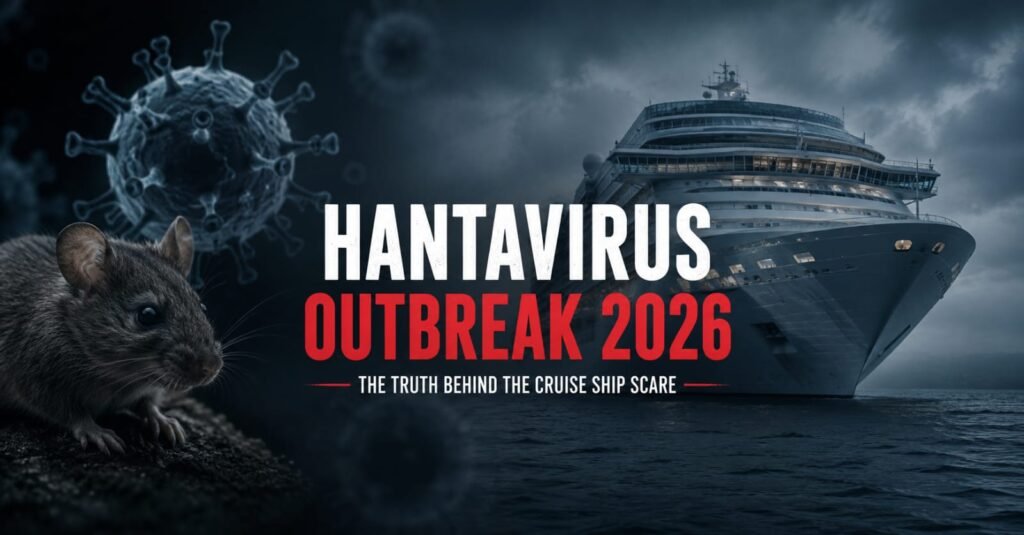
Hantavirus Outbreak 2026: What Is Actually Happening?
As of May 2026, a limited Hantavirus outbreak has been identified aboard a cruise ship, the MV Hondius, in the Atlantic Ocean, with at least seven cases and three deaths reported, mainly among passengers and crew. This rare, severe respiratory virus is primarily spread by rodents, but this specific case involves suspected, infrequent human-to-human transmission.
Current Outbreak Situation (May 2026):
Source: The outbreak is restricted to the MV Hondius, a vessel that departed Argentina in April.
Risk Level: The World Health Organization (WHO) and health experts consider the risk to the general global population to be very low.
Transmission: While typically spread through contact with rodent waste, this outbreak involves the Andes virus strain, which is known for rare, close-contact transmission.
Response: Passengers are being monitored and subjected to quarantine.
What Is Hantavirus? The Deadly Disease Explained
Disease: It causes Hantavirus Pulmonary Syndrome (HPS), a severe respiratory disease that can be fatal.
Rodent-Borne: It is generally transmitted to humans by inhaling virus particles from the urine, feces, or saliva of infected wild rodents.
Precaution: The best way to prevent infection is to avoid areas where rodents live, particularly enclosed, dusty areas where they might nest.
Why the 2026 Hantavirus Outbreak Will NOT Become a Pandemic
The current Hantavirus outbreak is not a pandemic and is considered highly unlikely to become one. While a dangerous Andes virus outbreak occurred on a cruise ship in May 2026, experts and the WHO confirm it does not spread easily between people like COVID-19, posing a very low risk to the general public.
Here is why the 2026 Hantavirus outbreak is not a pandemic:
Minimal Human-to-Human Spread
Most hantaviruses only transfer from rodent droppings to humans, not person-to-person. While the Andes strain can transmit between people, it requires close, prolonged contact.
Confined Outbreak
The recent cases are confined to a specific area — a cruise ship — rather than widespread community transmission.
Low Contagiousness
Infected individuals generally do not spread it efficiently, making sustained global spread unlikely.
No Pandemic Potential
Public health officials have explicitly stated the virus does not have pandemic potential.
Key Prevention and Safety Measures Against Hantavirus
Rodent Control: Seal gaps and holes (even small ones) in homes, trailers, and sheds to prevent rodent entry.
Safe Cleaning: Do not sweep or vacuum dry rodent urine, droppings, or nesting materials. This stirs up dust containing the virus.
Disinfection: Spray contaminated areas with a mixture of 1 part bleach to 9 parts water (or a disinfectant) and allow it to soak for 10 minutes before cleaning.
Protective Gear: Wear rubber or plastic gloves when cleaning, and consider an N95 respirator if cleaning confined spaces like cabins or sheds.
Food Storage: Store food, pet food, and garbage in thick plastic or metal containers with tight lids.
Air Ventilation: Open windows and doors to let fresh air in before cleaning a cabin or building that has been closed for a long time.
Hantavirus Outbreak Facts: Transmission, Symptoms and Monitoring
Transmission Risk: While some hantaviruses (like Andes virus) show person-to-person transmission, it is not common, and the risk to the general public remains very low.
Rodent-Borne: Infections are primarily acquired by breathing in air contaminated with the virus from rodent waste.
Symptoms and Care: Symptoms include high fever, muscle aches, and respiratory distress. Early access to intensive care is crucial, as the virus can be fatal.
Monitoring: During potential outbreaks, monitoring close contacts for symptoms is essential, with some experts recommending monitoring for up to 42 days.
Stay informed, stay calm, and share this with anyone asking questions about the MV Hondius situation. Knowledge is the best protection.
Disclaimer: This article is published for informational purposes only. Readers are advised to verify details from official sources before making any decisions. The website is not responsible for any loss or damage arising from the use of this information.