E-SafeHER Initiative: How India Plans to Create 1 Million “Cyber Sakhis” by 2029
If you or someone in your family uses smartphones, digital payments, or social media—this story directly impacts you. This blog breaks down the E-SafeHER initiative, how it aims to protect women from rising cyber threats, and why it could change digital safety across India, especially in rural areas.
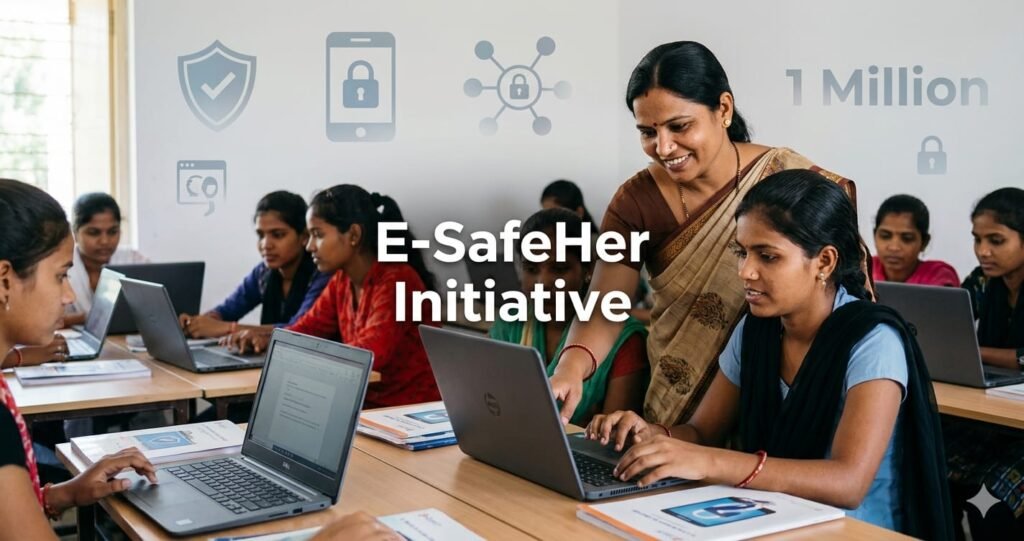
What is the E-SafeHER Initiative?
The E-SafeHER is a nationwide program in India launched to equip women, particularly in rural areas, with the knowledge, confidence, and tools to stay safe online.
The programme is a key component of Digital India, aimed at building a more inclusive and secure digital ecosystem.
E-SafeHER Initiative Goal: 1 Million Cyber Sakhis
One of the most ambitious targets of the E-SafeHER initiative is to train 1 million “Cyber Sakhis” by 2029.
These Cyber Sakhis will act as digital safety leaders in their communities—helping other women understand online risks, avoid fraud, and confidently use digital platforms.
Who is Behind the E-SafeHER Initiative?
The E-SafeHER initiative is a collaborative effort involving:
It is anchored under MeitY’s Information Security Education and Awareness (ISEA) programme.
Focus Areas of the E-SafeHER Initiative
The E-SafeHER initiative focuses on helping women stay safe in key digital areas:
This initiative directly addresses the rising concerns of cyber fraud and online harassment in India.
How the E-SafeHER Initiative Will Work
The implementation model of the E-SafeHER initiative is designed for real grassroots impact:
This approach ensures that knowledge spreads organically within rural communities.
Training Content: What Women Will Learn
Under the E-SafeHER initiative, women will receive structured training that includes:
In collaboration with Tech Her, the program also focuses on empowering women to take action—not just awareness.
What Leaders Are Saying
According to S Krishnan, the initiative aligns with the government’s vision of a Cyber Secure Bharat. He emphasized that it will empower women in remote regions to stay safe online and can scale further through partnerships.
Isha Ambani highlighted that rural women are coming online faster than ever. She noted that the E-SafeHER initiative will help them build essential digital safety skills and achieve the goal of one million Cyber Sakhis by 2029.
Why the E-SafeHER Initiative is Crucial Right Now
India is witnessing a rapid increase in:
The E-SafeHER initiative steps in at the right time—ensuring that women are not just users of technology but informed and safe participants in the digital world.
A Community-Driven Digital Safety Movement
What makes the E-SafeHER initiative unique is its community-first approach.
By building a network of Cyber Sakhis, the program creates a ripple effect—where one trained woman can educate dozens more, especially in underserved regions.
This is not just a training programme—it’s a movement toward digital empowerment.
The E-SafeHER initiative is more than a government program—it’s a powerful step toward making India’s digital future safer for women. With the goal of 1 million Cyber Sakhis, it has the potential to transform how rural India interacts with technology.
Do you believe initiatives like E-SafeHER can reduce cybercrime in India? Or is more needed? Share your thoughts in the comments—your opinion matters.
Disclaimer: This article is published for informational purposes only. Readers are advised to verify details from official sources before making any decisions. The website is not responsible for any loss or damage arising from the use of this information.