Will the Global Water Crisis 2026 Trigger a Dangerous Future? 7 Alarming Signs the World Can No Longer Ignore
The world is not facing a crude oil crisis alone. There is another natural resource that is gradually running out and affects every living being on Earth—water. Our bodies are made up of nearly 75% water, and life without it is impossible. Yet in 2026, water has become one of the most valuable and limited resources across the globe. Alongside money, energy, and fuel, water has become an unavoidable part of daily survival. The biggest question now is no longer whether water scarcity exists, but how humanity will cope with it in the years ahead.
Global Water Crisis 2026: Why Experts Are Warning About “Water Bankruptcy”
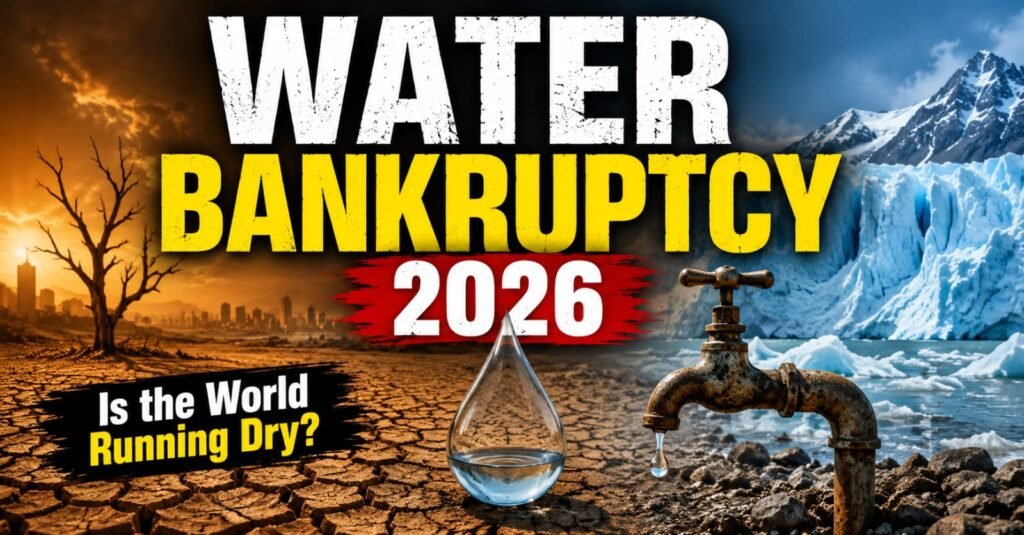
The Global Water Crisis 2026 is no longer being viewed as a temporary shortage caused by drought. Scientists and environmental researchers are increasingly using the term “water bankruptcy” to describe a deeper problem—structural depletion of freshwater reserves that may take decades or even centuries to recover.
Unlike seasonal droughts, water bankruptcy occurs when groundwater, rivers, lakes, and natural reserves are consumed faster than nature can replenish them. Rising temperatures, changing rainfall patterns, and growing demand have pushed many regions beyond sustainable limits.
The 3 Major Drivers Behind the Global Water Crisis 2026
Extreme Heat and El Niño Effects
Powerful El Niño conditions have intensified global temperatures, increasing evaporation rates and reducing available freshwater resources. Higher sea surface temperatures have disrupted weather patterns, creating longer dry spells and worsening water stress in vulnerable regions.
Rapid Glacier Melting
The Himalayan glaciers, often called Asia’s water towers, are retreating at an alarming pace. While glacier melt initially increases river flows, it threatens long-term water availability by reducing natural water storage that millions depend on during dry seasons.
Over-Extraction of Groundwater
Many countries continue extracting groundwater faster than aquifers can recharge. This unsustainable practice is accelerating freshwater depletion and pushing several regions closer to permanent water shortages.
India at the Center of the Global Water Crisis 2026
India is among the countries facing the most severe water challenges. More than 250 billion cubic meters of groundwater are extracted every year, placing enormous pressure on natural reserves.
Eleven of India’s fifteen major river basins are experiencing severe stress. Reservoir levels have declined significantly in several regions, while nearly 60 crore people are facing high to extreme water stress. The situation highlights how rapidly water availability is shrinking in one of the world’s most populated nations.
Regional Hotspots Facing Severe Global Water Crisis 2026
Rajasthan and Northern India
Temperatures crossing 48°C, declining groundwater levels, and canal shutdowns have intensified the crisis. In several rural districts, a single hand pump serves multiple villages, making access to drinking water increasingly difficult.
Southern India
Reservoirs across southern states have witnessed alarming declines. The Krishna River Basin has experienced critically low water levels, creating pressure on both agriculture and urban water supplies.
Maharashtra and Uttar Pradesh
Major reservoirs, including Bhima Ujjaini and Maudaha, have reached critically low levels or dried up completely in some areas. This has disrupted irrigation systems and increased dependence on water tankers.
Uttarakhand
Even regions known as sources of major rivers are facing stress. Changing weather patterns and glacier retreat have affected reservoir levels, raising concerns about future water security.
How the Global Water Crisis 2026 Is Affecting the World
The impact of Global Water Crisis 2026 extends far beyond drinking water shortages.
Food Security Risks
Changing river flows and declining groundwater threaten agricultural productivity, particularly in regions dependent on seasonal water supplies.
Economic Losses
Droughts and water scarcity are causing billions in economic losses globally. Industries, farming communities, and urban centers are all facing growing financial pressure.
Gender Inequality
Women and girls often bear the greatest burden during water shortages, spending more time collecting water and facing increased social and economic challenges.
Rising Water Tensions
Declining water availability in major river basins across Africa and Asia is increasing concerns over future transboundary water disputes.
What Is Being Done to Address the Crisis?
Governments and international organizations are accelerating efforts to improve water security. In India, programs such as the Jal Jeevan Mission, climate-resilient agriculture initiatives, groundwater conservation projects, and the Namami Gange Programme are being expanded to strengthen long-term resilience.
However, experts warn that conservation, efficient water use, rainwater harvesting, wastewater recycling, and sustainable groundwater management must become priorities at every level of society.
The Bigger Question for Humanity
The Global Water Crisis 2026 is a reminder that freshwater is not an unlimited resource. What was once considered a local environmental issue has evolved into a global challenge affecting economies, food systems, public health, and future generations.
The choices made today will determine whether future generations inherit sustainable water resources or a world struggling with permanent water shortages.
FAQs
As water becomes one of the defining challenges of our time, stay connected with us for more insights into the global issues shaping our future.
Disclaimer: This article is published for informational purposes only. Readers are advised to verify details from official sources before making any decisions. The website is not responsible for any loss or damage arising from the use of this information.