Can Artificial Photosynthesis Fuel End the Global Oil Crisis? 7 Promising Breakthroughs From Japan Raising Hope
Artificial Photosynthesis Fuel: A New Hope for a World Beyond Oil
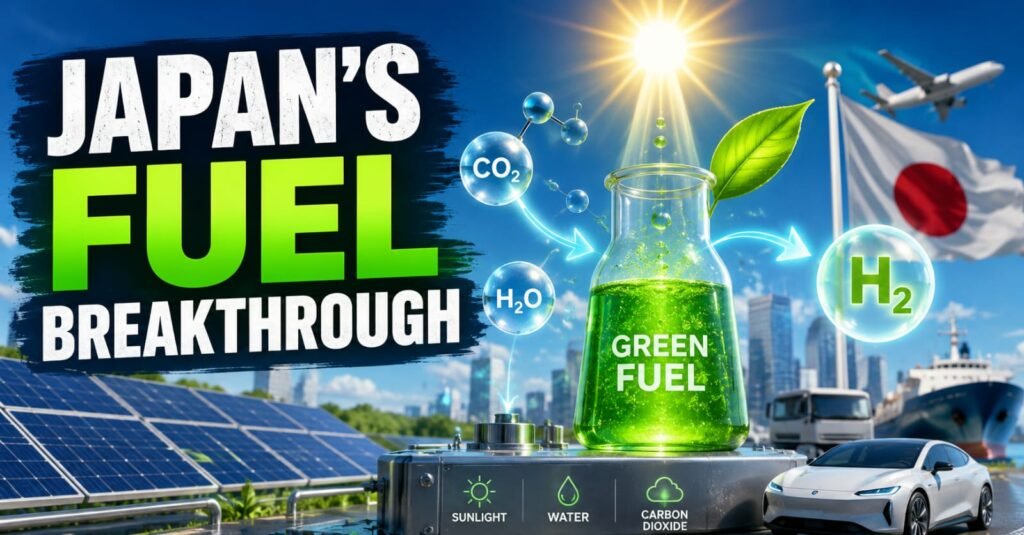
In this blog, we explore how Japan is making remarkable progress in developing Artificial Photosynthesis Fuel, a technology that could reduce dependence on fossil fuels and offer a cleaner future. As countries worldwide search for sustainable energy alternatives, Japanese researchers are working on systems that convert sunlight, water, and carbon dioxide into usable fuels. If successful at large scale, this innovation could transform transportation, industry, and energy production while helping tackle climate change.
Why the World Is Looking Beyond Oil
Modern economies rely heavily on oil and gas. From transportation and manufacturing to aviation and shipping, fossil fuels remain essential. However, concerns over energy security, climate change, and long-term fuel availability are pushing nations to explore alternatives.
This is where Artificial Photosynthesis Fuel is attracting global attention. Instead of extracting energy from fossil reserves, scientists are trying to imitate nature’s photosynthesis process and create fuel directly from sunlight.
Japan’s Artificial Photosynthesis Fuel Converts Sunlight Into Green Energy
Japanese researchers are making significant strides in Artificial Photosynthesis Fuel technology by converting sunlight, water, and carbon dioxide into energy-rich fuels such as formic acid and methane.
Unlike conventional fuel production, this process creates a sustainable cycle that can potentially operate with minimal emissions. The generated fuels can be stored and transported more easily than electricity, making them practical for real-world applications.
Smart Self-Regulating Electrolyser Removes Costly Components
One major breakthrough comes from researchers at Osaka Metropolitan University.
Their newly developed system features a self-regulating electrolyser that automatically adjusts its electrical behavior as sunlight intensity changes. This eliminates the need for expensive batteries and complex electronic controllers that are commonly required in solar-powered systems.
This advancement makes Artificial Photosynthesis Fuel systems simpler, more efficient, and potentially more affordable.
Fuel for Cars, Aircraft, Ships and Hydrogen Vehicles
The energy produced through Artificial Photosynthesis Fuel is highly versatile.
The system can generate clean hydrogen along with liquid fuels that may power modified combustion engines, fuel-cell vehicles, and even sectors that are difficult to electrify, such as aviation and maritime shipping.
This flexibility is one reason why researchers believe the technology could play a major role in future energy systems.
Turning Carbon Dioxide Into Valuable Fuel
Another important benefit of Artificial Photosynthesis Fuel is its ability to use captured carbon dioxide as a raw material.
Instead of releasing additional greenhouse gases into the atmosphere, the technology converts existing carbon dioxide into useful fuels and chemical feedstocks. This creates a circular carbon economy where emissions become resources rather than waste.
Higher Efficiency Than Natural Photosynthesis
Japanese institutions, including science and technology research centers, have reported solar-to-hydrogen and solar-to-formic-acid conversion rates significantly higher than those achieved by natural plant photosynthesis.
These improvements are making Artificial Photosynthesis Fuel increasingly viable for commercial energy production, offering higher energy output and greater scalability.
Japan’s Long-Term Vision for Commercial Deployment
Japan’s national research programs are bringing together government agencies, universities, and private companies to accelerate development.
The long-term objective is to move from laboratory-scale success to commercial implementation and eventually large-scale production of fuels and chemical materials. If achieved, Artificial Photosynthesis Fuel could become a key pillar of future low-emission societies.
Solar Technologies Are Already Transforming Transport Systems
While Artificial Photosynthesis Fuel continues to develop, solar-powered transportation systems are already becoming a reality.
Many metro networks around the world now use solar energy to power station operations such as lighting, ticketing systems, and air conditioning. Large solar farms also contribute electricity to metro networks.
The Delhi Metro Rail Corporation became one of the first major metro systems to source a substantial share of its energy from solar power. Kochi Metro has also expanded its solar energy use, while several other Indian metro networks continue increasing renewable energy capacity.
Globally, solar-powered rail initiatives are gaining momentum. Australia’s Byron Bay Train became famous for operating with solar panels and battery storage, while several European transit systems are exploring similar technologies.
The Bigger Picture
The rapid development of renewable technologies shows that the future of energy may not depend solely on oil. Innovations such as Artificial Photosynthesis Fuel, advanced solar power systems, and carbon-recycling technologies are creating new possibilities for cleaner and more sustainable growth.
Although large-scale adoption still requires further development, Japan’s progress demonstrates how science can transform environmental challenges into practical solutions for future generations.
The journey toward a cleaner energy future is accelerating, and Artificial Photosynthesis Fuel could become one of the most important breakthroughs of this century. If these technologies continue advancing at the current pace, the world may one day produce fuel directly from sunlight while reducing carbon emissions at the same time.
FAQs
Stay connected with us for more future-focused energy innovations, breakthrough technologies, and global developments shaping tomorrow’s world.
Disclaimer: This article is published for informational purposes only. Readers are advised to verify details from official sources before making any decisions. The website is not responsible for any loss or damage arising from the use of this information.