Navratri Day 5: Maa Skandamata Puja, Blessings, Rituals & Sacred Bhog Revealed
Jai Mata Di, dear viewers. Today is the worship of the fifth form of Matarani, and this day holds deep spiritual significance during Navratri. In this special update, we bring you everything about the divine story, sacred name, rituals, offerings, and important temples associated with Maa Skandamata Puja (Day 5). If you have any doubts about the worship rituals, you can find them clearly explained here.
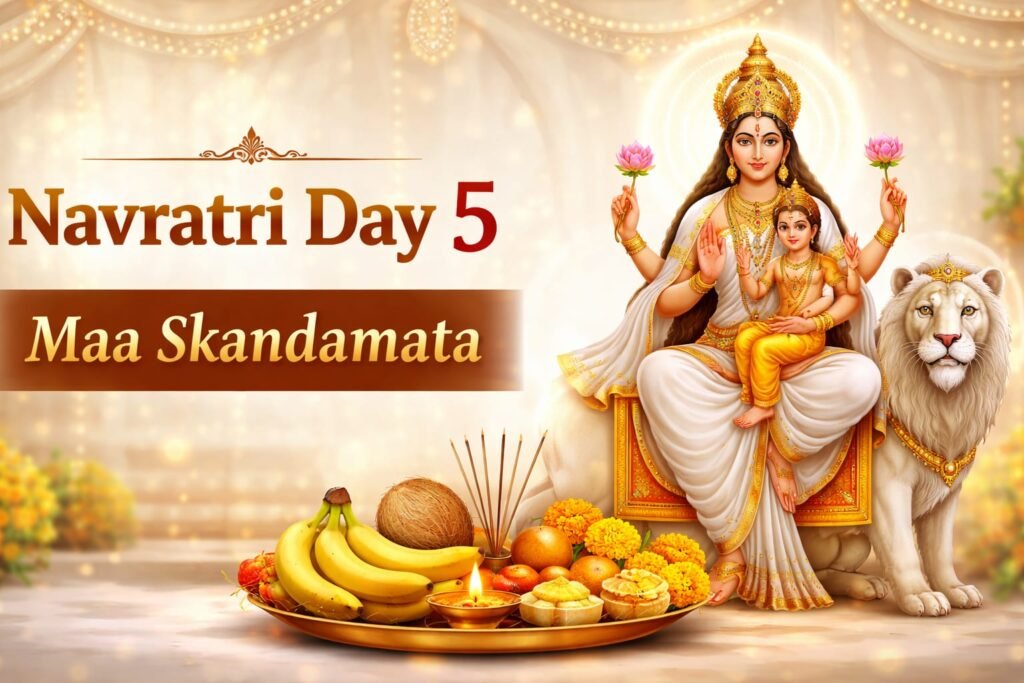
Maa Skandamata Puja (Day 5) Significance
Devotees believe that worshipping her during Maa Skandamata Puja (Day 5) opens the doors to salvation and divine grace. She is also associated with the sacred color white, symbolizing peace, purity, and inner joy.
Key Aspects of Maa Skandamata Puja (Day 5)
The importance of Maa Skandamata Puja (Day 5) lies in her nurturing and protective nature. She represents the divine mother who holds her child Kartikeya in her lap, symbolizing unconditional love and protection. She is also associated with the Vishuddha Chakra, which represents purity of thought and expression.
By worshipping her, devotees seek wisdom, inner peace, and spiritual awakening. This form of Maa Durga is believed to bless her devotees with both material prosperity and spiritual upliftment.
Sacred Offerings (Bhog) in Maa Skandamata Puja (Day 5)
In Maa Skandamata Puja, specific offerings are made to please the goddess. It is considered highly auspicious to offer bananas (केला) as her favorite bhog. Many devotees prepare delicious Banana Kheer as a special offering.
Along with bananas, devotees offer:
These offerings represent devotion, purity, and gratitude towards the divine mother. Yellow-colored offerings are especially significant in Maa Skandamata Puja (Day 5) as they reflect positivity and energy.
Navratri Special: Maa Durga’s 9 Bhog (Divine Offerings)
Navratri is incomplete without the sacred 9 Bhog, each dedicated to a different form of Maa Durga. These divine offerings symbolize devotion, gratitude, and the spiritual journey of the devotee across all nine days of Navratri.
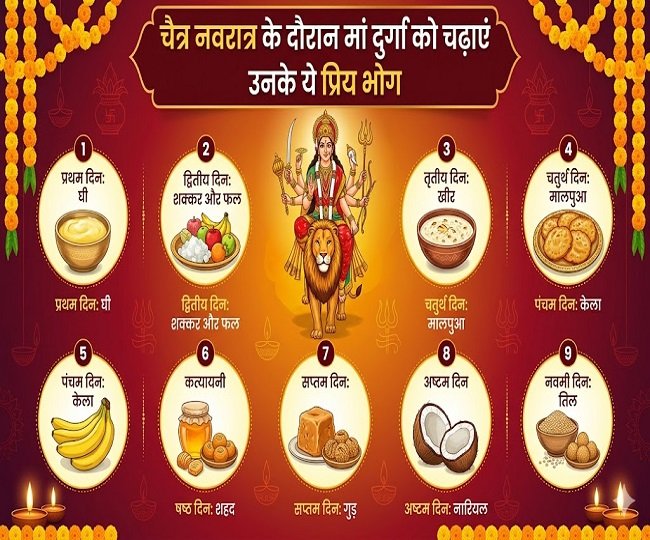
Experience the divine energy of Navratri through these sacred 9 Bhog offerings. Each bhog carries blessings of Maa Durga, bringing prosperity, health, and happiness into your life. Share this divine moment with your loved ones and stay connected with Maa Rani’s blessings
Color Significance in Maa Skandamata Puja (Day 5)
The color white is deeply associated with Maa Skandamata Puja (Day 5). Wearing white clothes during the puja is believed to attract peace, harmony, and divine blessings. In some traditions, devotees also wear yellow attire while offering yellow flowers and sweets to align with spiritual energy and positivity.
Key Rituals for Maa Skandamata Puja (Day 5)
Performing the rituals with devotion is essential in Maa Skandamata Puja (Day 5). Here are the key steps:
Morning Rituals:
Wake up early, take a holy bath, and clean the puja area with devotion.
Establishment:
Place the idol or picture of Maa Skandamata on a pedestal, preferably covered with a yellow or red cloth.
Shringar:
Offer traditional shringar items like vermilion, bangles, and other adornments to the goddess.
Mantra Chanting:
Chant the sacred mantra:
“ॐ देवी स्कन्दमातायै नमः”
(Om Devi Skandamatayai Namah)
Maa Skandamata Aarti (Sacred Divine Moment
To experience the true essence of Maa Skandamata Puja (Day 5), devotees perform the sacred aarti with deep devotion and faith. The aarti symbolizes surrender, gratitude, and the divine connection with the Mother Goddess.
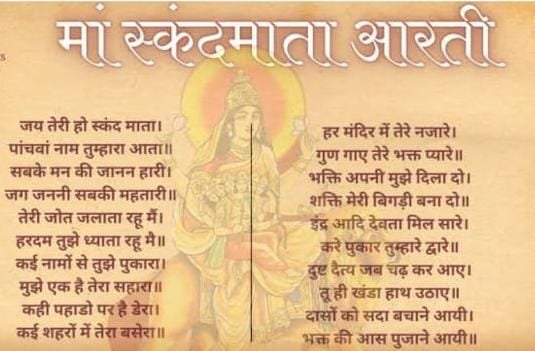
Witness the divine glow of Maa Skandamata’s aarti and feel her blessings fill your heart with peace, strength, and positivity. Let this sacred moment bring you closer to the divine mother and inspire your devotion.
Important Temples of Maa Skandamata
The worship of Maa Skandamata is deeply rooted in several sacred temples across India.
Varanasi, Uttar Pradesh: The main temple is located in Jaitpura (Bageshwari Devi Temple area), considered a powerful spiritual center.
Vadodara, Gujarat: A historic temple dating back to the 10th century, known for its architectural beauty.
Chamba, Himachal Pradesh: An 8th-century temple featuring exquisite traditional wood carvings.
Almora, Uttarakhand: A 9th-century temple located in the serene Himalayan region.
These temples attract thousands of devotees during Navratri, especially on the fifth day dedicated to Maa Skandamata Puja.
Spiritual Connection and Blessings
Devotees believe that sincere worship during Maa Skandamata Puja (Day 5) brings prosperity, removes obstacles, and blesses the family with happiness and peace. Her divine energy protects devotees from negativity and guides them toward a better life filled with spiritual strength.
Spiritual Connection and Blessings
Devotees believe that sincere worship during Maa Skandamata Puja (Day 5) brings prosperity, removes obstacles, and blesses the family with happiness and peace. Her divine energy protects devotees from negativity and guides them toward a better life filled with spiritual strength.
Final Blessings to Viewers
May Mata Rani bless us and our viewers so that we continue to grow while staying devoted at Her divine feet through Maa Skandamata Puja (Day 5). Stay with us for more updates and divine insights about the sacred forms of Mata Rani.
Do you perform Maa Skandamata Puja at home or visit a temple on this special day? Share your experience, rituals, or blessings in the comments below. Your devotion and stories inspire others and strengthen our spiritual community