India’s First Underwater Twin Tube Tunnel Approved — Could This Change Travel Forever?
In our blog today, we are going to tell our viewers about the Twin Tube Tunnel Project. The Government of India has approved the construction of a four-lane, access-controlled greenfield corridor featuring the nation’s first underwater road and rail tunnel.
Approval was granted by the Cabinet Committee on Economic Affairs chaired by Prime Minister Narendra Modi. This historic move makes the Twin Tube Tunnel Project not only the first in India but the second of its kind in the world, highlighting India’s push toward futuristic infrastructure.
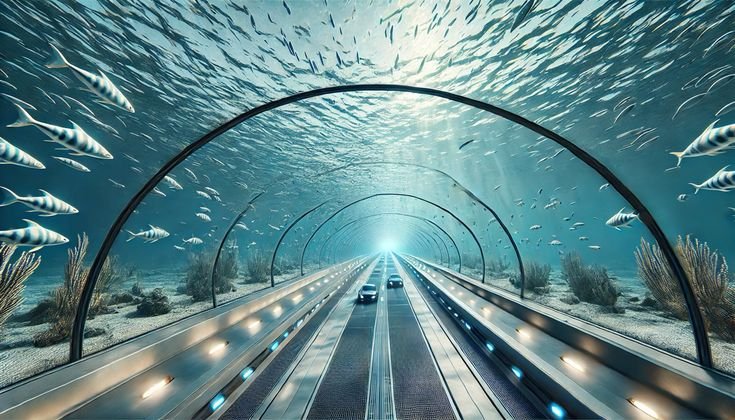
Two Mega Twin-Tube Tunnel Projects Underway in India
As of February 2026, two major twin tube tunnel projects are advancing across the country.
Numaligarh–Gohpur Underwater Corridor (Assam)
The Numaligarh–Gohpur project in Assam is a ₹18,662 crore, 15.79 km, four-lane underwater twin-tube road-cum-rail tunnel. It includes a 15.79 km tunnel beneath the Brahmaputra River.
The corridor will connect major national highways National Highway 15 and National Highway 715. Passing through ecologically sensitive zones near Kaziranga National Park, this tunnel aims to provide a shorter, faster, and more reliable route, reducing logistics costs and boosting regional connectivity.
Once completed, the Twin Tube Road Cum Rail Tunnel Project will stimulate economic activity across Assam, Arunachal Pradesh, Nagaland, and other northeastern states while encouraging tourism. The corridor is expected to generate around 80 lakh person-employment opportunities and connect 11 economic nodes including industrial and development centers.
Air connectivity will be integrated through Donyi Polo Airport and Tezpur Airport, while inland waterways provide additional channels for passengers and cargo, creating a multi-modal transport network.
The project will also link four major railway stations:
The tunnel will be constructed using Tunnel Boring Machine (TBM) technology and is slated for a total capital cost of ₹18,662 crore. The project received final Union Cabinet approval in February 2026.
Thane–Borivali Twin Tunnel (Mumbai
Separately, the Thane–Borivali Twin Tunnel in Mumbai is an 11.8 km, 3-lane-per-tube project using 13.34-meter diameter TBMs.
This tunnel under Sanjay Gandhi National Park will connect Thane and Borivali, reducing travel time from 60–90 minutes to just 15 minutes. The project completed portal excavation and began TBM assembly in late 2025/early 2026.
The Twin Tube Road Cum Rail Tunnel Project in both Mumbai and Assam marks a historic push in India’s infrastructure journey, combining urban and regional connectivity with futuristic engineering.
Why This Project Is a Game-Changer
India is moving toward major infrastructure projects aimed at improving connectivity, reducing travel time, and boosting economic growth. The Twin Tube Road Cum Rail Tunnel Project integrates highways, railways, airports, and waterways into one seamless transport network, reducing logistics costs and unlocking regional development.
By connecting multiple states, economic zones, and airports, this project is not just an engineering marvel but a strategic catalyst for employment, tourism, and industrial growth.
As in our previous blogs covering Air Taxi services and Bharat Cab, India continues to take bold steps in modern transport solutions. The Twin Tube Road Cum Rail Tunnel Project is the latest example of these transformative infrastructure initiatives.
What do you think — will India’s first underwater twin tube tunnel transform travel in the Northeast? Share your thoughts below!
We hope the information provided by our blogs continues to be helpful to you. Stay tuned for more updates on India’s mega projects and connectivity milestones.
Disclaimer: This article is published for informational purposes only. Readers are advised to verify details from official sources before making any decisions. The website is not responsible for any loss or damage arising from the use of this information.