UPI ‘1-Hour Golden Hour’ Rule: Big Change for Payments Above ₹10,000—Safety Shield or Major Delay?
India’s digital payment ecosystem may soon see a major shift with the proposed UPI 1-Hour Golden Hour Rule by the Reserve Bank of India (RBI). Designed as a powerful fraud-prevention mechanism, this move could change how high-value UPI transactions work—especially for payments above ₹10,000.
But while the intent is security, users are divided: is this a much-needed safety net or a frustrating delay in urgent moments?
What is the UPI 1-Hour Golden Hour Rule?
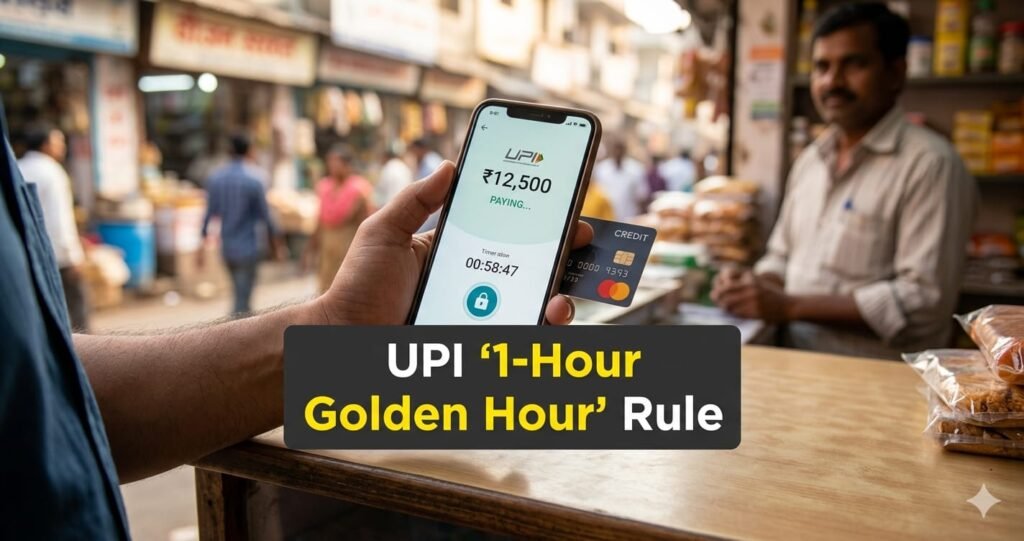
The UPI 1-Hour Golden Hour Rule is a proposed security measure (as of April 2026) to curb rising digital fraud. It introduces a cooling-off period of up to one hour for high-value UPI transactions.
Under this system, the sender’s account will be debited immediately, but the funds will not be instantly credited to the recipient. Instead, the amount will be held temporarily, giving users a chance to cancel or report fraudulent payments.
Why the UPI 1-Hour Golden Hour Rule Exists
Preventing Fraudulent “Disappearance” of Funds
UPI transactions are typically instant and irreversible. Fraudsters often withdraw stolen money within minutes. The UPI 1-Hour Golden Hour Rule breaks this speed, allowing victims time to act before funds vanish.
Combating “Authorized” Fraud
Many scams trick users into approving payments themselves. This one-hour buffer acts as a safety pause, helping users rethink suspicious transactions.
Focus on High-Value Transfers
The proposal targets transactions above ₹10,000, which account for nearly 98.5% of fraud value. This ensures small daily payments remain fast and unaffected.
Protection for Vulnerable Users
Senior citizens and users under pressure get an added safety layer. The delay allows them time to realize potential fraud and take action.
How the UPI 1-Hour Golden Hour Rule Will Work
If implemented, the UPI 1-Hour Golden Hour Rule will function in a simple but impactful way:
Applies to Large Payments Only: Transactions above ₹10,000 will be affected, while smaller payments remain instant.
“Pending” Status: Money will be debited but held for up to one hour before reaching the receiver.
Cancellation Window: Users can cancel the payment within this period if it was made by mistake or under fraud.
Extra Safeguards: Additional protections may apply for transactions above ₹50,000, especially for vulnerable users.
Immediate Steps to Take During the Golden Hour
If you suspect fraud, acting fast within that one hour is critical:
Call 1930: The National Cyber Crime Helpline works 24×7 to freeze fraudulent transactions.
Report Online: Use cybercrime.gov.in or your UPI app’s “Raise Issue” feature.
Contact Your Bank: Inform your bank’s fraud helpline immediately.
This quick action can significantly improve your chances of recovering money.
Drawbacks of the UPI 1-Hour Golden Hour Rule
While the UPI 1-Hour Golden Hour Rule strengthens security, it comes with trade-offs:
Loss of Instant Payments
UPI’s biggest advantage—real-time transfers—may be compromised for high-value payments.
Delays in Emergencies
Urgent situations like medical needs or property deals could face critical delays.
Increased Friction
Users may experience additional alerts, warnings, or confirmation steps, making transactions less smooth.
Risk of Duplicate Payments
Confusion over “pending” status might lead users to resend payments, causing multiple debits.
What Happens Next?
This proposal is part of an RBI discussion paper aimed at strengthening digital payment security. Public feedback is open until May 8, 2026, and the final decision will depend on stakeholder responses.
If implemented, the UPI 1-Hour Golden Hour Rule could redefine how India balances speed and security in digital payments.
The UPI 1-Hour Golden Hour Rule clearly prioritizes safety over speed—but whether users will embrace this trade-off remains to be seen. For some, it’s a lifesaver; for others, a potential inconvenience.
What do you think—would you prefer extra security or instant payments without delay? Drop your thoughts in the comments and let’s discuss!
Disclaimer: This article is published for informational purposes only. Readers are advised to verify details from official sources before making any decisions. The website is not responsible for any loss or damage arising from the use of this information.