UAE Leaves OPEC in 2026: Shock Exit from OPEC+ Could Reshape Global Oil Prices Overnight
This blog breaks down the biggest energy shock of 2026—UAE leaves OPEC after nearly six decades. It explains what OPEC and OPEC+ are, why the UAE made this bold move, and how it could impact global oil prices, supply, and geopolitics. If you want a clear, fast understanding of how this decision may affect fuel prices, markets, and global power dynamics, this is worth your time.
What Is OPEC & OPEC+? Understanding the Power Behind Oil Markets
The Organization of the Petroleum Exporting Countries is a permanent intergovernmental organization founded in 1960 to coordinate petroleum policies and stabilize oil markets. It was established by Iran, Iraq, Kuwait, Saudi Arabia, and Venezuela to secure fair prices for producers and ensure efficient supply for consumers.
The extended alliance, known as OPEC+, was formed in 2016. It includes OPEC members along with major non-OPEC oil-producing nations such as Russia, Mexico, and Kazakhstan to further manage global oil supply.
Together, OPEC+ produces roughly 59% of global crude oil and plays a key role in influencing oil prices by adjusting production targets based on market demand.
Breaking News: UAE Leaves OPEC and OPEC+ in 2026
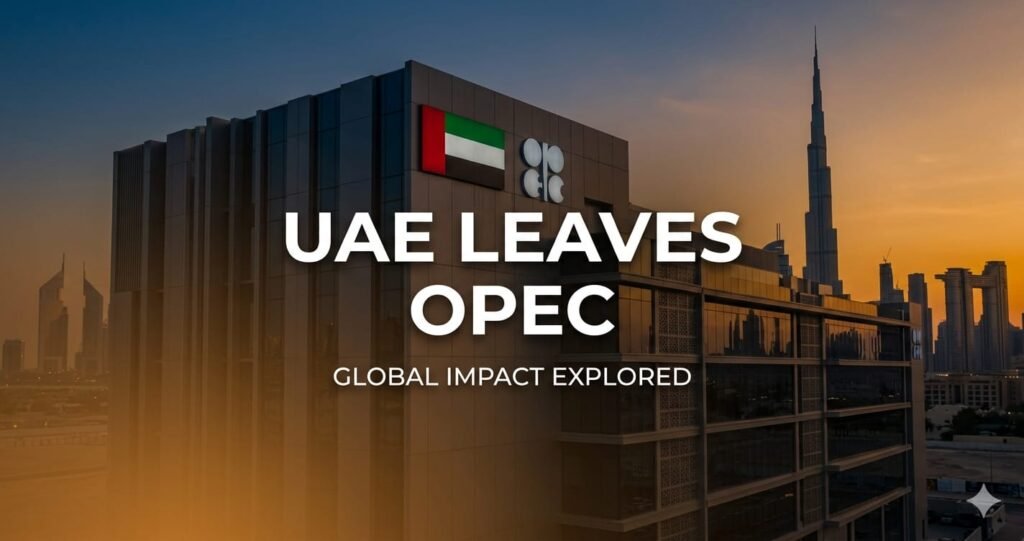
In a stunning move, the United Arab Emirates announced on April 28, 2026, that it is exiting both OPEC and OPEC+, effective May 1, 2026. This decision marks the end of nearly 60 years of membership and signals a major shift in global energy dynamics during a period of heightened regional conflict.
The UAE leaves OPEC decision is being seen as one of the most significant disruptions in recent oil market history.
Why UAE Leaves OPEC: Key Reasons Behind the Exit
The primary reason UAE leaves OPEC is frustration with production constraints. OPEC-imposed quotas limited the UAE’s ability to increase output and maximize revenue despite heavy investments in oil capacity. The country now aims to boost production to 5 million barrels per day by 2027.
Another major factor is strained ties with Saudi Arabia, the leading force within OPEC. Years of disagreements over production policies and regional influence contributed to rising tensions.
The UAE also emphasized its desire for strategic autonomy, stating that leaving allows it to pursue an independent long-term economic vision instead of adhering to group quotas.
Additionally, regional instability linked to tensions involving Iran played a role. The UAE expressed dissatisfaction with the lack of coordinated support during recent attacks, further pushing it toward exit.
Strait of Hormuz Tensions Add Fuel to the Crisis
OPEC Gulf producers have already been struggling to ship exports through the Strait of Hormuz, a critical chokepoint between Iran and Oman. Nearly one-fifth of the world’s crude oil and liquefied natural gas passes through this route.
Iranian threats and attacks on vessels have disrupted shipments, increasing uncertainty in global oil supply chains. Officials noted that the UAE’s exit may not immediately impact the market heavily due to existing disruptions in this region.
Global Impact: What Happens After UAE Leaves OPEC
The UAE leaves OPEC move carries serious implications:
Weaker OPEC Influence:
The departure removes a key and compliant member, making it harder for Saudi Arabia to maintain control over global oil supply.
Increased Oil Supply:
Freed from quotas, the UAE is expected to ramp up production, which could push global oil prices downward.
Market Uncertainty:
Combined with geopolitical tensions, the decision adds volatility to an already unstable market.
Tighter Supply Conditions:
Global spare capacity is already at historically low levels, making the oil market more sensitive to disruptions.
Also Read: Petrol Diesel Price Hike 2026: Govt Cuts Tax but Prices Still Rising—What’s Really Happening?
A Strategic Shift Toward Independence
Operating outside OPEC allows the UAE to fully leverage its position as a supplier of some of the world’s lowest-cost and lowest-carbon oil. The country believes this move will help create a more responsive and reliable energy supply system.
Officials described the decision as a carefully evaluated policy shift based on current and future production strategies.
Ultimately, the UAE views its exit as a net positive—not just for itself, but for global consumers and the broader economy.
Final Thoughts: A Turning Point for Global Energy
The UAE leaves OPEC decision could redefine how global oil markets function. Whether it leads to lower fuel prices or deeper geopolitical tensions remains to be seen—but one thing is certain: the balance of power in energy markets is shifting.
What do you think—will this move lower oil prices or trigger more global instability? Drop your thoughts in the comments and join the conversation.
Disclaimer: This article is published for informational purposes only. Readers are advised to verify details from official sources before making any decisions. The website is not responsible for any loss or damage arising from the use of this information.