Strait of Hormuz Crisis 2026: Even After Reopening, Why Oil Prices May Shock the World
Strait of Hormuz is recently a trending topic but most of the people don’t know about the Strait of Hormuz. So in our today’s blog we are hoping to provide all the facts of Strait of Hormuz to our viewers.
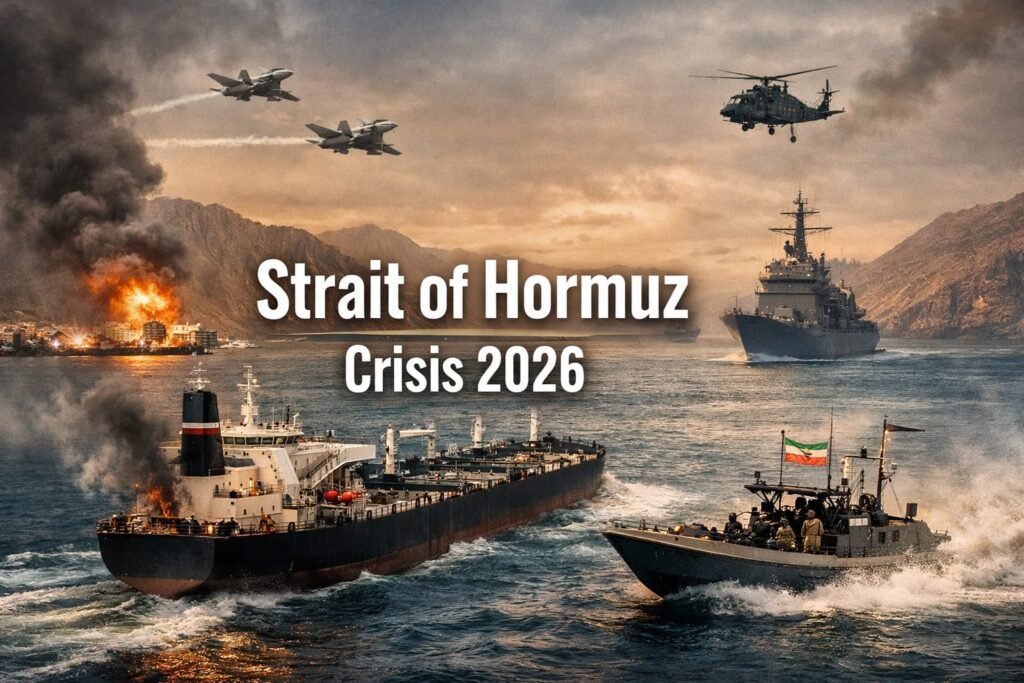
What is the Strait of Hormuz Crisis 2026 and Why Everyone Is Talking About It?
The Strait of Hormuz Crisis 2026 has now become one of the biggest global concerns as it directly impacts crude oil supply, stock markets, and geopolitical stability. Even if the Strait of Hormuz reopens, crude oil prices can remain high or increase due to lingering shipping bottlenecks, high insurance premiums, and damaged infrastructure. While the reopening causes initial price dips, market volatility persists because it takes months for oil shipments to return to normal volumes.
Why Prices May Still Rise in the Strait of Hormuz Crisis 2026
Despite hopes of stability, the Strait of Hormuz Crisis 2026 continues to pressure global oil prices. Here’s why:
Physical Bottlenecks & Logistics:
Even when open, backlog of tankers and potential damage to ports can slow shipments, maintaining tight supply, notes the AP.
High Insurance/Risk Premiums:
Concerns over renewed military escalation make shipping companies hesitant, keeping insurance costs for tankers high.
Structural Shortage:
The disruption of roughly 20 million barrels per day (mb/d) creates a “severe physical shortage” that cannot be instantly resolved.
Uncertainty & Geopolitical Risk:
Fragile ceasefires and continued blockades can lead to rapid price spikes.
Damaged Infrastructure:
If conflicts damaged port facilities or pipelines, it could take longer than simply reopening the strait to return output to pre-crisis levels.
Lowered Confidence:
Shipowners remain cautious about the security of their vessels, reducing the volume of shipping traffic even when the route is officially open.
Reduced Supply Buffers:
Before the reopening, supply was significantly reduced, meaning inventories are low and need time to restock.
Who “Made” the Strait of Hormuz?
The Strait of Hormuz was formed naturally over millions of years through geological processes, not by a single human entity.
Tectonic Formation:
It formed approximately 35 million years ago due to the collision of the Arabian Plate with the Eurasian Plate. This collision caused the land to crumble, creating the Zagros Mountains, while the seabed deepened, creating the Strait.
Geographical Location:
It is a natural narrow waterway (about 21 miles wide at its narrowest) between Oman (Musandam Peninsula) and Iran.
Who is Collecting Tolls in the Strait of Hormuz Crisis 2026?
As of April 2026, Iran has initiated a formal, controversial process to collect taxes and transit fees from vessels passing through the Strait of Hormuz. This has further intensified the Strait of Hormuz Crisis 2026.
The Collector:
The Islamic Revolutionary Guard Corps (IRGC) of Iran is controlling the passage and managing the collection.
The Charges:
Iran is reportedly demanding fees of up to $2 million per vessel for “safe passage” or “security services”.
Legality:
Under international maritime law (UNCLOS), the strait is a “transit passage” and should be free for all, making this a de facto, rather than international, levy.
The Process:
Iran’s parliament is formalizing this via the “Strait of Hormuz Management Plan,” which includes a “safe corridor” for ships that pay or are approved by Tehran.
War Tensions Escalate: What’s Happening Right Now?
The Strait of Hormuz Crisis 2026 has escalated with major global powers involved:
U.S. Seizes Ship:
Iran’s military vowed to retaliate after the U.S. Navy fired on and seized an Iranian-flagged cargo ship near the Strait of Hormuz as part of the American military blockade.
Peace Talks in Doubt:
While Vice President JD Vance and other U.S. negotiators appeared set to travel to Pakistan for a new round of peace talks, Iran’s Foreign Ministry said “no decision has been made” on whether to hold new talks.
Trump’s New Threats:
With the ceasefire set to end Wednesday, President Donald Trump threatened to “knock out every single Power Plant, and every single Bridge, in Iran” if there is no deal.
Markets Rattled:
The price of oil jumped sharply and stock futures tumbled as the renewed tensions over the critical Strait of Hormuz shook global markets.
Final Take: Why Strait of Hormuz Crisis 2026 Still Matters
The Strait of Hormuz Crisis 2026 is not just about a waterway—it is about global energy security, economic stability, and geopolitical balance. Even if the route reopens, the aftershocks can last for months, keeping oil prices volatile and markets uncertain.
What do you think—will oil prices stabilize soon or are we heading toward a bigger global crisis? Share your thoughts in the comments below!
Disclaimer: This article is published for informational purposes only. Readers are advised to verify details from official sources before making any decisions. The website is not responsible for any loss or damage arising from the use of this information.