India’s Shocking Silver Import Restriction 2026: Will Silver Investment Still Be Profitable After New Rules?
India has dropped a major bombshell on the bullion market. With strict new silver import restrictions, higher duties, and tighter RBI oversight, investors, traders, and manufacturers are now questioning the future of silver investment in India.
From rising domestic premiums to sharp MCX volatility, these policy changes could completely reshape the country’s bullion market in the coming months. Here’s everything you need to know about India’s new silver import rules and whether silver investment still makes sense now.
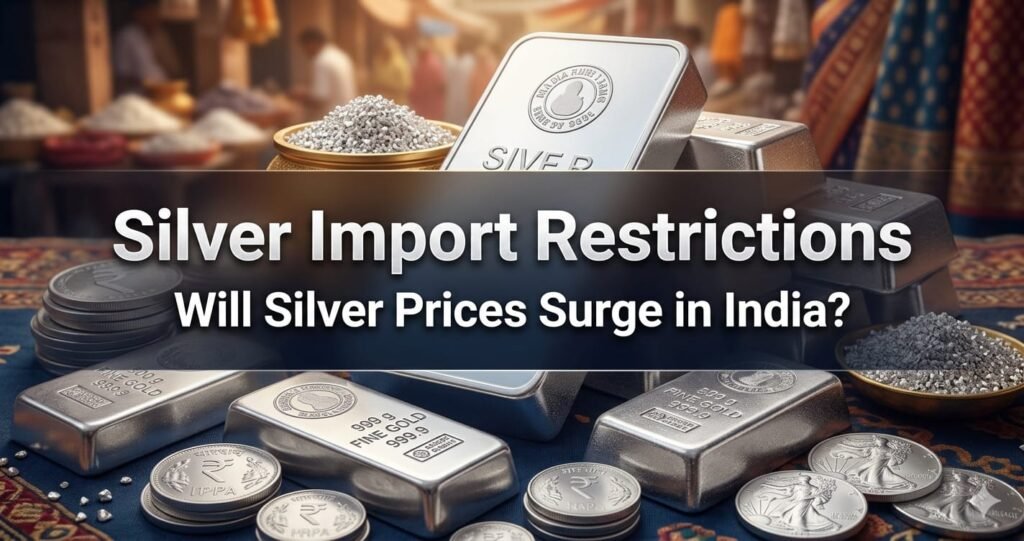
India has introduced strict new rules for silver imports to control the trade deficit and stabilize the rupee. The government shifted silver imports from the “free” to the “restricted” category, meaning shipments now require a mandatory license.
The key changes introduced by the Directorate General of Foreign Trade (DGFT) and the Finance Ministry include:
Import Licensing Required for Silver Imports
Imports of silver bars (99.9% purity), unwrought silver, semi-manufactured forms, and silver powder now require explicit government authorization. The new silver import restrictions are expected to tighten supply in the domestic market.
Import Duty Hike on Silver
The government sharply increased the import duty on silver from 6% to 15%. Bullion imports are also subject to a 3% Integrated Goods and Services Tax (IGST).
RBI Oversight on Bullion Imports
Certain categories of silver imports have now been made subject to specific Reserve Bank of India (RBI) oversight and compliance monitoring.
Addressing the UAE FTA Loophole
These silver import restrictions follow a surge in private traders taking advantage of tariff concessions on silver routed through the UAE under the Comprehensive Economic Partnership Agreement (CEPA).
Track ongoing import updates through the DGFT Portal.
India’s strict new silver import restrictions, which moved 99.9% purity silver bars and semi-finished products into the restricted category, aim to curb trade deficits. While these curbs make physical silver costlier for end consumers, profitability now depends heavily on investment strategy.
Short-Term Physical Buyers
Silver investment may become less profitable in the short term. Tighter availability is pushing up local market premiums, and jewelers are likely to pass hefty acquisition and operational costs down to buyers.
Long-Term Investors
Silver investment can still remain profitable in the long run. Sustained industrial demand from solar energy, EVs, and electronics, combined with global safe-haven buying, continues to support a bullish long-term outlook.
ETF Investors
Thanks to updated Securities and Exchange Board of India (SEBI) regulations, Gold and Silver ETFs are now valued using transparent domestic spot prices rather than international benchmarks.
The combination of silver import restrictions and duty hikes is already impacting the domestic market in several ways.
Supply Constraints and Higher Premiums
By requiring official government licenses for silver imports, physical availability is becoming restricted. Since India relies on imports for more than 80% of its silver consumption, this bottleneck is causing domestic premiums to rise above international prices.
MCX Volatility May Increase
Multi Commodity Exchange of India (MCX) prices may experience sharp fluctuations. The sudden supply squeeze coupled with cooling global rates caused a sharp intra-week drop to around ₹2.72 lakh to ₹2.79 lakh per kilogram.
Wider MCX-LBMA Price Spread
Market experts anticipate a wider spread between domestic prices and the London Bullion Market Association (LBMA) benchmarks, with Indian buyers absorbing the cost of tight liquidity.
Pressure on Industrial Manufacturers
Because silver is vital for electronics, solar panels, and precision manufacturing, restricted supply and higher costs could pressure margins for domestic manufacturers if the supply remains artificially curbed.
The government enacted these silver import restrictions primarily to curb rising import bills, protect foreign exchange reserves, and ease pressure on the Indian rupee.
Key Market Updates and Rules
The DGFT shifted silver bars (99% purity or more) and unwrought/semi-manufactured silver from the “free” to the “restricted” category.
Imports now require mandatory government licenses.
Import duties on silver were increased to 15% from 6%.
A strict 3% IGST continues to apply on bullion imports.
Resistance for the upcoming session is placed near ₹2,85,000 per kg.
Strong support currently holds above ₹2,60,000 per kg.
Global Indicators Remain Important
Domestically, prices are expected to stay elevated due to the supply squeeze created by import bottlenecks. However, global XAG/INR trends indicate some cooling-off in industrial demand.
Track live bullion prices through the MCX India Official Website or read policy updates on the DGFT Official Portal.
The new silver import restrictions have undoubtedly changed India’s bullion landscape. Physical silver may become costlier and more volatile in the short term, but long-term industrial demand and safe-haven interest still keep the broader outlook positive.
For investors, the next few months will be crucial. Watching policy updates, MCX movements, and global silver demand trends carefully could make the difference between panic selling and smart long-term gains.
Stay connected for more sharp market breakdowns, investment explainers, and real-time financial updates that help you stay ahead of the next big move.
Disclaimer: This article is published for informational purposes only. Gold and Silver Prices are subject to market risks and real-time fluctuations. Readers are advised to verify rates from official or local bullion sources before making any financial decisions. The website is not responsible for any loss or damage arising from the use of this information.