Will India’s New Polymer Notes End This Costly Problem? 5 Big Reasons RBI Is Testing Plastic Currency Again
India may soon witness a major change in the currency notes we use every day. While Indian currency has traditionally been made from cotton-based paper, the government and the Reserve Bank of India (RBI) are once again exploring a shift toward new polymer notes. This is not a completely new idea. The plan has been under discussion for several years, but now efforts are being revived because of rising printing costs, durability concerns, and the need for stronger security features.
The move could bring significant long-term benefits for the country’s currency system while reducing the frequent replacement of worn-out notes. Here is everything you need to know about RBI’s latest push toward new polymer notes in India.
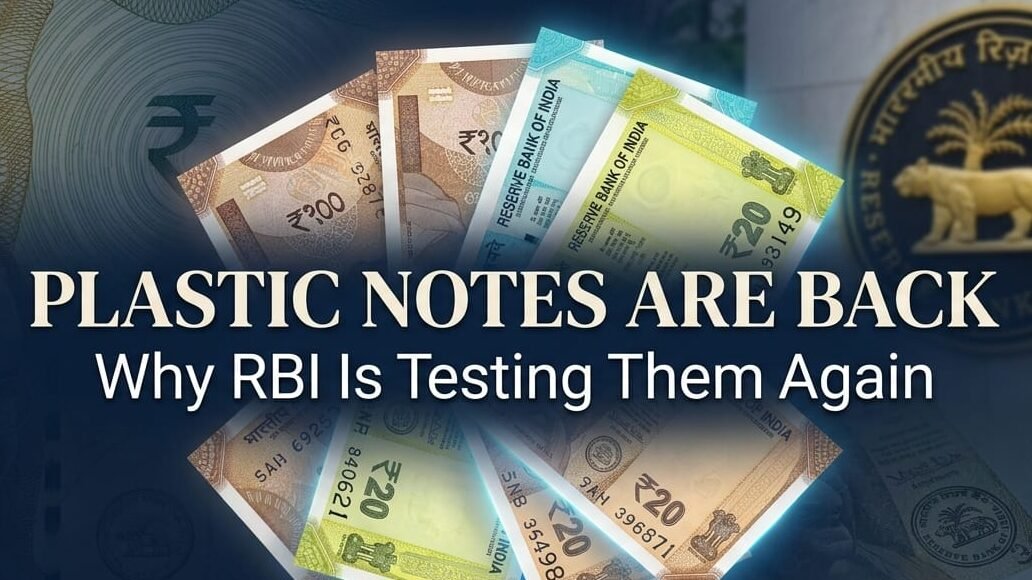
Why RBI Wants to Introduce New Polymer Notes
The Reserve Bank of India is reviving its plan to introduce new polymer notes in a phased manner. The primary reason behind this move is durability.
Traditional cotton-based paper notes wear out quickly because they pass through millions of hands every day. As a result, the RBI has to spend a substantial amount on printing replacement notes.
Polymer notes, which are made from a special type of plastic, are known to last three to four times longer than conventional paper notes. This could significantly reduce printing and replacement expenses over time.
Apart from durability, polymer notes also offer advanced security features, making them harder to counterfeit.
Environmental Benefits of New Polymer Notes
Another important reason behind the proposed shift is sustainability.
Paper currency production requires cotton cultivation, water usage, and agricultural inputs such as pesticides. Since new polymer notes have a much longer lifespan, the overall environmental footprint associated with currency production could decline in the long run.
Because these notes remain in circulation for a longer period, fewer replacement notes are needed, reducing the pressure on resources used during manufacturing.
Which Currency Notes Could Change First?
The RBI is not planning an immediate nationwide rollout.
Instead, the central bank is expected to begin with lower denominations, particularly ₹10 and ₹20 notes. These notes circulate most frequently in daily transactions and therefore wear out faster than higher-value denominations.
By introducing new polymer notes in these categories first, the RBI can evaluate their performance under real-world conditions before considering wider implementation.
Five Cities Selected for Testing
The RBI has chosen five cities for the initial trials:
These cities were selected because they represent different geographical and climatic conditions across India.
The trial will help authorities understand how the notes perform in varying temperatures, humidity levels, and daily usage patterns. It will also assess their compatibility with ATM machines and cash-handling systems.
A Look Back at RBI’s Earlier Experiment
Interestingly, this is not the first time India has experimented with polymer currency.
Back in 2012, the RBI conducted a field trial involving approximately one billion ₹10 polymer notes across the same five cities—Kochi, Mysore, Jaipur, Bhubaneswar, and Shimla.
However, the pilot project encountered several operational and technical challenges. One of the major issues was that many ATM machines struggled to consistently identify and dispense polymer notes correctly.
These challenges prevented wider implementation at that time.
Now, with advancements in technology and improved banking infrastructure, the government is once again exploring the possibility of introducing new polymer notes across the country.
What Makes Polymer Notes Different?
Polymer notes come with several advantages:
Because they remain in good condition for longer periods, they can reduce the burden of constantly replacing damaged notes.
Also Read: Major RBI Mobile Wallet Rules Update 2026: Important Limits, Refund & Security Changes Explained
What Happens Next?
At present, the RBI appears to be taking a cautious approach. Rather than implementing the change nationwide immediately, authorities are focusing on testing and evaluating the performance of new polymer notes under different conditions.
If the trials prove successful and operational challenges are resolved, India could gradually move toward a more durable and cost-effective currency system in the coming years.
FAQ
The return of new polymer notes shows that India is once again exploring ways to make its currency system more durable, secure, and cost-effective. Whether the latest trials succeed where earlier experiments faced challenges will be closely watched in the months ahead.
Stay connected with Akhbaar India for more easy-to-understand updates on money, banking, technology, and the developments that could affect your everyday life.
Disclaimer: This article is published for informational purposes only. Readers are advised to verify details from official sources before making any decisions. The website is not responsible for any loss or damage arising from the use of this information.