Malaysia Social Media Ban for Teens: 7 Serious Reasons Why This Controversial Move Could Change Children’s Future
We often complain when Wi-Fi stops working, mobile data slows down, or electricity goes out for even a few minutes. Phones, internet, and social media have become such an important part of our daily lives that many of us cannot imagine living without them. But have we become too dependent on them? This question is now being raised by governments around the world, and Malaysia Social Media Ban for Teens is one of the strongest steps taken so far to address the growing concern.
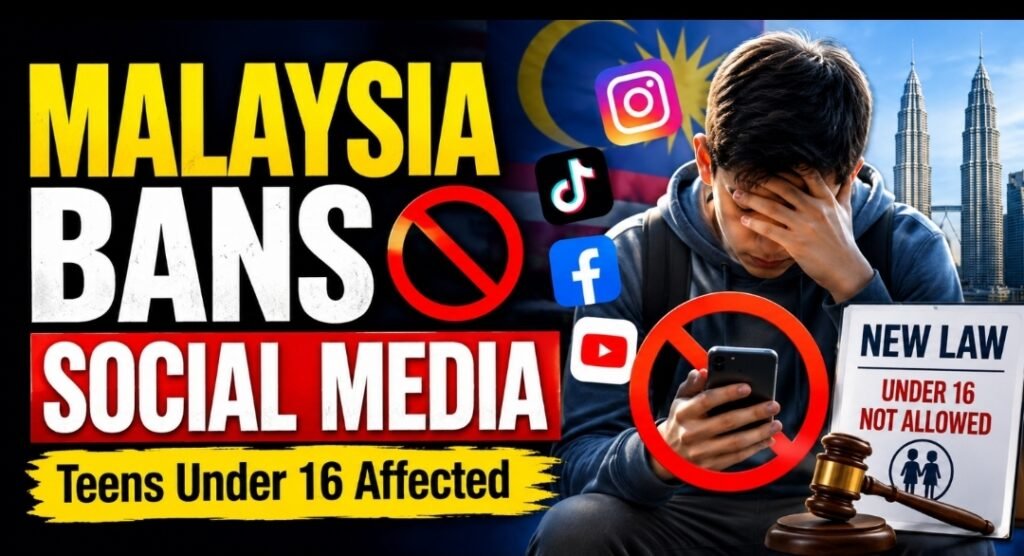
Malaysia Social Media Ban for Teens: A Growing Concern Over Digital Addiction
Questions like these have become common in our daily lives. If there is no internet for even a short time, many people feel frustrated and restless. We often wonder how we will spend our time without scrolling through Instagram, YouTube, Facebook, or other platforms.
The reality is that phones and the internet have become deeply connected to our minds, routines, and daily activities. While technology has made life easier in countless ways, excessive dependence on it is creating new challenges. Many people find it difficult to sleep without checking their phones. Some even wake up in the middle of the night if they think their phone is missing from where they placed it.
This growing attachment to mobile devices has raised concerns about mental health, sleep quality, concentration, and overall well-being. Although most people are aware of these issues, reducing screen time remains difficult. Many cannot imagine keeping their phone or laptop in another room while they sleep.
Why Malaysia Social Media Ban for Teens Has Been Introduced
Recognizing these concerns, Malaysia has taken a significant step to protect young users online.
Under the Malaysia Social Media Ban for Teens, children under the age of 16 are no longer allowed to create or hold social media accounts on platforms such as Instagram, Facebook, TikTok, and YouTube.
The main objective is to protect minors from cyberbullying, online scams, predatory behavior, and mental health risks linked to excessive screen time and addictive platform designs.
Strict Age Verification Rules
Social media platforms with at least eight million users in Malaysia are required to implement strict age-verification systems.
These systems are designed to prevent underage users from opening accounts. Companies that fail to comply with the regulations can face fines of up to 10 million ringgit.
Parents will not be penalized if their children attempt to bypass the restrictions.
What Happens to Existing Accounts?
The Malaysia Social Media Ban for Teens does not only apply to new users.
Existing users identified as being under 16 years old are being phased out of the platforms. Affected users are being given one month to download, transfer, or save their personal data before their accounts are removed.
The Main Goal Behind the Malaysia Social Media Ban for Teens
Authorities believe that social media addiction and platform designs encouraging excessive screen time can negatively affect young minds.
The policy aims to reduce unhealthy psychological pressures, online dependency, and digital habits that may impact children’s development.
Malaysia’s decision places it among a growing number of countries trying to prioritize youth safety over unlimited digital access.
Privacy Concerns and Criticism
Not everyone supports the move.
One major concern involves age verification requirements. Some platforms may require government-issued identification documents such as passports or MyKad cards to verify users’ ages.
Privacy advocates argue that this could create data security risks and raise concerns about how personal information is stored and used.
There are also concerns for stateless individuals, undocumented residents, and young people who rely on online anonymity for personal safety and support.
What Tech Companies Are Saying
Companies such as Meta have warned that the Malaysia Social Media Ban for Teens could unintentionally push teenagers away from regulated platforms and toward less secure or unregulated parts of the internet.
Critics argue that while the goal is positive, enforcement will be challenging and may create new risks rather than eliminating existing ones.
A Debate the Whole World Is Watching
Whether this policy becomes a model for other nations or faces resistance remains to be seen. However, one thing is clear: governments are increasingly questioning how much influence social media should have over young minds.
As screen time continues to rise worldwide, the debate over digital freedom, online safety, and youth protection is likely to become even more important in the coming years.
FAQ
Thank you for reading. As technology continues to shape our lives, staying informed about changes like the Malaysia Social Media Ban for Teens helps us understand where the digital world may be heading next. Visit again for more important global updates explained in simple language
Disclaimer: This article is published for informational purposes only. Readers are advised to verify details from official sources before making any decisions. The website is not responsible for any loss or damage arising from the use of this information.