Japan Mango Import Ban Triggers Fresh Concern for Indian Exporters
India’s premium mango exports have hit an unexpected roadblock after Japan temporarily suspended imports of fresh Indian mangoes. While the move does not affect overall India-Japan trade, it raises serious concerns for exporters, farmers, and India’s efforts to expand into high-value global fruit markets. Here’s what actually happened, why Japan acted, and how this could impact India’s mango industry in 2026.
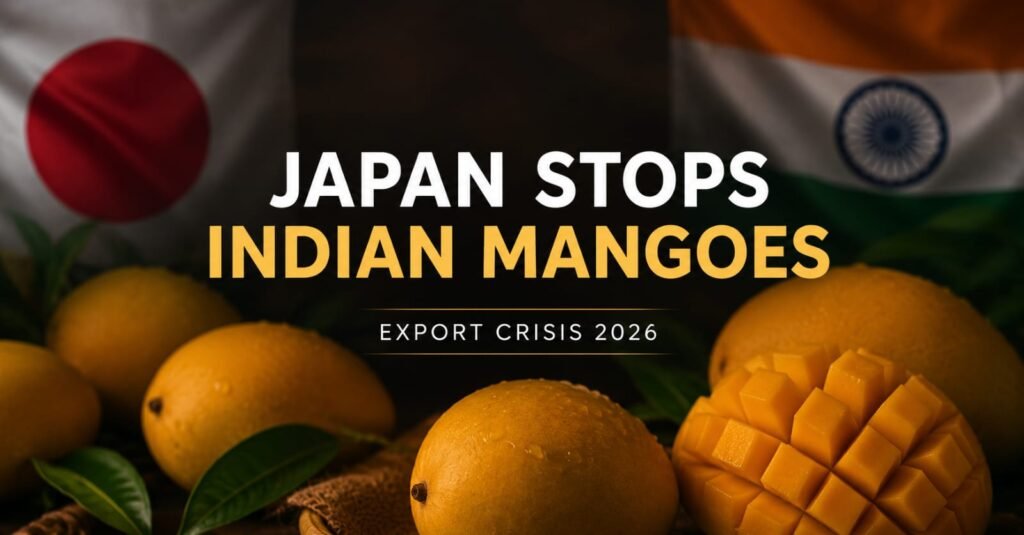
Japan Mango Import Ban Linked to Fumigation Lapses
Japan has not completely stopped importing from India, but it has temporarily suspended imports of fresh mangoes. The Japan mango import ban follows deficiencies in fumigation and disinfection measures flagged by Japanese quarantine officers during an inspection of Indian treatment facilities.
While the mango restriction impacts premium exports like Alphonso, Kesar, Langra, and Banganapalli, general bilateral trade continues as usual. Japan still actively imports billions of dollars worth of Indian goods — including vehicles, organic chemicals, electrical equipment, and pharmaceuticals — under their ongoing economic partnership.
For broader context on the India-Japan relationship, both countries continue strengthening ties across trade, technology, infrastructure, and defense cooperation despite the temporary Japan mango import ban.
Why Japan Suspended Indian Mango Imports
The Japan mango import ban was imposed due to lapses in pest-control and disinfection (fumigation) processes flagged by Japanese quarantine officers during a March facility inspection.
The suspension began abruptly after Japanese authorities rejected shipments certified on or after March 25, 2026. This blocked popular Indian mango varieties from entering the country during the crucial April-to-June export season.
The ban will remain in place until Indian agricultural facilities demonstrate improvements that satisfy Japan’s strict plant quarantine standards. Japan maintains exceptionally strict biosecurity regulations to prevent the spread of invasive pests like fruit flies, having previously invested heavily in eradication programs in Okinawa.
Japan Mango Import Ban Impact on India’s Economy
If Japan halts imports of Indian mangoes, the macroeconomic impact on India remains limited. The Japan mango import ban represents only a tiny fraction of India’s total agricultural trade. However, the restriction creates targeted financial losses for exporters and increases pressure on Indian authorities to upgrade fumigation and phytosanitary treatment protocols quickly.
Direct Financial Loss for Exporters
Japan acts as a niche premium market for Indian mango varieties like Alphonso, Kesar, Langra, and Banganapalli. The sudden halt in export shipments causes localized revenue losses for farmers and exporters in Maharashtra, Gujarat, Andhra Pradesh, Uttar Pradesh, and West Bengal.
Quarantine and Fumigation Friction
The Japan mango import ban is not politically motivated. Instead, it reflects Japan’s strict quality-control standards. Japanese plant quarantine authorities reportedly identified deficiencies in pest-killing disinfection and fumigation procedures at Indian treatment facilities.
India will now need to rectify these compliance gaps before exports can resume smoothly.
Negligible National Economic Impact
India produces nearly half of the world’s mangoes but exports only a small percentage of total production. Most mangoes are consumed domestically. Additionally, Japan imports relatively small quantities of Indian mangoes compared to major markets like the UAE and the UK.
Because of this, the overall economic impact of the Japan mango import ban remains limited at the national level.
Blow to India’s Mango Diplomacy and Export Expansion Plans
Indian agricultural bodies like Agricultural and Processed Food Products Export Development Authority have been actively expanding India’s footprint in East Asian and Western fruit markets. Losing access to Japan — even temporarily — disrupts these export diversification and “mango diplomacy” efforts.
Indian agricultural and commerce authorities are now expected to audit treatment centers and renegotiate clearance protocols to comply with regulations set by Japan’s Ministry of Agriculture, Forestry and Fisheries.
Exporters currently depend on phytosanitary certificates issued by the Directorate of Plant Protection, Quarantine & Storage to clear international shipments.
Also Read: Brutal 71°C Heat at Noi Bai International Airport Turns Hanoi Airfield Into a Blazing “Frying Pan”
What Happens Next?
The future of the Japan mango import ban now depends on how quickly India upgrades its fumigation systems and restores confidence among Japanese quarantine authorities. If corrective measures are implemented rapidly, exports could resume before long-term damage is done to India’s premium mango trade reputation.
For exporters, however, this episode is a reminder that global agricultural trade is no longer driven only by demand — strict compliance and biosecurity standards now matter just as much.
Stay connected for more sharp updates on global trade, export markets, agriculture policy, and business developments shaping India’s economy in 2026.
Disclaimer: This article is published for informational purposes only. Readers are advised to verify details from official sources before making any decisions. The website is not responsible for any loss or damage arising from the use of this information.