Dangerous India Heatwave 2026: India Dominates World’s 50 Hottest Cities Amid Extreme 48°C Temperatures
India is currently facing one of the most dangerous weather events of the year as an intense heatwave tightens its grip across multiple states. From Odisha and Bihar to Uttar Pradesh and Chhattisgarh, temperatures are soaring close to 48°C, leaving millions struggling under relentless heat. With all of the world’s 50 hottest cities reportedly located in India today, concerns over health risks, dehydration, and delayed monsoon conditions are rising rapidly. Here’s a complete look at the ongoing India heatwave 2026 situation, the worst-hit cities, causes behind the crisis, and essential safety measures people must follow.
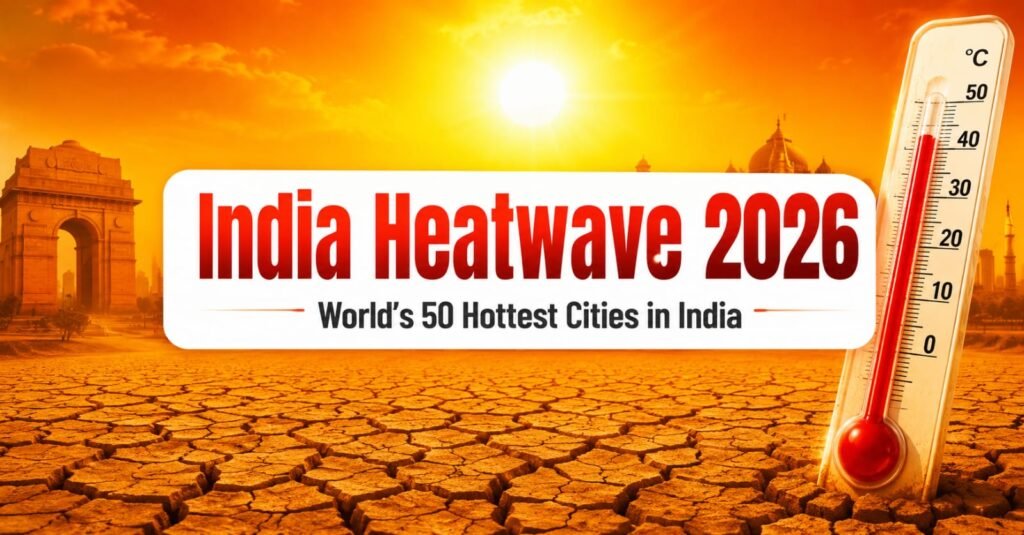
India Heatwave 2026 Pushes Temperatures Beyond 47°C
Due to a severe and persistent heatwave, India accounts for all 50 of the world’s hottest cities today, with multiple locations crossing the 47°C to 48°C mark.
The top 50 hottest locations today include:
Top Hotspots in India Heatwave 2026 (47°C – 48°C)
Northern & Central Hubs Facing India Heatwave 2026 (46°C – 47°C)
Other Regions Affected by India Heatwave 2026 (44°C – 46°C)
Cities across Uttar Pradesh, Haryana, Punjab, Rajasthan, and Uttarakhand, including Haridwar, are also witnessing extremely high temperatures.
The India Meteorological Department has issued red and orange alerts, warning that these “extreme hot” conditions are being driven by clear skies and dry northwesterly winds. Authorities are advising people to stay hydrated, avoid outdoor activities during peak afternoon hours, and follow local safety advisories.
Why India Heatwave 2026 Became So Severe
All of the world’s 50 hottest cities are currently located in India due to a widespread and persistent heatwave sweeping across the country.
According to real-time tracking on AQI.in, regions in north, central, and eastern India — particularly Odisha, Bihar, and Uttar Pradesh — are enduring extreme temperatures, with cities like Balangir crossing 45°C.
Meteorologists have pointed to several geographical and atmospheric factors behind the India heatwave 2026 crisis:
Unbroken Sunshine
Flat and low-lying regions in the Indo-Gangetic plains are fully exposed to harsh direct sunlight, causing heat to accumulate rapidly.
Dry Hot Winds
The presence of hot, dry, and dusty northwesterly winds, commonly known as the Loo, is significantly increasing temperatures and causing rapid dehydration.
Delay in Pre-Monsoon Rainfall
A temporary lack of pre-monsoon showers and absence of cloud cover means trapped heat cannot escape easily.
Urban Heat Island Effect
In densely populated urban areas, concrete structures, deforestation, and changing landscapes are worsening temperatures further.
Safety Measures During India Heatwave 2026
Doctors strongly advise staying indoors, drinking ORS or fluids every 15–30 minutes, and avoiding direct sun exposure during peak afternoon hours. Vulnerable groups such as children, elderly citizens, and outdoor workers remain at the highest risk.
Personal Survival Measures:
Avoid Peak Sun Exposure
Limit outdoor activity strictly between 12 PM and 4 PM.
Stay Hydrated
Drink water, ORS, lemonade, and other fluids regularly even if you do not feel thirsty.
Wear Protective Clothing
Use lightweight, loose-fitting, and light-colored cotton clothes to reduce heat stress.
Protect Vulnerable People
Check frequently on elderly family members, children, and people with existing health conditions.
Long-Term Solutions to Reduce India Heatwave 2026 Impact
Experts believe Indian cities must adopt urgent climate resilience strategies to reduce the impact of future heatwaves.
Urban Greening
Planting more native and fast-growing trees can significantly reduce urban temperatures and fight the heat island effect.
Cool Roof Technology
Using reflective white paint and cooling materials on rooftops can reduce indoor heat absorption.
Passive Cooling Infrastructure
Cities should develop shaded public transport stops, cool pavements, fountains, and misting systems to lower surrounding temperatures.
Public Hydration Hubs
Free community-run water stations and cooling centers are necessary for outdoor workers and vulnerable citizens.
Severe Heatwave Health Warning Issued
Doctors warn that people should immediately seek medical help if symptoms such as high body temperature, confusion, dizziness, rapid heartbeat, or fainting appear. Heat exhaustion and heatstroke can become life-threatening if ignored.
Despite the dangerous conditions, millions across the country are now waiting for the arrival of the monsoon to finally bring relief from the relentless India heatwave 2026.
As temperatures continue to rise, staying informed and following safety measures can make a major difference. Keep visiting our site for the latest weather alerts, heatwave updates, monsoon tracking, and important public safety news from across India.
Disclaimer: This article is published for informational purposes only. Readers are advised to verify details from official sources before making any decisions. The website is not responsible for any loss or damage arising from the use of this information.