E85 Fuel in India: After E20 Success, Is E85 the Next Big Shift in India’s Fuel Future?
In the time of the crude oil crisis, India is looking forward to solutions to cope with the problem. First, E20 was introduced for vehicles, and after its success, now it is the turn of E85 fuel in India. If you are new, refer to earlier blogs to explore E20.
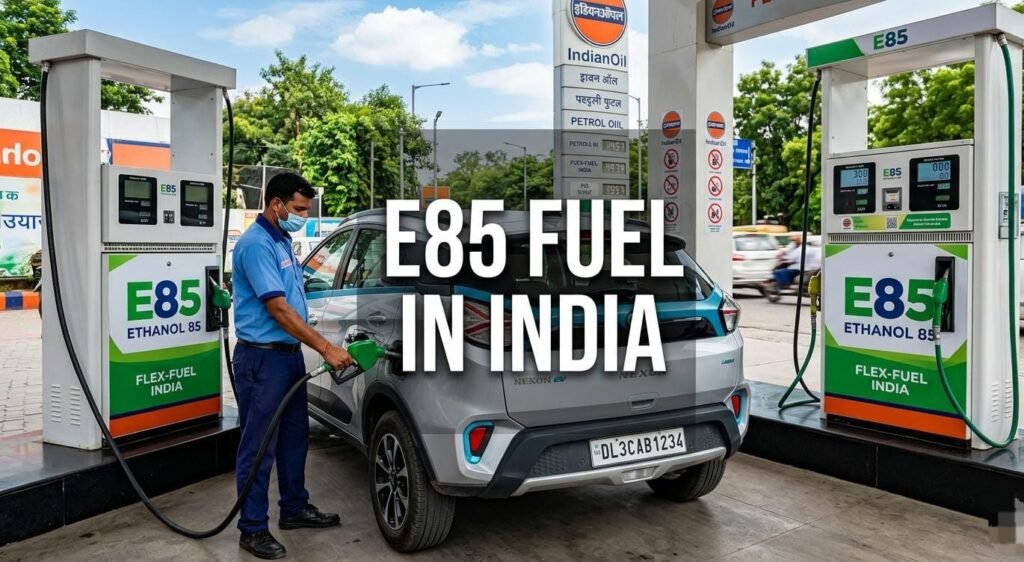
What is E85 Fuel in India and Why Is It Trending?
E85 fuel in India is a biofuel mixture of 85% ethanol and 15% gasoline. It offers higher octane and lower CO₂ emissions and is commonly used in flex-fuel vehicles (FFVs) to reduce oil imports. However, it requires dedicated engine components to prevent corrosion and typically results in lower fuel efficiency compared to pure gasoline.
With India pushing toward cleaner and cheaper alternatives, E85 fuel in India is now being discussed as the next major upgrade after E20.
Key Aspects of E85 Fuel in India
Composition
A blend of 85% ethanol and 15% petroleum, though the blend can vary, particularly in countries like the US.
Engine Requirements
Standard vehicles cannot use E85 fuel in India. Only dedicated flex-fuel vehicles (FFVs) or vehicles with approved conversion kits can run on it.
Fuel Efficiency
Ethanol contains less energy per liter than gasoline, generally resulting in lower mileage and higher fuel consumption.
Performance
The high octane content of E85 (often over 100) allows better performance and higher engine efficiency, especially in turbocharged engines.
India Focus
India is moving towards E85/E100, building on E20 success, to boost the rural economy (sugarcane and maize farmers) and reduce crude oil imports.
Advantages of E85 Fuel in India
Performance Booster
Due to its high octane rating (100–105) and cooling effect, E85 acts as a power adder for turbocharged vehicles, offering around a 10–12% increase in horsepower and torque.
Environmentally Friendly
Ethanol is a renewable resource, producing cleaner and lower greenhouse gas emissions compared to standard petrol.
Cost Benefit
E85 is often cheaper than premium petrol, which can benefit high-mileage drivers, although lower fuel efficiency offsets this advantage.
Cleaner Engine
High-ethanol fuel helps keep engine internals and fuel systems cleaner over time.
Disadvantages of E85 Fuel in India
Lower Fuel Economy
E85 contains less energy per volume than gasoline, leading to a 20–30% drop in mileage.
Limited Availability
Refueling stations for E85 fuel in India are currently limited compared to regular petrol pumps.
Vehicle Compatibility
Only Flex-Fuel Vehicles (FFVs) are designed to use E85, making it inaccessible for most current car owners.
Cold Start Issues
E85 can cause difficulty in starting vehicles in very cold weather conditions.
Fuel Degradation
E85 can degrade over time, leading to contamination if the vehicle is not used frequently.
Important Considerations Before Using E85 Fuel in India
Engine Maintenance
E85 can contaminate engine oil faster, requiring more frequent oil changes.
Percentage Variation
The ethanol percentage can drop to around 50% in winter to improve cold starting performance.
Compatibility Warning
Most petrol cars in India today are only certified for E20 fuel. Using E85 fuel in India in such vehicles can cause serious engine damage.
Also Read: E20 Petrol Rule From April 1, 2026: Big Fuel Shift in India — Will Your Vehicle Be Ready?
How to Identify an E85-Compatible Car?
If you are planning to switch, here’s how you can confirm whether your car supports E85 fuel in India:
Yellow Fuel Cap: A common sign of flex-fuel vehicles
VIN Number: In many models, the 8th digit of the VIN indicates flex-fuel compatibility
Is India Ready for E85 Fuel?
India’s push toward ethanol blending is not just about fuel—it’s about reducing dependency on imports and strengthening rural income. While E85 fuel in India promises performance and environmental benefits, infrastructure, vehicle compatibility, and awareness remain key challenges before mass adoption.
E20 was just the beginning—E85 could be the real game changer, but only if India gets the ecosystem right.
Would you switch to E85 fuel if it becomes widely available in India, or are you concerned about mileage and compatibility? Share your thoughts in the comments!
Disclaimer: This article is published for informational purposes only. Readers are advised to verify details from official sources before making any decisions. The website is not responsible for any loss or damage arising from the use of this information.