Delhi Vehicle Entry Rules 2026: 5 Crucial Restrictions That Could Cause Trouble for Drivers
If you are planning to visit Delhi for a business tour, catch an international or domestic flight, or travel for personal reasons, there is one important thing you must check before leaving: your vehicle’s BS emission standard.
From November 1, 2026, Delhi has implemented stricter winter pollution-control measures restricting the entry of certain out-of-state vehicles. The restrictions will remain in force until January 31, 2027. Whether you are travelling from Noida, Gurugram, Faridabad, Ghaziabad or another state, knowing these rules beforehand can help you avoid inconvenience, border checks and possible penalties.
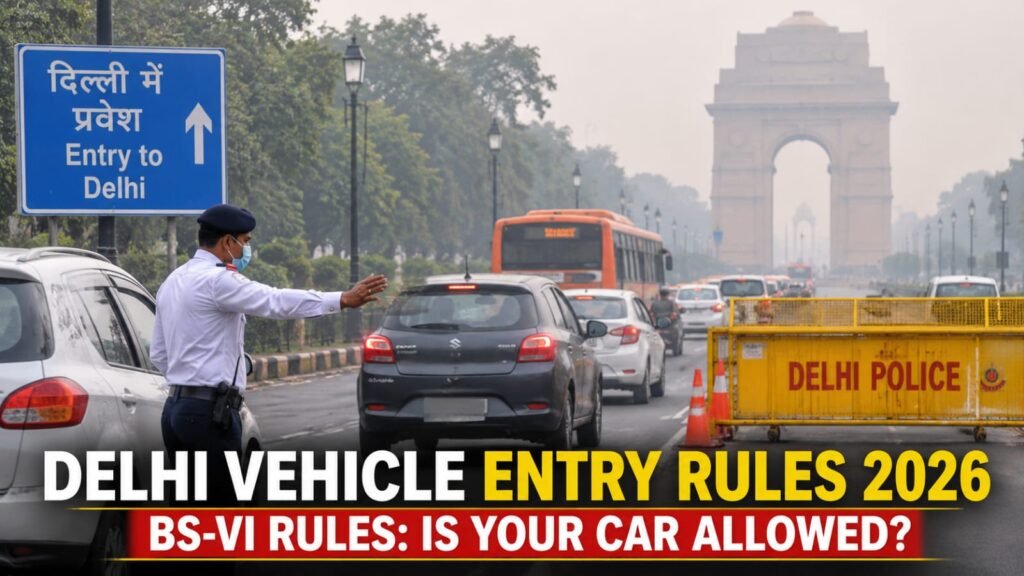
Delhi Vehicle Entry Rules 2026: Which Vehicles Are Allowed and Banned?
Under the new winter pollution-control directions, non-BS-VI petrol and diesel vehicles registered outside Delhi are not permitted to enter or operate in the capital during the specified period.
Vehicles allowed in Delhi:
Vehicles facing restrictions:
The restrictions also cover vehicles registered in neighbouring NCR cities, including Noida, Gurugram, Faridabad and Ghaziabad. However, Delhi-registered vehicles and certain exempted categories are treated differently under the notified directions.
No PUC, No Fuel: Another Important Rule for Vehicle Owners
Apart from emission standards, carrying a valid Pollution Under Control Certificate (PUCC) is one of the essential rule of Delhi Vehicle Entry Rules 2026.
Delhi follows a strict ‘No PUC, No Fuel’ policy. Vehicles without a valid PUC certificate will not be supplied fuel at petrol pumps, CNG and LPG stations under the notified directions.
Even if your vehicle meets BS-VI standards, make sure your PUC certificate is valid before planning your journey.
Delhi Vehicle Entry Rules 2026: How Will Delhi Police Check Your Vehicle’s BS Norms?
Delhi Traffic Police and transport authorities are using digital verification and enforcement systems to identify non-compliant vehicles.
Here is how the verification process works:
These digital checks are an important part of enforcing the Delhi vehicle entry rules 2026 and identifying vehicles that do not meet the required emission standards.
Will You Get a ₹20,000 Challan for Violating Delhi Vehicle Entry Rules 2026?
Driving a prohibited vehicle into Delhi can lead to enforcement action and penalties under the applicable laws and orders.
However, the ₹20,000 figure should not be treated as a confirmed flat challan for every BS-III or BS-IV entry violation. Delhi Traffic Police’s published penalty schedule lists different penalties for different offences. The applicable penalty depends on the specific violation and legal provision.
Missing or expired PUC: Driving without a valid PUC can attract penalties under the Motor Vehicles Act. The ₹10,000 penalty is commonly associated with pollution-certificate violations, subject to the applicable provision.
End-of-Life Vehicles: Separate restrictions apply to diesel vehicles older than 10 years and petrol vehicles older than 15 years in Delhi-NCR. These rules are independent of the seasonal BS-VI entry restriction. Such vehicles can face enforcement action, including seizure where legally applicable.
Also Read: Are India Nepal Travel Rules 2026 Becoming Strict? 7 Important Updates Every Traveller Must Know
Delhi Vehicle Entry Rules 2026: Major Delhi Borders Where Vehicle Checks May Take Place
If you are travelling from neighbouring states, pay attention to these important entry points:
Enforcement is also being strengthened at other identified entry points and toll plazas.
Frequently Asked Questions (FAQs)
Before you plan your next trip to Delhi, check your vehicle’s emission category and PUC validity. A little preparation can save you unnecessary delays at the borders. Keep following Akhbaar India for important travel updates, traffic rules and news that matter to you
Disclaimer: This article is published for informational purposes only. Readers are advised to verify details from official sources before making any decisions. The website is not responsible for any loss or damage arising from the use of this information.