Census 2027 Begins: 33 Questions Revealed — But Rising Fraud Alerts You Can’t Ignore
As Census 2027 begins across India, millions of households will be surveyed for the first time using digital tools and self-enumeration. But alongside this major national exercise, a surge in scams has raised serious concerns. This blog breaks down everything you need to know—official updates, key questions, and how to stay safe.
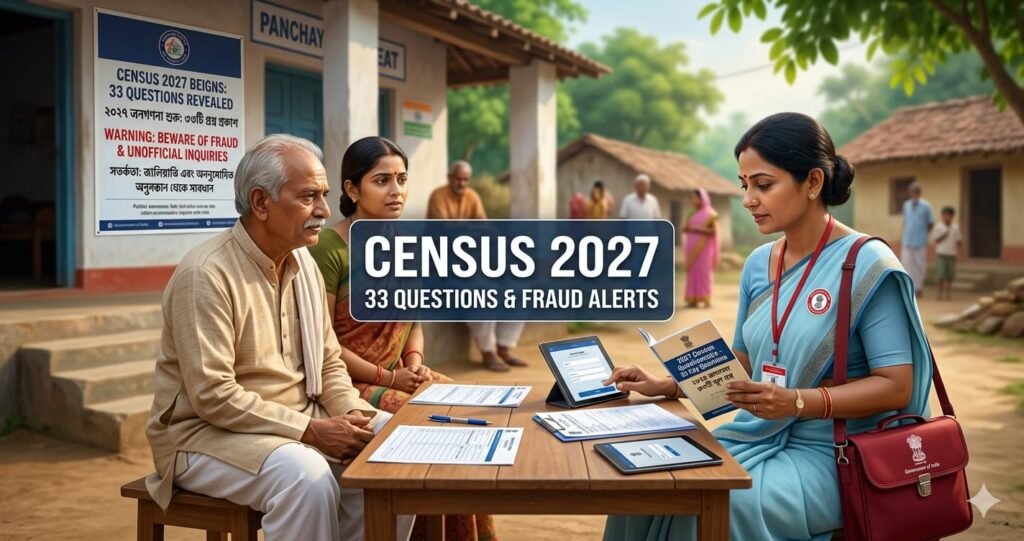
Census 2027 Phase I Starts: What It Means for You
India’s Census 2027 (16th decennial Census) began its first phase, the Houselisting and Housing Census, on April 1, 2026. This phase will continue until September 30, 2026 and focuses on collecting detailed data about housing conditions, amenities, and assets.
For the first time, Census 2027 introduces a Self-Enumeration portal, allowing citizens to fill in their details online. Data collection is also being carried out through a mobile app, marking a major digital shift.
The second phase, Population Enumeration, will take place in February 2027 and will include caste enumeration. The official reference date for Census 2027 is 00:00 hours of March 1, 2027.
Census 2027 Structure: Two Phases Explained
Phase I: Houselisting & Housing (April–September 2026)
This phase of Census 2027 focuses on housing conditions, household amenities, and assets. It includes 33 detailed questions covering everything from construction materials to internet access.
Phase II: Population Enumeration (February 2027)
The second phase of Census 2027 will collect demographic details of individuals, including caste data.
Exceptions: In Ladakh, Jammu & Kashmir, Himachal Pradesh, and Uttarakhand, Population Enumeration will be conducted in September 2026 due to weather conditions.
Census 2027 Begins: Full List of 33 Questions You’ll Be Asked
The Phase I questionnaire of Census 2027 includes:
- Building number
- Census house number
- Floor material
- Wall material
- Roof material
- Use of census house
- Condition of house
- Household number
- Total residents
- Head of household name
- Gender of head
- SC/ST/Other category
- Ownership status
- Number of rooms
- Married couples in household
- Drinking water source
- Availability of water
- Lighting source
- Latrine access
- Type of latrine
- Wastewater outlet
- Bathing facilities
- Kitchen & LPG/PNG availability
- Cooking fuel
- Radio/Transistor
- Television
- Internet access
- Laptop/Computer
- Mobile/Telephone/Smartphone
- Two-wheelers
- Car/Jeep/Van
- Main cereal consumed
- Mobile number (for census communication)
Census 2027 Fraud Alert: Scams Are Rising Fast
As Census 2027 begins, authorities have issued urgent warnings about a surge in census-related fraud. Scammers are impersonating officials through visits, calls, and messages to steal sensitive data.
Common Scam Tactics
Fake Doorstep Visits: Fraudsters posing as “Janganna” officers with tablets
Digital Arrest Scams: Fake video calls pretending to be police or CBI
Phishing Links & Apps: Messages with harmful links or apps like AnyDesk or TeamViewer
Threats of Lost Benefits: Claims that benefits will be stopped if details aren’t “verified”
How to Identify Genuine Census 2027 Officials
To stay safe during Census 2027, remember:
Verification Tip: Genuine enumerators carry an official ID card with a scannable code. Always verify credentials before sharing any information.
Digital Push in Census 2027: What’s New
The biggest highlight of Census 2027 is its digital transformation. From self-enumeration portals to mobile-based data collection, the process is designed to be faster, more accurate, and citizen-friendly.
However, this digital shift also makes awareness crucial, as scammers are exploiting online platforms.
Census 2027 is one of the most important national exercises shaping India’s future planning and policies. While participation is essential, staying alert is equally important.
Have you or someone you know been contacted for Census 2027 yet? Share your experience in the comments—your story could help others stay safe.
Disclaimer: This article is published for informational purposes only. Readers are advised to verify details from official sources before making any decisions. The website is not responsible for any loss or damage arising from the use of this information.