CBSE Board Exams 2026 Big Shift: Twice a Year Exams, New Pattern & Open-Book Twist—What Every Student Must Know
The CBSE Board Exams 2026 are bringing one of the biggest changes in recent years, from twice-a-year exams to a new competency-based pattern and open-book system. This blog breaks down everything students and parents need to know to stay prepared and ahead.
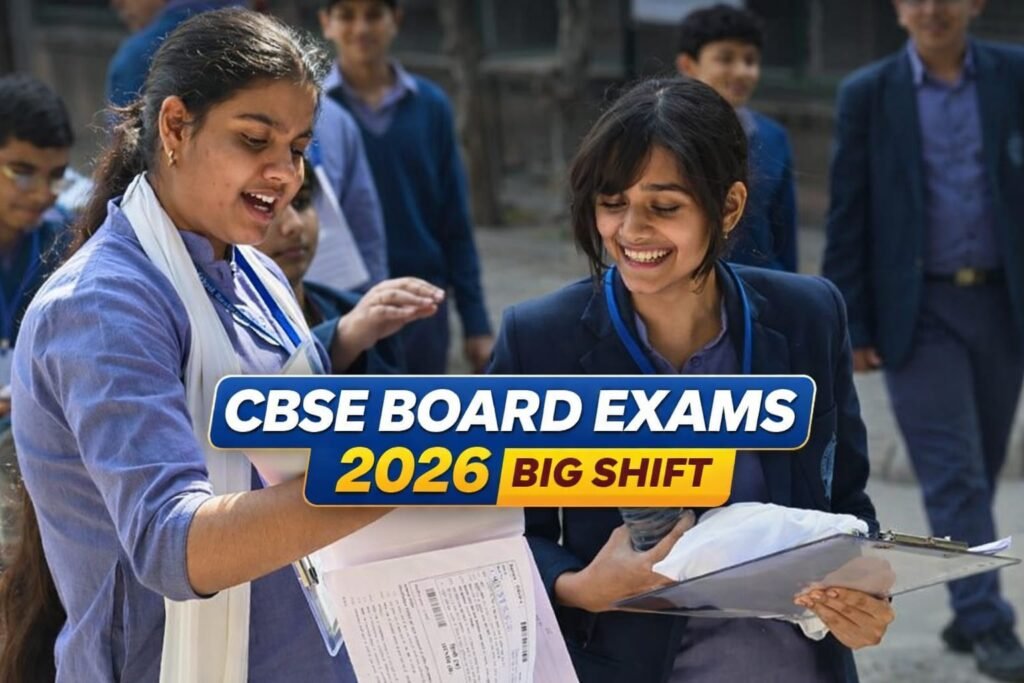
CBSE Board Exams 2026: A Major Transformation Begins
When all sectors are undergoing modification in 2026, the education sector is also witnessing drastic changes—especially in the CBSE Board Exams 2026 pattern. These reforms are set to redefine how students prepare, perform, and succeed in board exams.
Starting in 2026, the CBSE Class 10 board exams will be conducted twice a year, with the first mandatory exam in February and an optional second attempt in May for improvement. The best score from the two attempts will be finalized. The exams will focus more on competency-based questions, with a minimum of 75% attendance required.
Two Board Exams in CBSE Board Exams 2026: What Changes for Students?
One of the biggest highlights of CBSE Board Exams 2026 is the introduction of two exam attempts:
This move is expected to reduce the pressure of a single high-stakes exam and give students more flexibility.
Best of Two System in CBSE Board Exams 2026
Under the CBSE Board Exams 2026, students can improve their scores in up to three subjects in the second attempt. The highest score will be retained.
This “best of two” system ensures that performance is not judged on just one attempt, giving students a fair opportunity to improve and excel.
New Exam Pattern: Focus on Skills, Not Just Memory
The CBSE Board Exams 2026 will introduce a stronger focus on competency-based questions, including:
This shift reduces rote learning and encourages students to understand concepts deeply and apply them in real-life situations.
Eligibility & Attendance Rules in CBSE Board Exams 2026
To appear for the CBSE Board Exams 2026, students must meet the following criteria:
Internal assessment will now carry higher weightage, making regular performance more important than ever.
Digital Tracking with APAAR ID: A New Academic Identity
A major digital reform in CBSE Board Exams 2026 is the introduction of the Pariksha Sangam portal. Every student must register and will be assigned a unique APAAR ID.
This system will help track:
It brings transparency and accountability into the education system.
Open-Book Exams in CBSE Board Exams 2026: A Game Changer?
Another major reform in CBSE Board Exams 2026 is the introduction of open-book exams.
Key Benefits:
This change aligns education with real-world problem-solving skills.
Why CBSE Board Exams 2026 Could Reduce Student Stress
The new system is designed to ease exam pressure:
This approach promotes growth instead of just testing memory.
More Opportunities, Better Outcomes for Students
The CBSE Board Exams 2026 reforms also provide:
These changes aim to create a more balanced and student-friendly education system.
The CBSE Board Exams 2026 are not just a pattern change—they represent a complete shift in how education is approached in India. With a focus on conceptual clarity, flexibility, and reduced stress, students and parents must start adapting early.
What do you think about these big changes in CBSE Board Exams 2026? Will it really reduce stress or create new challenges? Share your thoughts in the comments!
Disclaimer: This article is published for informational purposes only. Readers are advised to verify details from official sources before making any decisions. The website is not responsible for any loss or damage arising from the use of this information.