Can This ₹800 Crore Amul Dairy Expansion Create Thousands of New Jobs and Trigger a Major Boost for Eastern India?
India is often called the world’s largest milk-producing nation, but the real strength behind this achievement is the millions of Indians who consume milk and dairy products every day. From milk and curd to paneer, lassi, yogurt, and shakes, dairy products remain an important part of daily life across all age groups. Now, a major development is taking place in eastern India that shows just how fast this demand is growing.
The latest Amul Dairy Expansion project in West Bengal and Assam is not only increasing milk processing capacity but also creating opportunities for farmers, businesses, and job seekers across the region.
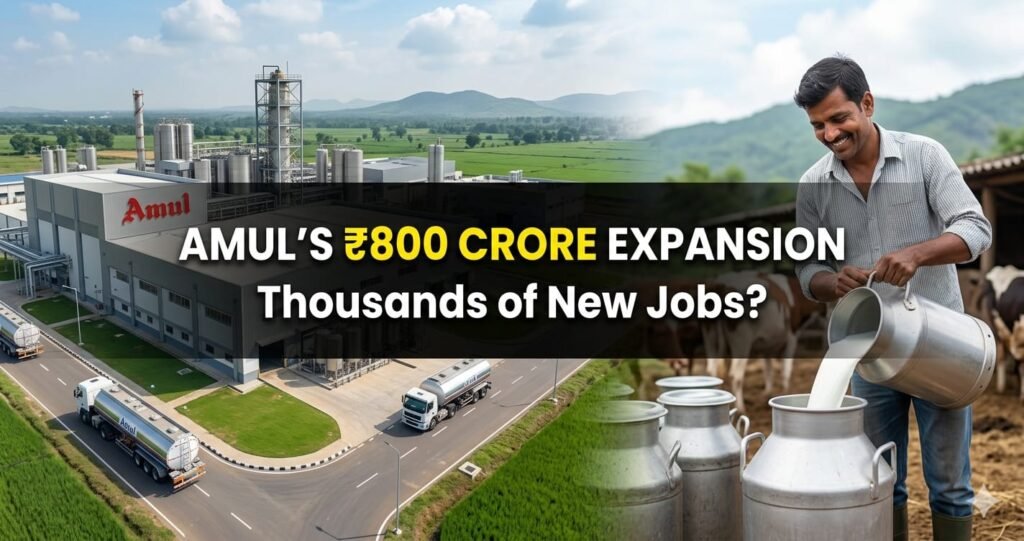
Amul Dairy Expansion Gets a Massive ₹800 Crore Boost
To meet the rapidly increasing demand for dairy products in eastern and northeastern India, Amul is investing around ₹800 crore in new infrastructure.
The biggest part of this investment is a ₹650 crore integrated dairy plant being developed at Sankrail Food Park in Howrah, West Bengal. The facility is expected to become the world’s largest curd manufacturing unit.
Amul already sells more than 10 lakh litres of milk daily in West Bengal. With the new project, the processing capacity will increase to around 15 lakh litres of milk per day, helping the company meet the growing appetite for dairy products in the region.
Why Bengal’s Love for Curd Is Driving Growth
West Bengal has a strong tradition of consuming dairy products, especially local favorites such as Tok Doi and Mishti Doi.
Because of this strong consumer demand, the new facility is expected to produce around 10 lakh kilograms of curd daily. This highlights how the Amul Dairy Expansion is being designed to serve regional tastes while strengthening the organized dairy sector.
As more consumers shift toward branded and quality-controlled dairy products, the demand for large-scale processing facilities continues to rise.
How Farmers Will Benefit From This Amul Dairy Expansion Project
One of the most important aspects of the project is its direct connection with dairy farmers.
The plant is expected to procure milk from more than 1.2 lakh dairy farmers across 14 districts of West Bengal. Farmers will receive direct bank payments, reducing dependence on middlemen and improving transparency in the supply chain.
This part of the Amul Dairy Expansion could provide long-term support to rural households that depend on dairy farming for income.
New Jobs and Business Opportunities Expected
The project is expected to generate thousands of direct and indirect employment opportunities in manufacturing, logistics, transportation, distribution, and retail operations.
For people interested in entering the dairy retail business, this may also be an attractive opportunity.
Amul outlets generally require an investment ranging from approximately ₹2 lakh to ₹6 lakh, depending on the format and location.
Typical earnings include:
A major advantage is that Amul does not take a share of the retailer’s monthly profits. Entrepreneurs can begin with an Amul Preferred Outlet or an Ice Cream Parlour depending on their budget.
Amul Is Expanding Beyond Traditional Dairy Products
The company’s strategy is not limited to milk alone.
Alongside traditional dairy products, Amul is increasingly focusing on value-added categories such as frozen foods, pizza products, and high-protein health beverages. This allows the brand to reach a wider urban customer base while responding to changing consumer preferences.
The ongoing Amul Dairy Expansion in eastern India reflects this broader strategy of strengthening distribution networks and introducing new product categories.
The new dairy plants in West Bengal and Assam could become a turning point for eastern India’s organized dairy sector. Farmers may gain better market access, consumers may get improved product availability, and local economies could benefit from fresh employment and business opportunities.
As the Amul Dairy Expansion continues to grow, it will be interesting to see how strongly eastern and northeastern India contribute to the next phase of India’s dairy story.
Frequently Asked Questions (FAQ)
Stay connected for more business, agriculture, and economy updates that directly impact everyday consumers and entrepreneurs.
Disclaimer: This article is published for informational purposes only. Readers are advised to verify details from official sources before making any decisions. The website is not responsible for any loss or damage arising from the use of this information.