Are 32 Million Sterile Mosquitoes a Brilliant Solution or a Risky Experiment? 5 Surprising Facts About Mosquito Population Control
Can Breeding Sterile Mosquitoes Really Help Stop Dangerous Diseases?
For years, humans searched for ways to kill mosquitoes using repellents, sprays, and chemical treatments. Now, something even more surprising is happening. Instead of destroying mosquitoes directly, scientists are breeding millions of them in laboratories and releasing them into the wild.
At first glance, it sounds like a mystery. Why would anyone raise mosquitoes only to release them later? The answer lies in a new disease-control strategy that aims to reduce mosquito populations without relying heavily on chemicals. Google’s life sciences division, Verily, believes this approach could help fight dangerous diseases while offering a more environmentally sustainable alternative.
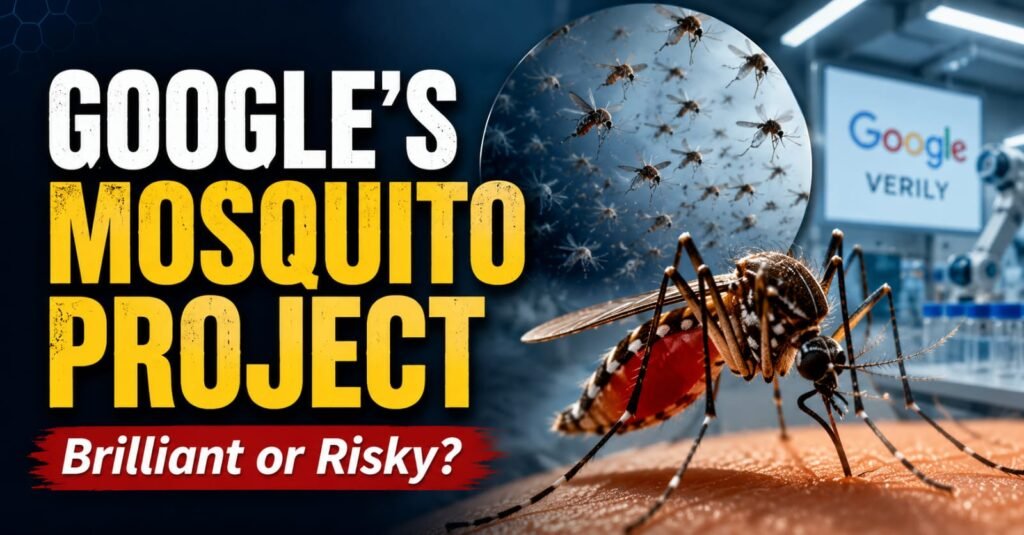
Sterile Mosquitoes Proposal: What Is Google Planning?
Google’s life sciences division, Verily, is seeking federal approval from the U.S. Environmental Protection Agency (EPA) to release up to 32 million sterile mosquitoes across California and Florida over two years.
The goal is to reduce populations of disease-carrying mosquitoes that spread illnesses such as:
The project plans to release approximately 16 million mosquitoes in the first year and another 16 million in the second year.
How Do Sterile Mosquitoes Work?
The strategy uses a naturally occurring bacterium called Wolbachia pipientis.
Scientists breed male mosquitoes in controlled laboratory environments and infect them with Wolbachia. When these males mate with wild female mosquitoes that do not carry the same bacterial strain, the resulting eggs become non-viable and fail to hatch.
Over time, this process can significantly reduce local mosquito populations.
The approach focuses on sterile mosquitoes rather than traditional genetic modification of wild insect populations.
Why Are Only Male Mosquitoes Released?
One of the biggest concerns people have is obvious: will releasing millions of mosquitoes lead to more bites?
The answer is no.
Only female mosquitoes bite humans because they need blood for egg production. Male mosquitoes do not bite humans or transmit diseases.
Verily uses AI-powered robotics to sort and release only male mosquitoes, ensuring that the project does not increase mosquito bites or itchy welts.
Which Mosquito Species Is Being Targeted?
Unlike some earlier projects that focused on Aedes aegypti, this proposal targets Culex quinquefasciatus, a mosquito species known for spreading:
Reducing these mosquito populations could help lower disease transmission risks in affected regions.
Why Scientists Support Sterile Mosquitoes
Supporters believe sterile mosquitoes offer several advantages:
Eco-Friendly Alternative
Traditional chemical insecticides are becoming less effective because mosquitoes are developing resistance.
Using Wolbachia provides a more environmentally sustainable pest-control method.
No Genetic Modification of Wild Populations
The released males simply prevent successful reproduction. The wild mosquito population declines naturally over time without permanently altering the species’ genetics.
Reduced Disease Risk
Fewer disease-carrying mosquitoes may result in lower transmission of viruses that affect public health.
Why Critics Remain Concerned
Not everyone is convinced.
Ecological Unpredictability
Some environmentalists worry about the long-term impact of significantly reducing a species within local ecosystems. Even though certain mosquito species are invasive in urban environments, large population declines could influence predator-prey relationships.
Public Skepticism
Releasing millions of insects naturally raises questions. Critics often compare such interventions to historical ecological mistakes and worry about unintended consequences from human interference with nature.
Difficult to Scale
The program requires sophisticated AI robotics, laboratory breeding facilities, and complex logistics to raise, sort, transport, and release millions of fragile insects.
Not a Complete Solution
Even if successful, sterile mosquitoes will not eliminate every biting insect or every mosquito-borne disease. Experts view the approach as one tool among many in public health efforts.
Current Status of the Project
The EPA is currently reviewing Verily’s request under the Federal Insecticide, Fungicide, and Rodenticide Act (FIFRA).
The agency has also accepted public comments and community feedback as part of the regulatory review process.
The proposal is part of Verily’s larger “Debug” initiative, which has previously conducted localized mosquito-control trials, including projects in Fresno County, California.
Also Read: Dangerous Hantavirus Outbreak 2026 Confirmed on Cruise Ship — What You Must Know Right Now
The Bigger Question
Humanity once focused on finding ways to kill mosquitoes. Now scientists are breeding millions of them to eliminate other mosquito populations.
It sounds surprising, almost like a science-fiction experiment. Yet it reflects how disease control is evolving in a world where traditional solutions are becoming less effective.
Whether this becomes a breakthrough in public health or sparks new environmental debates remains one of the most interesting questions to watch in the coming years.
FAQ
If you enjoy exploring the mysteries behind emerging science, technology, and world-changing innovations, keep visiting our site for more stories that make you look at familiar things in completely new ways.
Disclaimer: This article is published for informational purposes only. Readers are advised to verify details from official sources before making any decisions. The website is not responsible for any loss or damage arising from the use of this information.