Will Rising Fuel Prices Make EV Cars in India 2026 Unavoidable? 5 Powerful Changes Affecting Every Indian
EV Cars in India 2026: Are We Entering a New Era of Transportation?
The year 2026 has brought drastic changes to our lives. Previous years also brought change, but this year has created challenges that many common people are finding difficult to handle. Rising prices, changing weather patterns, natural disasters, and increasing pressure on essential resources are forcing people to rethink how they live and travel.
One thing is becoming clear: the future is becoming more digital, more resource-conscious, and increasingly dependent on alternative energy solutions. Among these changes, EV Cars in India 2026 are witnessing one of the biggest transformations in the transportation sector..
Today, we are discussing whether we should shift to electric vehicles now or wait for later.
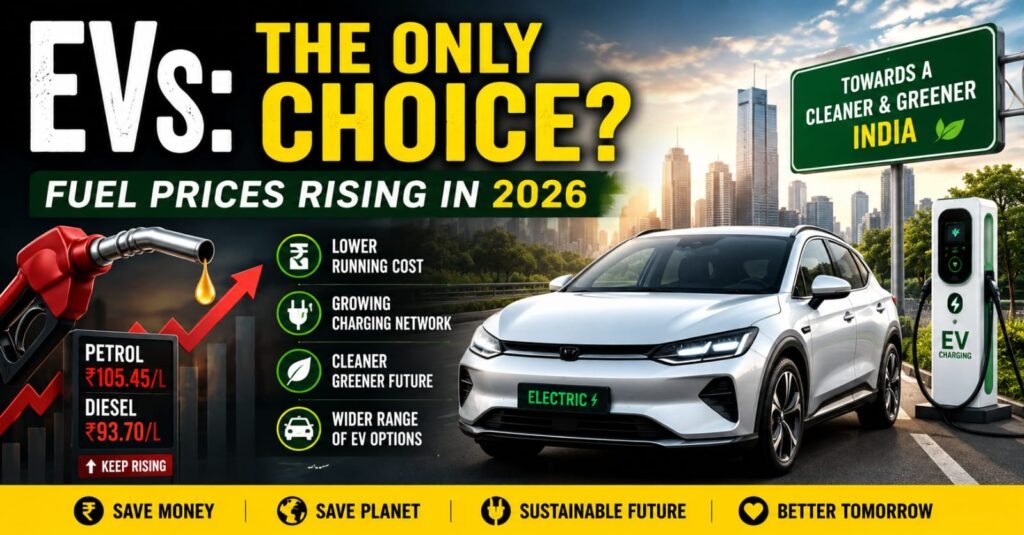
Why EV Cars in India 2026 Are Gaining Attention
The demand for crude oil continues to rise while supply remains under pressure. At the same time, fluctuations in fuel prices, the rupee, gold markets, and other economic factors are affecting household budgets.
Because of this, electric vehicles are no longer being viewed as a luxury or an experimental technology. They are gradually becoming a practical necessity.
Governments are also encouraging cleaner transportation solutions. The focus is now on reducing dependence on petrol and diesel while promoting environmentally friendly alternatives.
Delhi NCR Takes a Major Step Toward Electric Mobility
One of the first visible changes can be seen in Delhi and the NCR region, where EV cabs have been launched for public transportation.
These green cars are available at approximately ₹8 per kilometer, making them an attractive option for many commuters.
This development is being viewed as an important step toward cleaner transportation. As the demand for electric vehicles increases, conventional petrol and diesel vehicles may gradually see reduced demand in the coming years.
Petrol and diesel vehicles are becoming more expensive to maintain, while electric mobility is receiving stronger support from infrastructure and policy initiatives.
EV Cars in India 2026 Are Expanding Across Every Budget
The electric vehicle market in New Delhi and the NCR region now offers a wide range of choices.
Whether someone is looking for a budget-friendly model or a premium vehicle, there are options available across multiple price segments. Electric vehicles are available from around ₹6 lakh and can go beyond ₹30 lakh depending on features and specifications.
These compact vehicles are especially practical for navigating heavy traffic and limited parking spaces in cities such as Delhi, Noida, and Gurugram.
Major Benefits Driving the Growth of EV Cars in India 2026
Significant Cost Savings
Charging an EV is considerably cheaper than filling a fuel tank. In addition, electric vehicles have fewer moving parts, reducing maintenance costs. Expenses such as oil changes and complex exhaust system repairs are largely eliminated.
Better Range and Charging Infrastructure
Earlier concerns about getting stranded with a discharged battery are gradually disappearing.
Advancements in battery technology have increased driving range, while public charging networks continue to expand. Long-distance travel is becoming more practical than before.
More Choices Than Ever Before
Automobile manufacturers are launching hundreds of electric vehicle models worldwide.
Consumers now have access to electric SUVs, hatchbacks, compact city cars, and premium vehicles, providing much greater flexibility than in previous years.
The Shift Is Not Limited to Vehicles
The transformation toward alternative energy is visible in other areas as well.
Commercial gas cylinder prices have recently increased by ₹42 to ₹53.50 per cylinder. As a result, there is growing encouragement to shift toward PNG and other efficient energy solutions.
This indicates a broader trend where both transportation and household energy consumption are moving toward alternatives that can reduce long-term dependence on traditional fuels.
Is It Time to Switch to EV Cars in India 2026?
Electric vehicles certainly have their own drawbacks, including charging time, battery replacement concerns, and charging infrastructure limitations in some areas.
However, it is becoming increasingly difficult to ignore the advantages they offer.
As fuel costs continue to fluctuate and governments invest more in clean transportation, EVs are moving from being an option to becoming an important part of everyday life.
The transition may not happen overnight, but the direction is becoming clearer with each passing year.
Frequently Asked Questions (FAQ)
The future of EV Cars in India 2026 looks increasingly important as fuel costs and environmental concerns continue to influence consumer decisions.
In recent months, many people have started discussing electric vehicles more frequently than before. Rising fuel expenses and the availability of new EV models are encouraging consumers to explore alternatives for their daily travel needs.
What do you think—would you buy an electric vehicle today or wait a few more years? Keep visiting our website for more practical insights on technology, transportation, and the changing world around us.
Disclaimer: This article is published for informational purposes only. Readers are advised to verify details from official sources before making any decisions. The website is not responsible for any loss or damage arising from the use of this information.