Massive Gig Workers Protest in India Sparks Fuel Crisis Fears and Delivery Disruptions
India’s growing gig economy is facing a major crisis as thousands of delivery riders and drivers associated with food delivery and ride-hailing platforms have launched coordinated protests across several cities. The ongoing gig workers protest in India has already triggered app shutdowns, delayed deliveries, and concerns over rising fuel costs, worker safety, and platform pay-outs. With tensions increasing rapidly, the protests are now affecting both consumers and businesses nationwide.
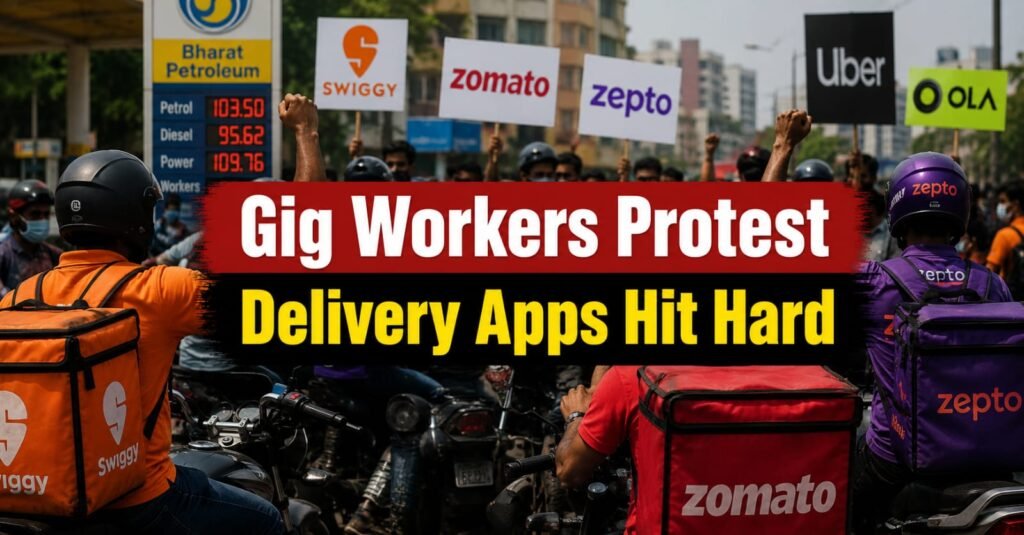
Why the Gig Workers Protest in India Started
The ongoing gig workers protest in India began after a recent ₹3 per litre fuel price hike increased operational expenses for drivers and delivery workers.
Gig workers from platforms like Swiggy, Zomato, Blinkit, Zepto, Uber, and Ola claim that fuel prices and operational costs have increased significantly, while payout and incentive structures remain almost unchanged.
Workers argue that current earnings no longer cover fuel, maintenance, and daily operational expenses.
Core Demands Behind the Gig Workers Protest in India
Minimum ₹20 Per Kilometre Pay
The biggest demand during the gig workers protest in India is a fixed minimum pay rate of ₹20 per kilometer for deliveries and rides.
Fuel-Linked Compensation
Worker unions are also demanding automatic payout adjustments whenever fuel prices rise. According to unions, fluctuating petrol and diesel prices directly impact driver income and should be linked to base payouts.
Safety Concerns Over Ultra-Fast Deliveries
Gig workers have raised concerns over aggressive 10 to 20-minute delivery targets imposed by quick-commerce platforms.
Workers claim these delivery timelines force riders to take risks on roads, compromise safety, and increase accident chances during peak traffic hours.
Massive App Shutdowns Disrupt Delivery Services
The gig workers protest in India has triggered large-scale “log-out” campaigns organized by the Gig and Platform Service Workers Union (GIPSWU).
Peak Hour Shutdown Strategy
Drivers and delivery riders are intentionally taking apps offline during high-demand afternoon windows between 12 PM and 5 PM to maximize disruption.
Major Cities Facing Disruptions
Widespread delivery delays and ride shortages have already been reported in major cities including:
Consumers are experiencing slower food deliveries, fewer ride bookings, and rising wait times across multiple platforms.
Fuel Purchase Limits Creating Additional Panic
Although India currently has no nationwide restrictions on personal fuel refills, several regions and petrol pumps have introduced localized rationing measures due to supply concerns.
Retail Fuel Purchase Limits
In some areas, temporary caps have been introduced to prevent panic buying.
Kerala Fuel Restrictions
Kerala became the first state to impose bulk retail sales caps:
Informal Limits at Local Petrol Pumps
Some fuel stations in regions like Punjab, Bihar, and Chandigarh have independently introduced temporary restrictions such as:
These measures are mainly precautionary and aimed at maintaining supply stability.
Rules for Buying Fuel in Containers
Strict rules apply for consumers purchasing petrol or diesel in containers, drums, or cans.
Small Container Purchases
Most petrol pumps allow only 2 to 5 litres in approved heavy-duty containers. Thin plastic bottles are generally prohibited for safety reasons.
Large Quantity Purchases
Under the Petroleum Act of 1934, purchasing large quantities such as 50 to 200 litres requires:
Rajasthan Petrol Pump Crackdown Exposes Consumer Fraud
A separate fuel-related controversy has intensified concerns during the gig workers protest in India.
Authorities in Rajasthan recently sealed 43 defective fuel nozzles across 25 petrol pumps after inspections found consumers were receiving 30 to 60 milliliters less fuel per five litres purchased.
What Officials Found
State inspection teams discovered that several fuel stations were using tampered or poorly calibrated dispensing systems that collectively cheated consumers out of lakhs of rupees monthly.
Situation in Jaipur
Routine petrol pumps continue operating normally in Jaipur, but any nozzle found defective during inspections has been sealed and taken out of service.
Dealers’ Strike in Bhilwara
In Bhilwara, petrol pump dealers launched an indefinite strike, alleging unethical inspection practices and public defamation during enforcement raids.
The ongoing gig workers protest in India reflects deeper issues within the country’s rapidly expanding app-based economy. Rising fuel prices, stagnant payouts, safety concerns, and growing worker dissatisfaction are now creating disruptions that affect millions of consumers daily.
If negotiations between workers, platforms, and authorities fail, the protests could expand further and impact India’s entire delivery and ride-hailing ecosystem.
Stay connected for the latest updates on gig worker strikes, fuel price changes, delivery disruptions, and major developments shaping India’s digital economy.
Disclaimer: This article is published for informational purposes only. Readers are advised to verify details from official sources before making any decisions. The website is not responsible for any loss or damage arising from the use of this information.