Delhi-NCR’s Powerful Green Transit Revolution 2026: How Electric Buses and E-Rickshaws Are Transforming Travel
Delhi-NCR is witnessing a massive transportation shift as the region aggressively moves toward cleaner and smarter mobility solutions. From thousands of electric buses to over 2 lakh electric auto-rickshaws, the capital region is rapidly building a sustainable public transport ecosystem to fight pollution and improve daily commuting. But Delhi-NCR’s Powerful Green Transit Revolution is not just about ordinary e-buses — advanced technologies like hydraulic suspension buses and green hydrogen buses are now becoming part of the city’s futuristic transit network.
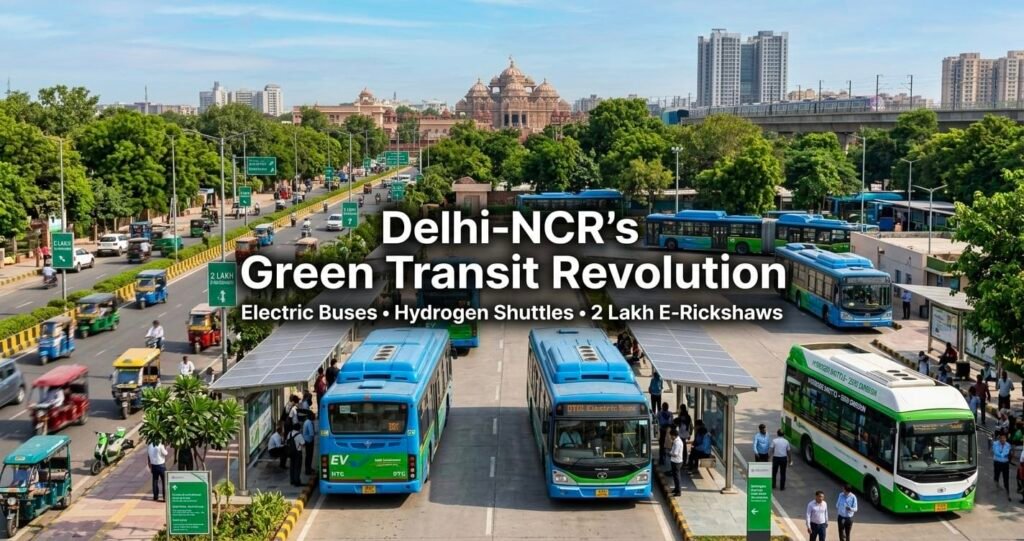
Delhi-NCR’s Powerful Green Transit Revolution Expands Rapidly
Delhi-NCR is aggressively expanding its public transportation system with massive fleets of electric buses and over 2 lakh registered electric auto-rickshaws for last-mile connectivity. While standard electric and CNG buses remain the everyday norm, advanced technologies such as hydraulic-suspension buses and green-hydrogen shuttle buses are also operating across the region.
The government’s strong push toward cleaner mobility has made Delhi-NCR’s Powerful Green Transit Revolution one of India’s biggest urban sustainability projects.
Hydraulic Suspension and Advanced Buses Improve Passenger Comfort
Delhi Transit now includes multiple modern transportation technologies designed for both sustainability and passenger comfort.
Hydraulic Suspension Buses
Premium and specialized low-floor buses, introduced in airport shuttle services and selected DMRC routes, use advanced hydraulic suspension systems to provide smoother and highly comfortable rides. These buses significantly reduce jerks and vibrations, improving the overall passenger experience during long-distance travel.
Green Hydrogen Buses
As part of Delhi-NCR’s Powerful Green Transit Revolution, the Delhi Government has also introduced green hydrogen buses into public transport operations. These buses run on hydrogen fuel and emit only water vapor, making them among the cleanest transportation solutions available today.
The hydrogen-powered buses are currently being used for sustainable shuttle services in key parts of Central Delhi and nearby transit corridors.
Electric Bus Fleet Powers Delhi-NCR’s Powerful Green Transit Revolution
Delhi currently operates thousands of zero-emission electric buses through the Delhi Transport Corporation (DTC). These modern e-buses feature digital ticketing systems, cashless payment options, and app-based route tracking facilities.
Passengers can monitor routes and schedules through the official DTC Delhi platform or via Google Maps transit services.
The continuously growing electric bus fleet has become one of the strongest pillars of Delhi-NCR’s Powerful Green Transit Revolution.
Mohalla Bus Scheme Brings Clean Transport Into Residential Areas
To strengthen neighborhood connectivity, the Delhi Government has expanded its Mohalla Bus Scheme. This initiative introduces compact zero-emission buses into narrow residential streets and underserved areas where large buses cannot operate efficiently.
The scheme improves accessibility while supporting the larger goals of Delhi-NCR’s Powerful Green Transit Revolution.
Electric Autos and E-Rickshaws Drive Last-Mile Connectivity
Electric autos and e-rickshaws now serve as the backbone of last-mile transportation across Delhi-NCR, including Noida, Gurgaon, and Ghaziabad.
Fleet Size
Delhi is widely recognized as the e-rickshaw capital of India, with more than 2,00,000 battery-operated three-wheelers operating throughout the region.
Pricing
Traditional autos usually operate through meters or fixed fares, starting at around ₹25 for the first 2 km and approximately ₹8 per additional kilometer.
E-rickshaws generally charge shared or negotiated flat fares ranging from ₹10 to ₹30 depending on distance and route.
Top Manufacturers
Several major manufacturers dominate the market, including Mahindra & Mahindra, YC Electric, and Piaggio.
Delhi Tightens Rules Under Delhi-NCR’s Powerful Green Transit Revolution
To reduce severe air pollution, Delhi authorities are implementing strict reforms focused on cleaner public transportation and regulated e-rickshaw operations.
Mandatory Electric Transition
The Commission for Air Quality Management (CAQM) has mandated that all newly registered autos must be electric. Older CNG and diesel autos are gradually being phased out to establish a fully electric three-wheeler ecosystem by 2027.
Route Planning and Traffic Management
Delhi authorities are also introducing dedicated operational guidelines for e-rickshaws to reduce traffic congestion, manage bottlenecks, and minimize idle-related emissions.
These reforms are expected to improve the efficiency of the region’s transportation system significantly.
Wider Pollution Mitigation Plans Across Delhi-NCR
Alongside public transport modernization, Delhi’s Air Pollution Mitigation Action Plan includes stricter enforcement measures aimed at reducing vehicular emissions.
“No PUC, No Fuel” Rule
Authorities are enforcing tighter monitoring systems requiring all vehicles to possess valid Pollution Under Control (PUC) certificates. Vehicles without valid certification may face heavy penalties or fuel restrictions at petrol pumps.
No Vehicle Day Initiatives
The government continues promoting carpooling, work-from-home policies, and increased reliance on public transportation to reduce the number of private vehicles on roads.
Why Delhi-NCR’s Powerful Green Transit Revolution Matters
Delhi-NCR’s aggressive push toward sustainable mobility is becoming a major example of how Indian cities can combine technology, innovation, and public transport modernization to tackle pollution. From electric buses and hydrogen-powered shuttles to regulated e-rickshaws, Delhi-NCR’s Powerful Green Transit Revolution represents a major step toward building a cleaner and smarter urban future.
As the city continues investing in zero-emission transportation and eco-friendly infrastructure, commuters can expect safer, cleaner, and more connected travel experiences in the years ahead.
Bookmark our site for more powerful updates on India’s fastest-changing transport, technology, and urban development stories.
Disclaimer: This article is published for informational purposes only. Readers are advised to verify details from official sources before making any decisions. The website is not responsible for any loss or damage arising from the use of this information.