Rising Prices in India April 2026: How Iran-Israel Conflict Is Hitting Every Household
April 2026 is bringing a wave of financial stress for Indians, as global tensions begin to hit household budgets directly. The ongoing Iran-Israel conflict is no longer just a geopolitical issue—it is now a daily struggle for the common man. Rising prices have always been a concern, but the current rising prices in India April 2026 are making survival harder for millions.
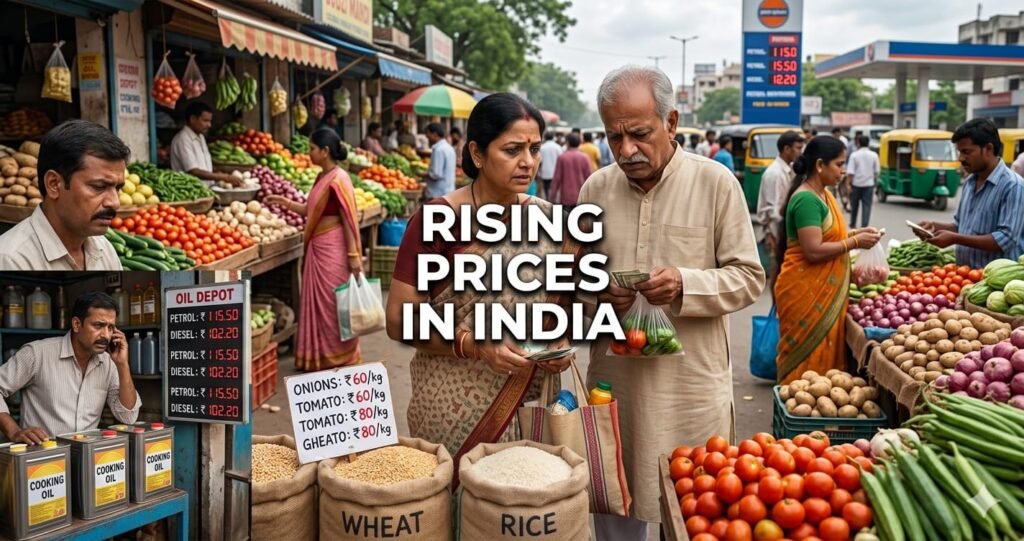
Why Rising Prices in India April 2026 Are Surging Fast
In March 2026, the Iran-Israel conflict triggered significant price increases in India across daily essentials. From groceries to electronics, the impact is widespread. The rising prices in India April 2026 are mainly driven by rising oil prices, higher shipping costs, and supply chain disruptions.
Crude oil remains at the center of this crisis. As prices surge globally, transportation and manufacturing costs in India are increasing sharply, pushing inflation higher across sectors.
Key Price Hikes Indians Are Facing
Plastics & Packaged Goods
Raw material costs have surged by 50–70%, leading to expected 50–60% price hikes in plastic products. Items like food packaging and bottles are becoming significantly costlier. Polyethylene (PE) prices have increased by ₹7,000 per ton, while Polypropylene (PP) has risen by ₹4,000 per ton.
Essential Commodities
Groceries, including cooking oil and snacks, are getting expensive due to higher logistics and raw material costs. Consumers are already seeing higher monthly bills.
Household Items & Appliances
Electrical appliances like ACs and refrigerators have become 8–12% more expensive, driven by rising input costs.
Imported Goods
Products such as dry fruits from the Middle East are seeing price hikes due to logistical disruptions.
Energy Costs
LPG and fuel prices have already increased in early March 2026, directly impacting household budgets.
What’s Driving Rising Prices in India April 2026
Surging Oil and Energy Costs
The conflict in West Asia has pushed Brent crude prices higher. Any disruption in the Strait of Hormuz could keep energy costs elevated, increasing transportation expenses and causing cost-push inflation.
Weakening Rupee (INR)
The rupee has weakened sharply, crossing the 92/USD mark, as investors move towards safer assets. A weaker currency makes imports like oil and cooking gas more expensive, worsening the rising prices in India April 2026.
Rising Packaging Costs (FMCG)
Packaging materials like plastic and cardboard have become 40–50% more expensive due to petrochemical dependency. This directly raises prices of essential goods like soaps, detergents, and packaged foods.
Supply Chain Disruptions
Shipping costs on some routes have increased 3–5 times. Insurance premiums for vessels in the Gulf region have also risen, making imports more expensive and slower.
Commodity Shortages
The conflict has disrupted supplies of fertilizers and raw materials, increasing manufacturing costs for multiple industries.
A Growing Burden on the Common Man
When the currency value falls and the cost of living rises, it becomes a silent economic war for the common man. The rising prices in India April 2026 are not just about inflation—it is about survival.
Households are facing higher grocery bills, rising LPG costs, and increasing electricity expenses. Analysts warn that if the conflict continues, India’s retail inflation (CPI) could rise by up to 1.5 percentage points.
What Lies Ahead?
If the Iran-Israel conflict continues, the pressure on Indian households will intensify. The rising prices in India April 2026 could turn into a long-term economic challenge, affecting savings, consumption, and financial stability.
Are you already feeling the impact of rising prices in April 2026?
Which expense has hit your budget the hardest—fuel, groceries, or electricity?
Drop your answer in the comments—your experience matters more than you think.
Disclaimer: This article is published for informational purposes only. Readers are advised to verify details from official sources before making any decisions. The website is not responsible for any loss or damage arising from the use of this information.