Gold and Silver Investment: What the Ambani-BlackRock Meet Signals for Investors
Mumbai Event Sparks Fresh Debate on Capital Markets
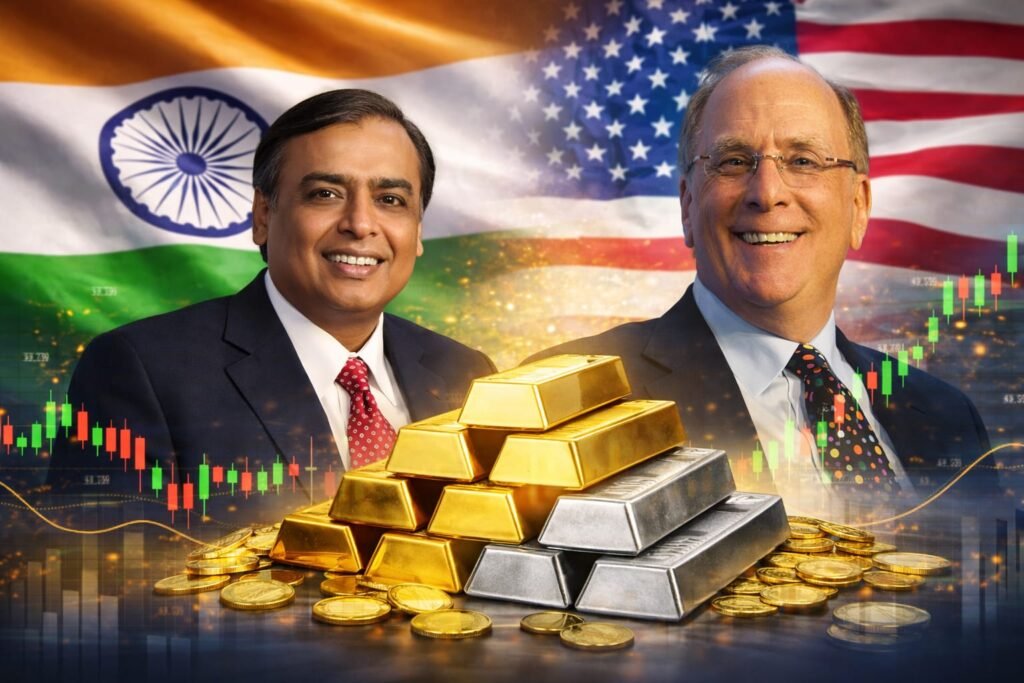
“Investment for a New Era” was a landmark event held on 4 February 2026 in Mumbai, where Reliance Jio Chairman Mukesh Ambani and BlackRock Chairman Larry Fink held an in-depth conversation on the future of Indian capital markets. The discussion focused on how Indians should rethink gold and silver investment, not only for personal growth but also for the nation’s economic development.
Both leaders shared insights on changing investment behaviour, long-term wealth creation, and India’s role in global markets at a time when financial volatility is at its peak.
India-US Trade Deal Sparks Market Rally, Impacts Gold and Silver Prices
On 3 February 2026, the long-awaited India-US trade deal was approved by both countries. The announcement came after US President Donald Trump reduced tariffs by 28%, triggering a strong positive reaction across Indian stock markets.
The Sensex and Nifty surged, while gold and silver prices also reacted sharply. News of a potential change in a US Federal Reserve official added optimism around interest rate adjustments, strengthening both the dollar and the rupee. These factors together created an environment where investors booked strong profits, further influencing gold and silver investment decisions.
China Gold Crash Sends Shockwaves Across Indian Markets
Soon after the rally, reports of a gold price crash in China caused renewed volatility. Indian markets reacted instantly, with the Sensex falling and metal stocks correcting sharply. Gold and silver prices also declined, once again proving how unpredictable gold and silver investment has become in recent times.
This phase highlighted a key reality: markets, metals, and investor sentiment are closely linked, making cautious decision-making essential when investing hard-earned money.
Investment Trends Are Changing, But Risks Remain
Today’s generation is increasingly inclined towards trading-based investments. While trading offers quick returns, experts stress the importance of understanding both its positive and negative sides. Nothing in the market is permanent, and short-term movements can be misleading.
For those focused on gold and silver investment, long-term strategies are considered safer than short-term speculation, as metal prices fluctuate constantly. Poor timing or emotional decisions can lead to losses, especially during volatile phases like the current one.
Why Physical Gold Is Losing Preference
Bank fixed deposits have seen declining interest due to lower returns. Traditionally, Indians preferred physical gold and silver, but Mukesh Ambani highlighted that physical assets do not significantly contribute to economic growth.
India is estimated to hold more gold privately than the Reserve Bank of India, yet this wealth does not actively support the economy. According to Ambani, shifting gold and silver investment towards financial instruments like ETFs and mutual funds can benefit both investors and the country.
What Are Gold and Silver ETFs?
Gold and silver ETFs refer to electronic investments in metals through digital platforms. Investors gain exposure to metal prices without physically holding gold or silver. This allows capital to be utilised for economic development while still offering returns linked to metal prices.
While the final investment choice always rests with individuals, Ambani expressed strong confidence in India’s economic growth and the potential of structured, long-term investments.
Jio–BlackRock Vision: Long-Term Wealth for Indians
Mukesh Ambani, often called the “BlackRock of India,” has a net worth of $102.8 billion. Through the Jio–BlackRock partnership, the aim is to democratise access to ETFs and mutual funds for the common investor.
The focus is on 20–30 years of long-term investing, using digital technology to help Indians participate in capital markets. This approach, experts believe, can generate an average 10% annual growth, ensuring retirement security and reducing dependence on imports in the future.
India’s Economic Journey and the Road to Viksit Bharat 2047
India’s economic transformation began under Dr Manmohan Singh and gained momentum under Prime Minister Narendra Modi’s policies. Today, India stands as the second most influential global participant after China, with the US in third place.
The vision of Viksit Bharat 2047 depends heavily on informed investment choices, responsible participation, and a balanced approach towards assets like gold and silver investment.
These views are based on current developments and expert discussions. Readers should choose what suits them best. Our aim is to provide updated knowledge of the financial world. Keep reading, share your views, and stay informed.