Crude Oil Shortage Panic: Will War Block the Strait of Hormuz and Trigger a Global Energy Shock?
In times of war crisis, everything starts fluctuating — whether it is the stock market, gold and silver prices, crude oil, or petroleum. But what if the supply of crude oil has stopped because of this war?
Industries, factories, and vehicles could halt as their raw material supply gets cut short. The fear of a crude oil shortage is not just speculation — it is a serious concern that could impact daily life across the globe.
Why the Strait of Hormuz Is at the Center of the Crude Oil Shortage Fears
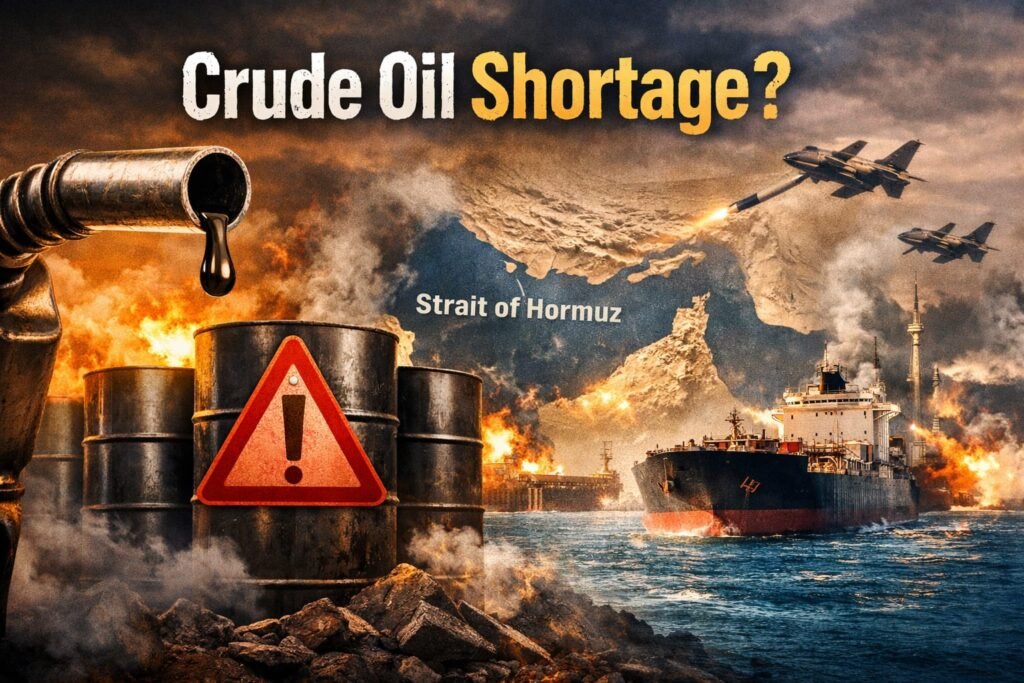
The Strait of Hormuz is the only sea channel linking the oil-rich Persian Gulf with the Gulf of Oman and the Arabian Sea. It is a vital route for global oil and liquefied natural gas exports and is one of the most critical oil chokepoints for the global economy, along with the Strait of Malacca.
Roughly 20 million barrels of crude oil per day move through this narrow corridor, along with large volumes of liquefied natural gas.That accounts for nearly a quarter of global oil trade and about a fifth of global LNG trade, making it one of the most strategically important shipping routes in the world.
Any disruption to traffic through this route can send oil prices soaring, disrupt supply chains, and trigger volatility in global financial markets. This is exactly why the growing tension is intensifying crude oil shortage fears worldwide.
How a Crude Oil Shortage Could Impact India
India is among the countries most exposed to any disruption in the Strait of Hormuz.The country imports more than 85% of its crude oil requirements, and a large portion of these shipments originate from the Middle East and pass through the strait.
India, the world’s third-largest oil importer, imports roughly half of its crude needs through this narrow passage. Its main LNG supplier, Qatar, also uses the same route to ship fuel to India.
New Delhi currently holds about 100 million barrels of commercial crude oil stocks — stored in tanks, underground strategic reserves, and on ships heading toward the country. This could cover roughly 40–45 days of requirement if flows through the Strait of Hormuz are disrupted.
While India has diversification options and inventory buffers, a sustained disruption would materially increase the import bill and create macroeconomic pressures. Oil marketing companies may still source crude from alternate suppliers, but the cost structure would deteriorate sharply due to higher crude prices, longer shipping routes, and rising freight and insurance costs.
In such a scenario, the impact of a crude oil shortage would ripple across the entire energy value chain.
Saudi Arabia’s “Plan B” to Prevent a Crude Oil Shortage
Amid escalating tensions with Iran and reports of disruptions, Saudi Arabia’s state oil giant Saudi Aramco has activated its “Plan B” to ensure continued supplies of petrol and diesel globally.
Following drone attacks near key facilities and stranded ships in the Gulf, Saudi Arabia has begun preparations to use the Red Sea route instead of the Persian Gulf to transport oil reserves, aiming to bypass potential blockades.
Saudi Aramco has contacted Asian importers, asking whether they can source oil from Yanbu Port on the Red Sea instead of the Persian Gulf. However, many companies remain hesitant due to high insurance rates and security risks.
East-West Pipeline: A Strategic Backup
Saudi Arabia also relies on its massive East-West Pipeline — a 746-mile network transporting oil from the eastern oil fields to the western Red Sea coast.
This pipeline has the capacity to transport 5 million barrels per day. Although Saudi Arabia produces around 10 million barrels daily, this pipeline becomes crucial during crisis situations.
Despite alternative routes, challenges remain. The Red Sea route faces threats from Yemen’s Iran-backed Houthi rebels, who have warned of renewed attacks on vessels transiting the region.
Global Ripple Effects of a Crude Oil Shortage
As countries attempt to minimize disruptions caused by geopolitical tensions, major producers like Saudi Arabia and Russia are exploring alternatives to stabilize supply. However, logistical challenges, security concerns, and rising costs continue to create uncertainty.
A prolonged disruption could send oil prices sharply higher, increase inflation, and put pressure on global economies. Financial markets may witness heightened volatility, while transport, manufacturing, and essential services could feel the strain.
The fear of a crude oil shortage is not just about fuel — it is about economic stability, inflation, and everyday life.
The situation remains fluid, and governments are closely monitoring developments. For now, strategic reserves and alternative routes offer temporary relief, but sustained tensions could reshape global energy dynamics.
Do you think India is prepared enough to handle a prolonged crude oil supply disruption? Share your thoughts in the comments below — your opinion matters in this crucial global debate.
Disclaimer: This article is published for informational purposes only. Readers are advised to verify details from official sources before making any decisions. The website is not responsible for any loss or damage arising from the use of this information.