Ghaziabad Property Registration Strike Ends: 5 Major Reliefs for Homebuyers After 20 Days – What Changes From July 1?
After nearly 20 days of uncertainty, there is finally good news for thousands of people waiting to complete their property and marriage registrations. In this blog, we explain why the Ghaziabad property registration strike ended, what the government agreed to, who benefits the most, and what registrations have resumed from July 1, 2026.
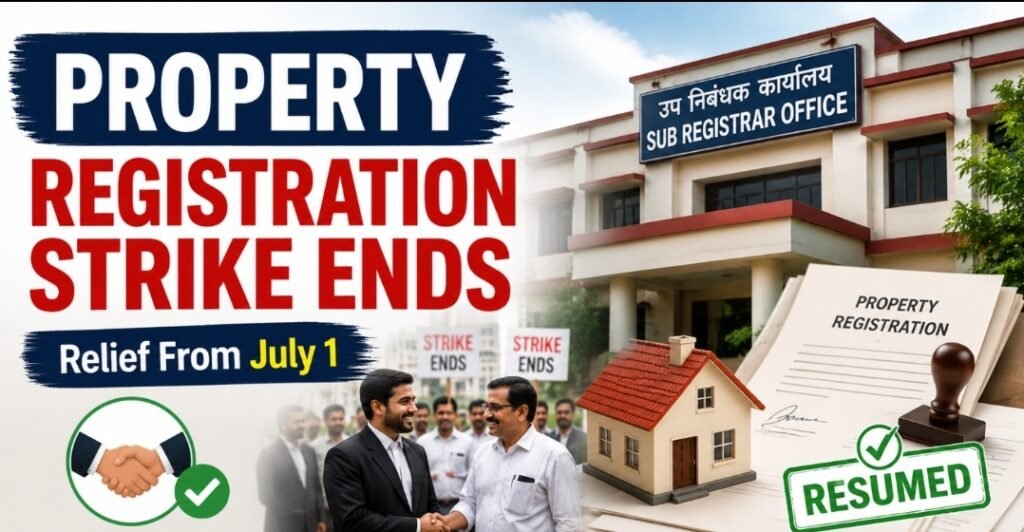
Ghaziabad Property Registration Strike Ends, Registration Services Resume
The Ghaziabad property registration strike has officially ended after nearly 20 days, bringing major relief not only to lawyers and deed writers but also to thousands of citizens whose important registrations had been delayed.
Property registration services resumed from July 1, 2026, after successful negotiations in Lucknow between representatives of the protesting lawyers and deed writers and the Inspector General (IG) of Stamps.
The discussions resulted in the Uttar Pradesh government agreeing to withdraw the controversial e-registration mandate and review the 2024 document registration rules, paving the way for normal registration work to restart.
Why Did the Ghaziabad Property Registration Strike Begin?
The Ghaziabad property registration strike started in early June 2026 after the Uttar Pradesh Registration Department proposed expanding an online e-registration system and assigning parts of the registration process to private agencies.
Lawyers and deed writers strongly opposed the move, arguing that it could threaten their livelihoods while also increasing financial and procedural burdens for the public. The protest quickly spread beyond Ghaziabad to nearby districts, including Hapur and Greater Noida.
Advocates and deed writers demanded that the government withdraw the order and continue the traditional registration process until a mutually acceptable system was introduced.
What Was Decided During the Lucknow Meeting?
The deadlock ended after discussions in Lucknow with the IG of Stamps.
Following the meeting, the government agreed to:
This decision ultimately brought the Ghaziabad property registration strike to an end.
Who Gets Relief After the Strike?
The end of the Ghaziabad property registration strike is expected to benefit a large number of people, including:
For many citizens, registrations delayed for weeks can now finally move forward.
Major Impact of the 20-Day Strike
The prolonged disruption had significant consequences across the district.
Some of the biggest impacts included:
What Happened in Noida, Greater Noida and Gautam Buddh Nagar?
The protest was not limited to Ghaziabad.
Advocates and deed writers in Greater Noida, Dadri and Jewar had also launched an indefinite strike from June 10, 2026, opposing the state’s proposed online direct e-registration system.
The extended protest left thousands of homebuyers unable to complete property registrations.
After around 20 days of disruption across multiple districts, the Uttar Pradesh government amended its policy by limiting e-registration to selected categories. Following this decision, registration work gradually resumed across these areas as well.
However, it is worth noting that the Gautam Buddh Nagar Bar Association had separately faced scrutiny earlier in 2026 over repeated court boycotts. The Supreme Court had directed a committee of the Allahabad High Court to take appropriate action against local bar leaders for repeatedly abstaining from judicial work despite court directions.
Also Read: Property Transaction Rules 2026: 7 Important Changes That Could Trigger Strict Income Tax Scrutiny?
What Should Citizens Do Now?
With the Ghaziabad property registration strike now over, citizens who had pending registrations should contact their respective sub-registrar offices or deed writers to confirm appointment availability and complete pending documentation at the earliest.
As registration services resume, authorities may initially experience higher footfall because of the backlog created during the strike.
The end of the Ghaziabad property registration strike brings welcome relief to thousands of families, homebuyers, legal professionals and businesses affected over the past 20 days. While the government has temporarily withdrawn the disputed e-registration order, future policy discussions may continue. For now, registration work has resumed, allowing long-pending legal and property-related documents to move forward once again.
FAQs
Thank you for reading. Keep visiting our website for the latest updates on government decisions, property news and important public service announcements.
Disclaimer: This article is published for informational purposes only. Readers are advised to verify details from official sources before making any decisions. The website is not responsible for any loss or damage arising from the use of this information.