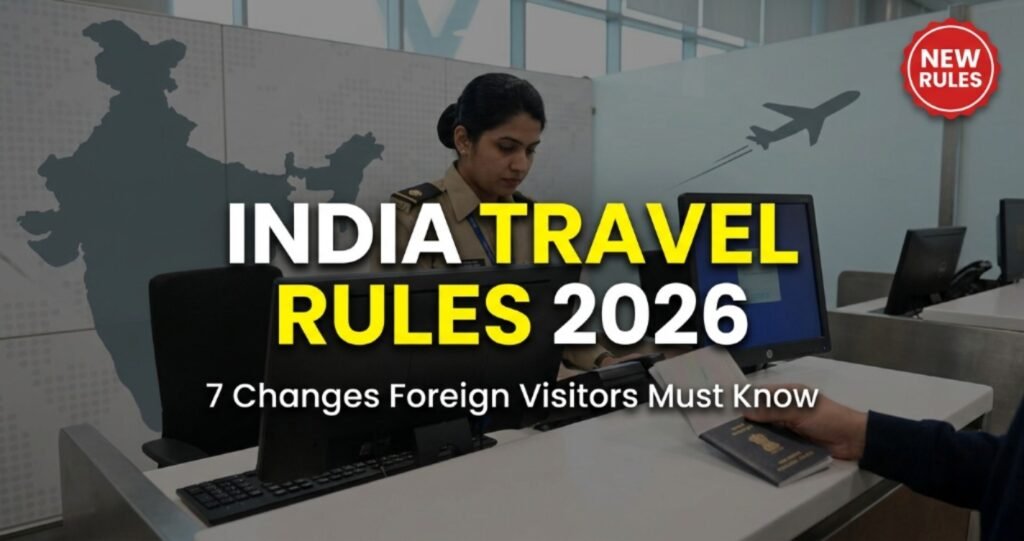
India Travel Rules 2026: 7 Important Changes Every Foreign Visitor Must Know Before Arrival
International travel regulations are evolving across the world as governments strengthen security systems and modernize immigration procedures. India is no exception. The Ministry of Home Affairs has introduced several important updates affecting foreign nationals visiting or staying in the country. From mandatory registration requirements to digital arrival forms and revised baggage allowances, these changes could directly impact travel plans in 2026.
If you are planning a trip to India or have family members living abroad who frequently visit the country, understanding these India Travel Rules 2026 can help avoid unnecessary delays, penalties, or compliance issues.
Foreigners Must Register Before Completing 180 Days of Stay
One of the most significant updates under India Travel Rules 2026 relates to long-term foreign visitors.
According to the revised notification, any foreign national staying in India for more than 180 days must register with the appropriate authorities before the expiry of the 180-day stay period.
Previously, visitors could benefit from a 14-day grace period after crossing the 180-day limit. That grace period has now been removed.
This means eligible foreign nationals must complete registration before their permitted stay reaches 180 days, even if they hold a long-term visa.
FRRO Registration Becomes More Important – India Travel Rules 2026
Visitors required to register must do so through the nearest Foreigners Regional Registration Office (FRRO).
The registration process is intended to help authorities maintain updated records of long-term foreign residents and ensure compliance with visa conditions.
Under the updated India Travel Rules 2026, timely registration is essential to avoid potential legal or immigration complications.
Relief for Children With Foreign Parents
The revised rules also introduce some relief measures for families.
Earlier, parents were required to electronically inform registration authorities within 30 days of a child’s birth to access visa-related services, including fresh visa applications and exit permissions.
However, the updated notification states that this requirement will not apply when one parent is an Indian citizen and the family intends to retain the child’s Indian citizenship.
This change is expected to simplify administrative procedures for many families.
OCI Card Holders and Children Under 12 Get Exemptions
Another important provision under India Travel Rules 2026 is the exemption granted to certain categories.
Overseas Citizen of India (OCI) card holders and children below the age of 12 are exempt from the registration requirement.
This exemption provides convenience for younger travelers and OCI card holders who frequently visit India.
Digital E-Arrival Form Now Mandatory
India is continuing its shift toward digital immigration systems.
All international visitors traveling to India are now required to complete a digital e-arrival form within 72 hours before departure.
The move effectively replaces traditional paper-based arrival forms and is designed to improve efficiency at immigration checkpoints.
Travelers should ensure that all required information is submitted accurately before boarding their flight.
Revised Baggage Rules Bring Higher Duty-Free Limits
The updated India Travel Rules 2026 also include revised baggage and customs provisions.
Key duty-free allowances include:
In addition, jewellery allowances are now determined primarily by weight limits rather than monetary value caps.
These changes aim to provide greater clarity for travelers carrying personal belongings into India.
Currency Declaration and Restricted Area Permits
Travelers carrying foreign currency exceeding the equivalent of US$8,500 must declare it upon arrival using the Indian Customs Declaration Portal.
Meanwhile, visitors planning to explore certain sensitive or border regions must obtain special permits before traveling.
These areas include:
Depending on the destination, travelers may need an Inner Line Permit (ILP) or a Protected Area Permit (PAP).
Obtaining these permits in advance can help prevent disruptions during travel.
Also Read: Citizenship (Amendment) Rules 2026: Game-Changing Digital Shift with Key Restrictions You Must Know
Why These Changes Matter
The latest India Travel Rules 2026 reflect India’s broader effort to strengthen border security, streamline immigration processes, and improve digital compliance systems.
While most travelers will continue to enjoy smooth entry into the country, staying informed about registration requirements, customs declarations, digital documentation, and permit rules can prevent avoidable complications.
For foreign visitors planning extended stays, early preparation will be especially important under the revised framework.
FAQ
Stay connected with us for more updates on travel regulations, immigration changes, global mobility trends, and important policy developments that could affect your next journey.
Disclaimer: This article is published for informational purposes only. Readers are advised to verify details from official sources before making any decisions. The website is not responsible for any loss or damage arising from the use of this information.