Samsung Electronics Strike 2026: Shocking AI Boom Crisis Could Disrupt Global Chip Supply
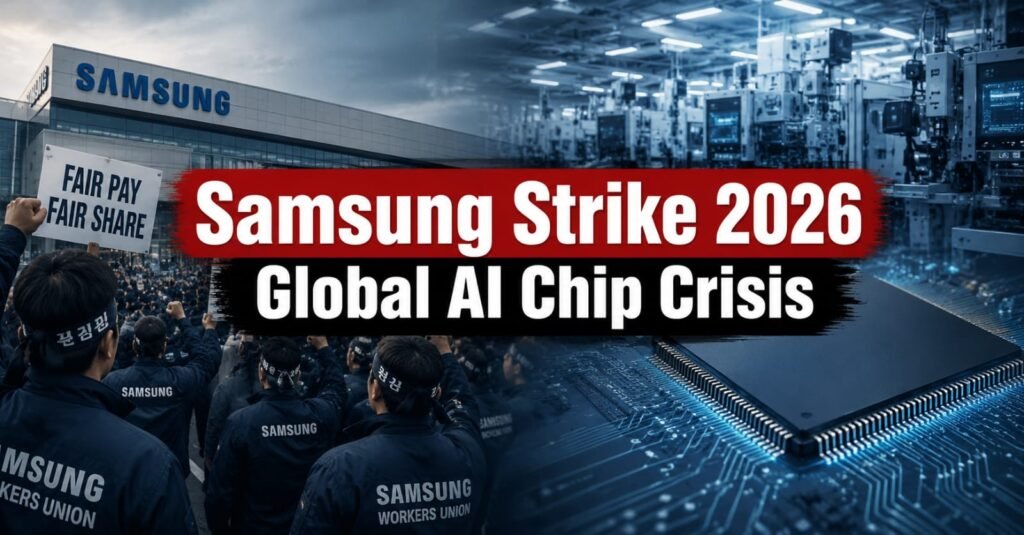
The upcoming Samsung Electronics strike in South Korea is no longer just a labor dispute — it has become a major global tech concern. Over 45,000 workers are preparing for an 18-day walkout beginning May 21, 2026, and the impact could spread far beyond South Korea. From AI data centers to smartphones and laptops, the strike threatens to disrupt the entire semiconductor supply chain. As tensions rise over bonuses, compensation, and profit-sharing during the massive AI boom, the world is now watching Samsung closely.
Why Is the Samsung Electronics Strike Happening?
The massive Samsung Electronics strike is mainly tied to compensation disputes and bonus payouts linked to the booming Artificial Intelligence (AI) industry.
The “AI Boom” Disparity
Samsung has earned enormous profits from the growing demand for memory chips like HBM, which power AI systems and global data centers. However, workers argue that employees have not received a fair share of the profits generated during the AI boom.
Bonus Payout Dispute
Employees claim there is a huge difference in bonus payouts compared to rival chipmakers like SK Hynix. According to the union, Samsung management’s current offers fail to reflect the increased labor, productivity, and business success created by the AI surge.
Compensation Demands
Workers involved in the Samsung Electronics strike are demanding fairer profit distribution and better compensation packages that match the company’s record-breaking semiconductor earnings.
Why the Samsung Electronics Strike Is So Significant
The Samsung Electronics strike could become one of the most disruptive labor actions in global tech history.
Supply Chain Risks
Samsung is the world’s largest memory chip manufacturer. A nearly 45,000-person walkout would mark the biggest strike in the company’s history and could severely impact semiconductor production.
Global Tech Industry Impact
The strike threatens to delay shipments of crucial memory chips required for AI servers, laptops, smartphones, and cloud computing systems. Major technology companies relying on Samsung components are already concerned about possible shortages and delivery delays.
South Korea’s Economic Concerns
The South Korean government fears major economic damage because Samsung contributes heavily to national exports. Officials are reportedly considering emergency arbitration measures if negotiations fail.
Financial Damage From a Prolonged Samsung Electronics Strike
A prolonged Samsung Electronics strike could trigger massive financial losses across the tech sector.
Financial institutions like JPMorgan estimate that extended disruptions could reduce Samsung’s operating profits by more than $14 billion.
Even a single day of halted semiconductor production can result in hundreds of millions of dollars in direct losses.
Delays in memory chip production could slow down AI infrastructure growth worldwide.
Global AI and Hardware Supply Could Face Serious Disruptions
As the world’s leading memory chipmaker, Samsung supplies essential components to major tech firms, cloud providers, and AI chip companies.
A prolonged Samsung Electronics strike may lead to:
Delayed GPU shipments
Longer delivery timelines for laptops and smartphones
AI server shortages
Increased pressure on rival chipmakers like Micron Technology and SK Hynix
The uncertainty could also push global buyers toward competitors, damaging Samsung’s long-term market trust.
Why Samsung Depends So Heavily on Skilled Workers
Semiconductor manufacturing is one of the most complex and precision-driven industries in the world.
Extreme Precision in Chip Manufacturing
Microchip production takes place inside ultra-clean environments where even microscopic dust particles can damage silicon wafers. Skilled employees operate and monitor highly sensitive lithography and etching machines worth millions of dollars.
24/7 Semiconductor Production
Samsung factories run continuously to meet the exploding demand for AI chips, smartphones, and servers. Engineers, operators, and technicians work across multiple shifts to maintain nonstop production.
Quality Control and Engineering Expertise
Human expertise remains essential for inspecting wafers, solving process defects, and improving advanced semiconductor technologies such as 2nm chip production.
Custom Chip Manufacturing
Samsung also develops custom chips for companies like Nvidia and Tesla. This requires highly specialized engineering teams capable of handling unique architectural requirements.
Could the South Korean Government Intervene?
Because Samsung contributes nearly a quarter of South Korea’s exports, government intervention remains a strong possibility.
Authorities may introduce emergency arbitration measures that could temporarily suspend industrial action for 30 days while negotiations continue under government supervision.
If implemented, such measures could help prevent deeper economic damage and stabilize the global semiconductor supply chain.
The Samsung Electronics strike is more than a workplace conflict — it is a warning sign about the growing pressure inside the global AI economy. As companies earn billions from the AI boom, workers are increasingly demanding fair compensation for the labor driving those profits. If the dispute continues for weeks, the effects could reshape the semiconductor industry, global AI infrastructure, and even the South Korean economy itself.
Stay connected for the latest updates on the Samsung Electronics strike, global chip supply disruptions, and major AI industry developments.
Disclaimer: This article is published for informational purposes only. Readers are advised to verify details from official sources before making any decisions. The website is not responsible for any loss or damage arising from the use of this information.