IndiGo Fuel Surcharge Hike 2026: Flights Get Costlier as Strait of Hormuz Crisis Triggers ATF Surge
Rising fuel prices and global tensions are now hitting your travel budget hard—this blog breaks down the IndiGo fuel surcharge hike 2026, explaining why flight tickets are suddenly getting expensive, how new charges are structured, and what it means for domestic and international travelers. You’ll discover the real reason behind the surge, government actions to control fares, and whether prices could rise even further—helping you make smarter travel decisions and avoid unexpected costs.
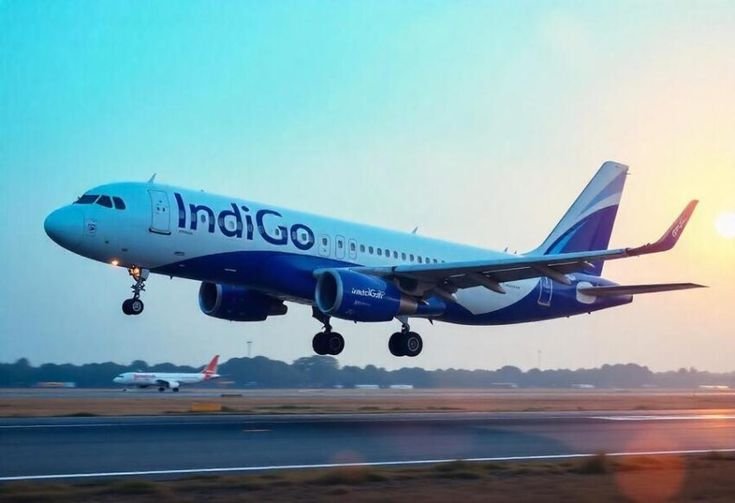
Global Crisis Sparks IndiGo Fuel Surcharge Hike 2026
Due to the closure of the Strait of Hormuz, many ships are waiting for the route to reopen. But the bigger problem for countries worldwide is the rising pressure on fuel supply and prices. This disruption has directly triggered the IndiGo fuel surcharge hike 2026, impacting passengers across domestic and international routes.
As crude oil movement slows, the shortage of fuel and related products is becoming a major concern for the common man, with aviation being one of the first sectors to reflect the impact.
IndiGo Announces Fuel Charge Revision (Effective April 2, 2026)
IndiGo has announced a revision in fuel charges for both domestic and international routes, effective from April 2, 2026, for all new bookings. This move comes in response to a sharp rise in Aviation Turbine Fuel (ATF) prices, which have increased by over 130% month-on-month.
This IndiGo fuel surcharge hike 2026 is a direct reflection of the global fuel crisis now hitting Indian travelers.
New Domestic Fuel Surcharge Slabs (Per Sector)
IndiGo has replaced the previous flat fuel charge with a distance-based structure:
Up to 500 km: ₹275
501–1,000 km: ₹400
1,001–1,500 km: ₹600
1,501–2,000 km: ₹800
Above 2,000 km: ₹950
This revised system under the IndiGo fuel surcharge hike 2026 aims to distribute costs more proportionally based on distance.
New International Fuel Surcharge Slabs (Per Sector)
International routes are seeing a significantly higher increase due to the full impact of rising jet fuel prices:
Indian Subcontinent (up to 500 km): ₹900
Indian Subcontinent (above 500 km): ₹2,500
GCC & Middle East (up to 2,000 km): ₹3,000
GCC & Middle East (above 2,000 km): ₹5,000
Southeast Asia & China (up to 2,000 km): ₹3,500
Southeast Asia & China (above 2,000 km): ₹5,000
Africa: ₹5,000
Greece & Turkey: ₹7,500
UK & Europe: ₹10,000
Clearly, the IndiGo fuel surcharge hike 2026 is much heavier on international travelers.
Why It’s Bad for the Common Man
The immediate impact of the IndiGo fuel surcharge hike 2026 is being felt across all segments:
Higher Travel Costs: Passengers now have to pay more for both domestic and international tickets.
Increased Budget Pressure: With fuel accounting for nearly 40% of airline operating costs, the burden is being passed directly to consumers.
Impact on Middle Class: While disposable income has improved, such hikes may reduce discretionary or “revenge” travel.
International Travel Shock: Ticket prices for long-haul routes like Europe may rise by up to ₹10,000.
Why It’s Not Even Worse (For Now)
Despite the situation, a few factors are helping control the damage:
Partial Pass-Through: IndiGo has clarified that it is not passing the full increase in fuel costs to customers.
Government Intervention: The Ministry of Civil Aviation and Ministry of Petroleum and Natural Gas have allowed only a partial and staggered 25% increase in ATF prices for domestic routes.
Distance-Based Pricing: The new slab system helps reduce the burden on shorter, more common routes.
These steps are slowing down the impact of the IndiGo fuel surcharge hike 2026, especially for domestic passengers.
Is There Hope to Control Fares?
There is some relief—but it may not last long.
The government’s cap on ATF price hikes is currently protecting domestic flyers.
IndiGo’s recalibrated slab system ensures a more balanced fare increase.
However, IndiGo has already warned that if fuel prices continue to rise due to ongoing instability in West Asia, further fare increases may be unavoidable. The IndiGo fuel surcharge hike 2026 could just be the beginning.
Why Are Prices Rising So Fast?
The root cause lies in geopolitical instability in West Asia. The disruption in oil supply chains has pushed crude oil prices sharply higher.
Unlike some global carriers, IndiGo typically does not hedge fuel costs. This makes it highly sensitive to sudden price spikes, leading to immediate surcharges for passengers under the IndiGo fuel surcharge hike 2026.
A Growing Concern for Everyone
While countries are trying to find solutions, the shortage of crude oil and rising costs of related products remain a serious concern for the common man. From flight tickets to daily essentials, the ripple effect is just beginning.
What do you think about the IndiGo fuel surcharge hike 2026? Will this change your travel plans? Share your thoughts in the comments!
Disclaimer: This article is published for informational purposes only. Readers are advised to verify details from official sources before making any decisions. The website is not responsible for any loss or damage arising from the use of this information.