PNG Mandatory in India 2026: 90-Day Deadline to Switch or Lose LPG – Big Energy Shift Explained
Rising Global Tensions Trigger Big Energy Moves
In the wake of rising Middle East tensions and global supply disruptions, energy security has become a critical concern for every country. One of the biggest challenges emerging from this situation is access to gas — a key source for cooking, daily needs, and economic stability.
India is now taking a decisive step to reduce dependency on imports and strengthen its internal infrastructure. The government’s latest move around PNG becoming mandatory in India in 2026 is set to impact millions of households across urban areas.
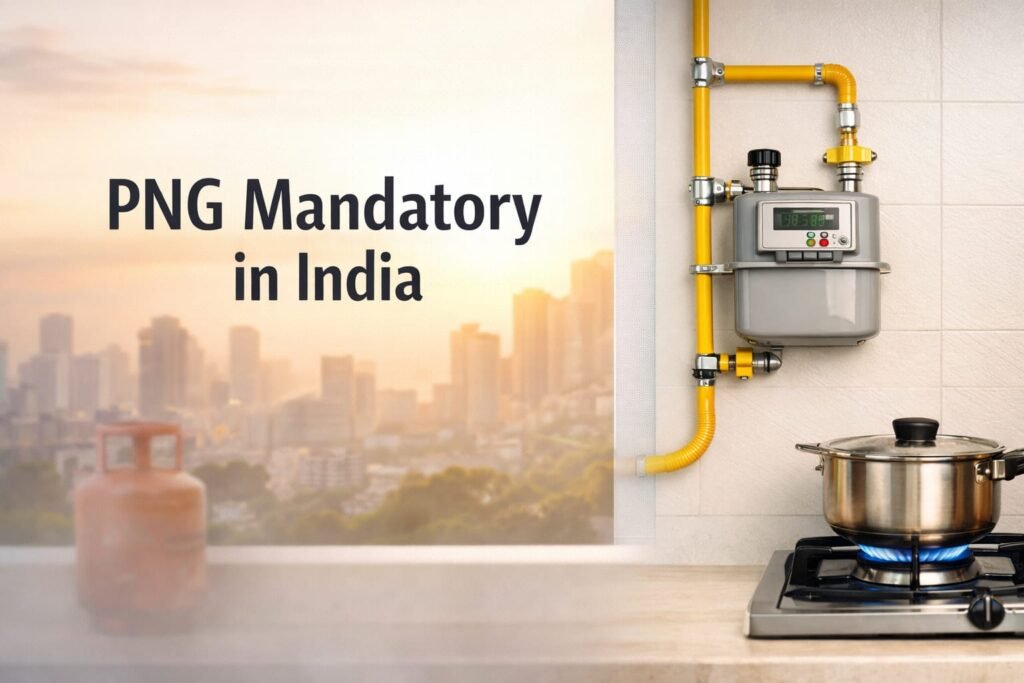
What the New PNG Mandatory Rule in India Says
Based on the March 2026 “Natural Gas and Petroleum Products Distribution Order,” Piped Natural Gas (PNG) has been made mandatory for households in areas where pipeline infrastructure is already available.
This means:
Housing societies are also under pressure. If they refuse to allow PNG installation, they risk losing LPG access entirely, making compliance almost unavoidable for urban residents.
Exceptions are limited and allowed only if an oil company confirms that providing a PNG connection is technically not feasible.
Why India Is Making PNG Mandatory
The push to make PNG compulsory is not sudden — it is driven by multiple urgent national priorities that are becoming more important due to global uncertainties:
Energy Security & Lower Imports
India imports nearly 60% of its LPG, with around 90% coming through vulnerable global routes. By shifting to PNG, the country aims to reduce this dependency and secure stable supply.
Safety and Convenience
PNG is supplied directly through pipelines, removing the need to book, carry, or store heavy LPG cylinders. It is also lighter than air, making it safer in case of leakage.
Faster Infrastructure Expansion
The government is accelerating city gas network expansion. Housing societies must now provide right-of-way for pipeline installation within three working days.
Better Resource Allocation
Making piped gas widely adopted helps redirect LPG cylinders to rural and remote areas where pipeline infrastructure is still unavailable.
What Happens If You Don’t Switch?
If you live in a notified area and do not apply for a PNG connection within three months:
You may face delays or restrictions in getting future connections
This rule ensures faster adoption of cleaner fuel across urban India.
How to Apply for PNG Connection Easily
Applying for a PNG connection is simple and can be done online or offline.
Step-by-Step Process:
Check Availability: Visit your local gas provider’s website and enter your pin code
Register Online: Fill out the application form via official portals or apps
Submit Documents: Aadhaar, PAN, or electricity bill
Make Payment: Pay a refundable security deposit
Installation: Site inspection followed by meter installation
Cost Details:
Standard domestic connection: ₹5,000 – ₹7,000
Smart meter connections: Up to ₹9,000
Offline applications are also accepted at customer service centers.
A Long-Term Strategic Move for India
The government is actively exploring solutions to reduce the impact of global fuel crises. Making PNG mandatory in urban areas is emerging as a practical and long-term strategy.
It ensures:
As global uncertainties continue, this transition is not just a policy — it is becoming a necessity.
The shift toward piped natural gas in India marks a major change in how the country manages its energy needs. While it may seem inconvenient initially, the long-term benefits in safety, cost, and reliability are significant.
What do you think about this mandatory PNG shift? Will it benefit households or create new challenges? Share your thoughts in the comments — your opinion matters!
Disclaimer: This article is published for informational purposes only. Readers are advised to verify details from official sources before making any decisions. The website is not responsible for any loss or damage arising from the use of this information.