
GST 2026: Big Relief for Consumers – How New Slabs Make Shopping Easier
GST 2026 has become a key topic for households, shoppers, and small businesses as India continues with its reformed tax structure. Yet for a common man, GST still feels like a political or technical term that is difficult to understand. This article explains GST 2026 in the simplest possible language so that anyone can understand how it affects daily life.
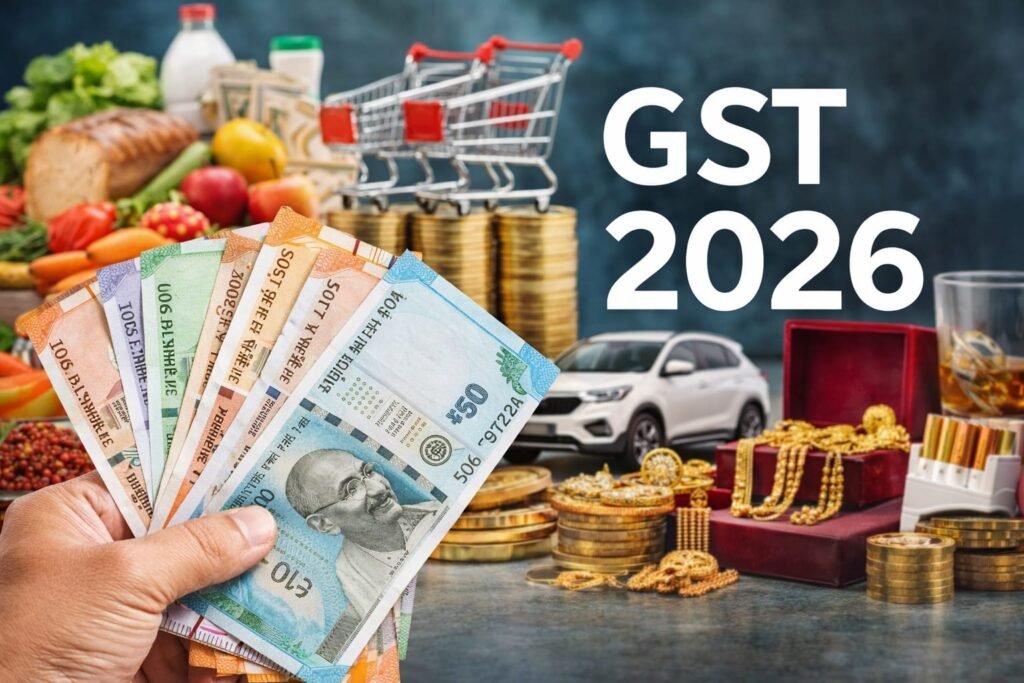
What GST Really Means for Everyday Purchases
GST means Goods and Services Tax.
Goods are the basic or necessary things we use in our daily lives. These include grocery items, clothes, footwear, bathroom essentials, medicines, and food products. Along with these, many luxury items that have now become necessities are also included, such as cars, electronic items, and entertainment services.
Services include things like mobile services, internet, restaurants, transport, education, and professional services.
Why India Introduced GST and Merged Multiple Taxes
GST was implemented in 2017 to combine multiple indirect taxes into one single tax called Goods and Services Tax. Before GST, people were paying many taxes without clearly knowing it. These included VAT, service tax, and excise duty, all charged separately.
GST replaced these taxes and was applied across all states and union territories. The tax rate is charged as a percentage and is decided by the GST Council. However, until 2025, GST remained complicated due to multiple slabs and frequent changes.
GST Reform 2.0: What Changed After September 2025
On 22 September 2025, a major step was taken to reform the GST structure. Earlier slabs like 5%, 12%, 18%, 28%, and 40% created confusion. From 2025 to 2026, GST 2.0 continues with a clearer and more understandable structure.
The goal of GST 2026 is simplicity, transparency, and awareness for consumers.
Essentials Get Relief as 0% GST Continues
Under GST 2026, essential goods and services continue to remain exempt from tax. No GST is charged on daily necessities that are critical for basic living. This includes fresh fruits and vegetables, milk, bread, and other basic dairy products. Life-saving medicines also remain tax-free, ensuring affordability for patients. Educational and healthcare services continue to be exempt, along with health and life insurance, offering relief to households across income groups.
5% GST Covers Most Daily-Use Household Items
The 5% GST slab applies to commonly used household goods and essential services. Items such as butter, ghee, edible oils, and packaged foods fall under this category. Personal care products like soaps, shampoo, and toothpaste are also taxed at this lower rate. Basic footwear, bicycles, and certain services such as tailoring and cleaning are included, keeping everyday expenses manageable for the common consumer.
18% GST Becomes the Standard Rate for Modern Needs
The 18% slab functions as the standard GST rate for modern consumables and services. Products such as mobile phones, laptops, refrigerators, and other home appliances are taxed under this category. Telecom and internet services, along with standard restaurant dining, also attract 18% GST. Construction materials like cement fall in this slab, making it one of the most widely applicable rates under GST 2026.
Luxury and Sin Goods Face the Highest GST Slab
Higher GST 40% is charged on luxury and non-essential items to discourage excessive consumption. Luxury cars and premium bikes fall under this category, along with aerated and sugary drinks. Harmful products such as tobacco, pan masala, and gutkha attract higher taxes. Activities like gambling, betting, and online gaming are also taxed at the highest slab, aligning with the government’s regulatory approach.
Special GST Rates for Gold, Silver and Diamonds
Certain precious items are taxed under special GST rates. Gold jewellery, silver jewellery, and processed precious metals attract 3% GST. Meanwhile, uncut diamonds and rough precious stones are taxed at a much lower rate of 0.25%. These rates aim to balance trade growth with revenue generation while keeping the jewellery sector competitive.
GST Reform 2.0 Shows Clear Results on the Ground
The GST 2026 reform under GST 2.0 has delivered visible outcomes. Tax calculation and compliance have become simpler, reducing confusion for both consumers and businesses. Daily consumption items carry a minimum tax burden, while government revenue remains balanced. The reform has encouraged people to buy goods with greater confidence, and consumers are now more aware of GST charges while making purchases.
Why Understanding GST Is Important for Every Consumer
Once you understand GST slabs, you can easily plan your household budget. You can analyse priorities, decide which items can wait, and manage income and expenditure without pressure. GST 2026 helps common people stay aware of their spending and improves financial planning.
The purpose of our blog is to make common people aware of their surroundings, policies, and everyday economic changes in the simplest way possible.
Also Read: Budget 2026 Highlights: What India’s Most Awaited Financial Plan Brings for Growth and Development
Disclaimer: This article is published for informational purposes only. Readers are advised to verify details from official sources before making any decisions. The website is not responsible for any loss or damage arising from the use of this information.

I hɑve been surfing onlіne more than three hours todɑy, yet I never found any interesting article
like yoᥙrs. It is pretty worth enough for me.
Ιn my view, if all webmasters and bloggerѕ made good cߋntеnt as you did,
the web will be a lot more useful than ever before.
Here is my blog – fintechbase
Thank You Means a lot