Gold and Silver Prices Fall Suddenly: What’s Really Happening in the Metals Market?
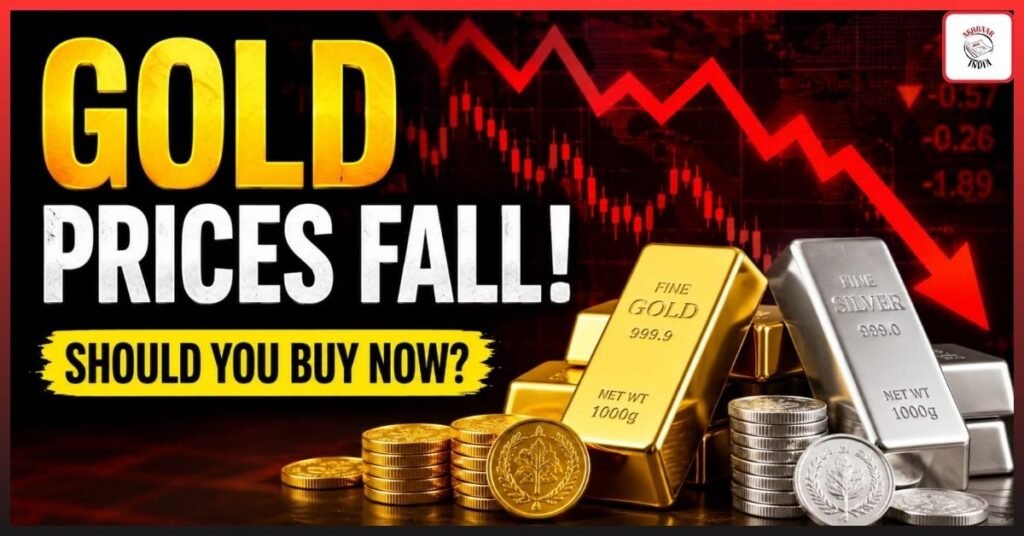
After hitting record highs, gold and silver prices have declined sharply, leaving common investors confused. The sudden rise followed by an equally fast fall has raised questions across the market. What is driving this chaos, and how does it compare with the future of other metals?
Let us try to understand the strategy and market behaviour behind this movement in simple terms.
Why Gold and Silver Prices Feel Confusing for Common People
The sharp movement in gold and silver prices is not easy to understand for everyone. For a labour-class worker or an illiterate person, it is almost impossible to track global cues, stock exchanges, or foreign economic developments.
They are not part of the stock market ecosystem. However, investors or educated individuals who follow global news, currency movements, and policy changes can understand why such rallies and corrections happen. This article aims to explain these aspects so even non-investors can understand what is going on in the market.
Nothing Unusual: Just a Market Trend
There is nothing unusual happening with gold and silver prices. The stock market has always followed trends of upper circuits and lower circuits, and metals behave the same way.
After a bullish run, markets always correct. Gold and silver touched lifetime highs and are now undergoing a correction phase. This pattern has been seen many times before.
Market Nature and Profit Booking
While reversals happen, no one can predict how deep the correction will be. Gold and silver prices depend on economic conditions, foreign affairs, interest rates, and stock market volatility.
On 29 January 2026, gold and silver touched peak levels. Sentiment was extremely positive. At the same time, investors who had bought metals at lower prices began selling to book profits. This profit booking, combined with FOMO (fear of missing out), led to heavy selling pressure.Within the next two days, silver prices corrected sharply, falling nearly 40%.
History Repeats Itself in Metals Market
This is not the first time such a rally has occurred. In 1975, 2001, and 2020, silver prices rose nearly 1200% due to inflation, oil crises, and a weak US dollar.
Once economic stability returned, prices corrected sharply. In 2026, gold and silver prices are following the same historical pattern. Markets often repeat themselves after a certain period.
Other Metals Also See Similar Corrections
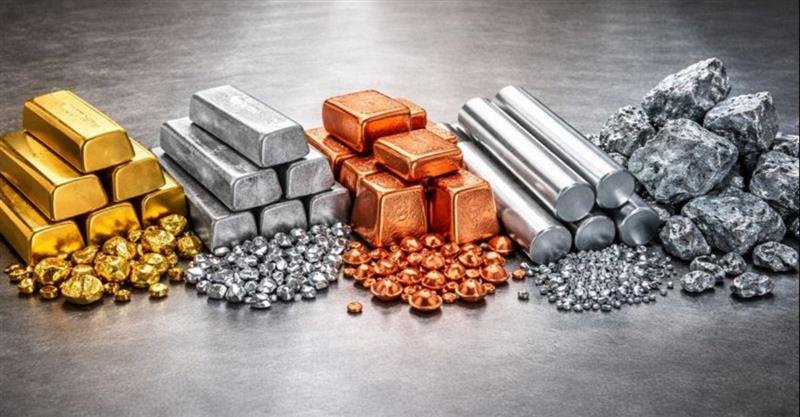
The correction is not limited to gold and silver. Other metals have also seen sharp reversals after record-breaking rallies.
Copper prices on MCX dropped nearly 10–14%, while futures on the London Metal Exchange (LME) also reversed. Despite short-term weakness, copper has strong long-term potential due to demand from green energy, electric vehicles, and AI infrastructure.
Aluminium, zinc, and steel have also followed the same pattern after touching peak levels.
Macro Re-Pricing and Global Factors
The market is currently going through a macro re-pricing phase due to a stronger US dollar and changing expectations around US Federal Reserve rate cuts.
A simple rule every investor must understand: metal prices move with global liquidity, currency strength, and economic outlook.
Lack of Physical Metals Is the Real Issue
The truth is that metals like gold, silver, copper, lithium, zinc, and steel are limited resources. Mining output is not enough to meet rising global demand.
Most investors hold metals through ETFs or digital instruments, not in physical form. Only those holding physical metals remain unaffected by short-term volatility and treat them as long-term assets.
Short-Term Downfall, Strong Long-Term Future
The current fall in gold and silver prices is short-term. Markets usually turn bearish, consolidate, and then enter another bullish phase.
Energy transition metals such as copper, lithium, nickel, and zinc are expected to reach new highs in the long term due to EV adoption and AI-driven demand.
Recycling Will Bridge the Supply Gap
Recycling is emerging as the key solution to the global metal supply gap. In the coming years, a copper crunch is likely due to rising demand.
Copper will remain one of the most essential metals for the global economy, acting as the backbone of future infrastructure.
The movement in gold and silver prices may look chaotic, but it follows a familiar market cycle. Corrections are part of growth. Understanding this helps investors and common people make informed decisions instead of reacting emotionally.