Cyclone Akvan: How Dangerous Could November 20 Landfall Be? 5 Key Alerts
Extreme weather can cause serious human, physical and natural losses. After October’s Cyclone Arnab reminded the eastern coast of the power of severe storms, another system is developing over the Bay of Bengal. Cyclone Akvan is moving towards Andhra Pradesh, with landfall forecast for November 20.
In its November 17 update, the India Meteorological Department (IMD) said the storm may become a very severe cyclonic storm by the morning of November 19. Heavy rain, powerful winds and rough seas are expected in the coming days.
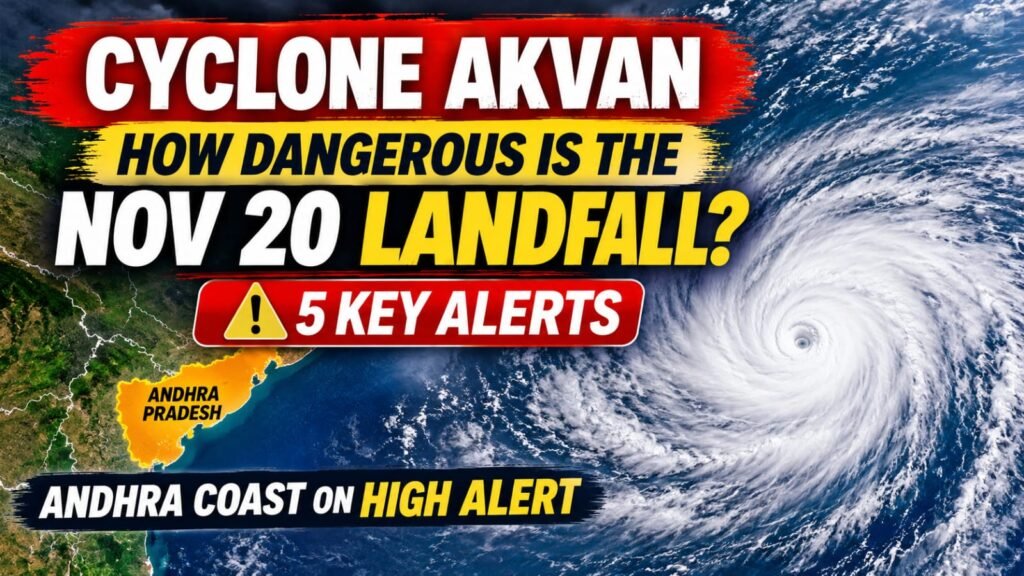
Cyclone Akvan: When and where is landfall expected?
The latest IMD bulletin placed the storm over the central south and adjoining west-central Bay of Bengal, around 610 km east of Chennai, 660 km southeast of Machilipatnam and 670 km south-southeast of Visakhapatnam.
It is likely to move northwestwards and cross the Andhra Pradesh and Yanam coasts between Nellore and Tuni around noon on Friday, November 20. At landfall, sustained winds may reach 120–130 kmph, gusting to 145 kmph. The IMD expects the system to become a severe cyclonic storm around the evening of November 17 and a very severe cyclonic storm around the morning of November 19.
5 critical weather alerts as Cyclone Akvan approaches
Cyclone Akvan is expected to affect parts of southern and eastern India. The key warnings in the IMD’s November 17 forecast are:
Andhra Pradesh rainfall alert: Heavy to very heavy rain is likely on November 19–20, with isolated extremely heavy rainfall. Widespread rain is expected through November 21.
Storm surge warning: A 1–2 metre surge above the astronomical tide may inundate low-lying areas of Prakasam, Bapatla, Krishna, West Godavari, Konaseema and Kakinada districts during landfall.
Strong coastal winds: Winds along the Andhra Pradesh and Yanam coasts may reach 120–130 kmph, gusting to 145 kmph. Sea conditions are expected to become phenomenal.
Tamil Nadu, Puducherry and Telangana: Gusty winds are forecast over Tamil Nadu and Puducherry during November 18–20, with isolated heavy rain on November 19. Telangana may receive widespread rain on November 20–21, including isolated very heavy spells. Kerala and Mahe may also see isolated showers through November 23.
Odisha and eastern India: Odisha may receive heavy rain on November 18 and isolated very heavy rain during November 19–21. Gangetic West Bengal and Jharkhand may also see heavy spells, while Rayalaseema may receive heavy rain on November 19–20.
The Andaman and Nicobar Islands may receive widespread rainfall on November 17–18.
Will Cyclone Akvan affect northern India?
Cyclone Akvan’s main impact is expected over southern and eastern India. The earlier Western Disturbance forecast for November 10–16 concerned northwest India and the western Himalayas; it is separate from the Bay of Bengal cyclone.
The IMD’s November 17 outlook says no significant weather is likely over western and northeastern India during the week. However, dense fog is forecast over Punjab, Haryana, Chandigarh and Delhi during November 19–21, potentially affecting morning visibility and travel.
What should coastal residents watch out for?
As the storm is expected to strengthen before landfall, coastal residents should follow IMD updates and local authorities’ instructions. Fishermen have been advised not to venture into specified parts of the Bay of Bengal through November 20. People should avoid beaches and exposed coastal areas during rough weather, secure loose outdoor objects and stay away from fallen power lines.
Cyclone Akvan’s track and intensity may change, so the latest official bulletin should guide local decisions. There is no need to panic, but staying alert and prepared is important.
FAQs
Stay connected with Akhbaar India for clear weather updates and important alerts as the situation develops.
Disclaimer: This article is published for informational purposes only. Readers are advised to verify details from official sources before making any decisions. The website is not responsible for any loss or damage arising from the use of this information.