Himalayan Disasters: 5 Alarming Warnings as Nepal Floods and Cyclone Arnab Hit India
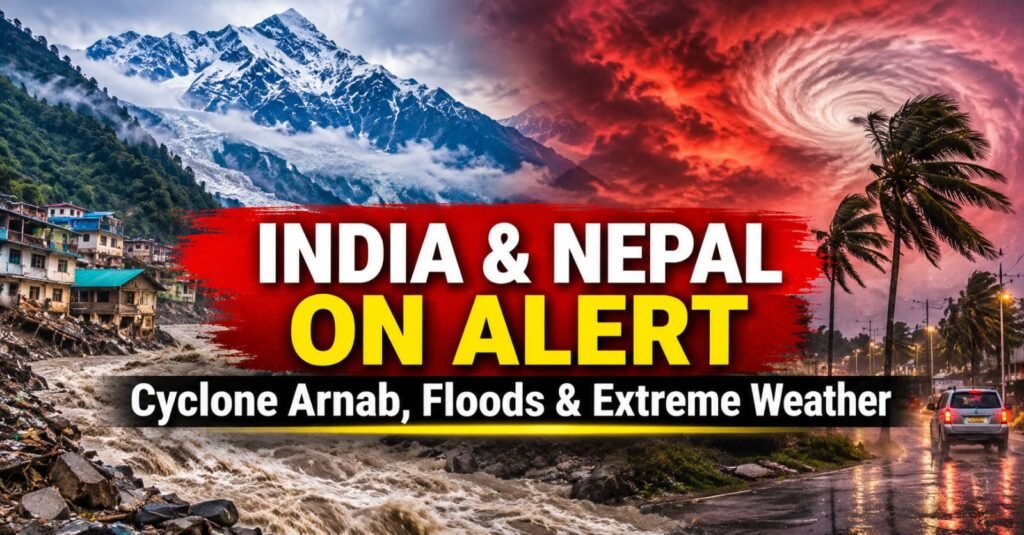
Nature is increasingly showing its destructive side, and recent events across India and Nepal are a reminder that human interference with the environment comes at a cost. From melting Himalayan glaciers and devastating floods to Cyclone Arnab and unregulated construction, these incidents raise an important question: Are we ignoring the warning signs until nature makes us face the consequences?
Himalayan Disasters: When Nature’s Warning Signs Become Dangerous
For years, humans have used nature according to their convenience, without thinking enough about its future impacts. Cloud seeding, unplanned construction, pollution, deforestation, cutting mountains and nuclear activities are among the environmental concerns that deserve attention.
Glaciers are melting, water levels are rising, and extreme heat is increasing evaporation and atmospheric moisture. These changing conditions, combined with other weather factors, can influence rainfall patterns and contribute to extreme weather events.
Today, these Himalayan disasters are becoming an eye-opener for human beings.
Uttarakhand and Nepal: Rising Threat of Glacial Floods
Uttarakhand and Nepal face heightened environmental and disaster risks driven by rapid glacial melting, unregulated construction and extreme weather events.
Glacial Lake Outburst Floods (GLOFs):
Rising global temperatures are causing Himalayan glaciers to melt rapidly, creating and expanding high-altitude glacial lakes.
In Uttarakhand, assessments by the Wadia Institute have identified 426 larger glacial lakes, of which 25 have been classified as potentially vulnerable. Nepal has also recently experienced severe floods linked to extreme weather and glacial risks, causing massive destruction and fatalities.
Rampant Construction and Real Estate Boom:
A recent study published in Scientific Reports highlighted that built-up land in high-risk zones across northern Nepal and Uttarakhand grew by roughly 45% between 2016 and 2023. In areas near glacial lake corridors, the increase reached almost 78%, placing around 300,000 people in the potential path of Himalayan disasters.
Landslides and Rock-Ice Avalanches:
Rapid warming in the Western Himalayas is thawing deep permafrost that helps stabilise steep mountain walls. This increases the likelihood of sudden rockfalls, debris flows and glacier-related avalanches, particularly during wet and summer seasons.
Downstream Flood Alerts:
Flash floods along regional waterways, such as Nepal’s Bhote Koshi and Budhi Gandaki rivers, have raised concerns about neighbouring northern Indian states, including Uttarakhand, Uttar Pradesh and Bihar, due to potential flooding across shared river basins.
Cyclone Arnab: Andhra Pradesh Faces Massive Destruction
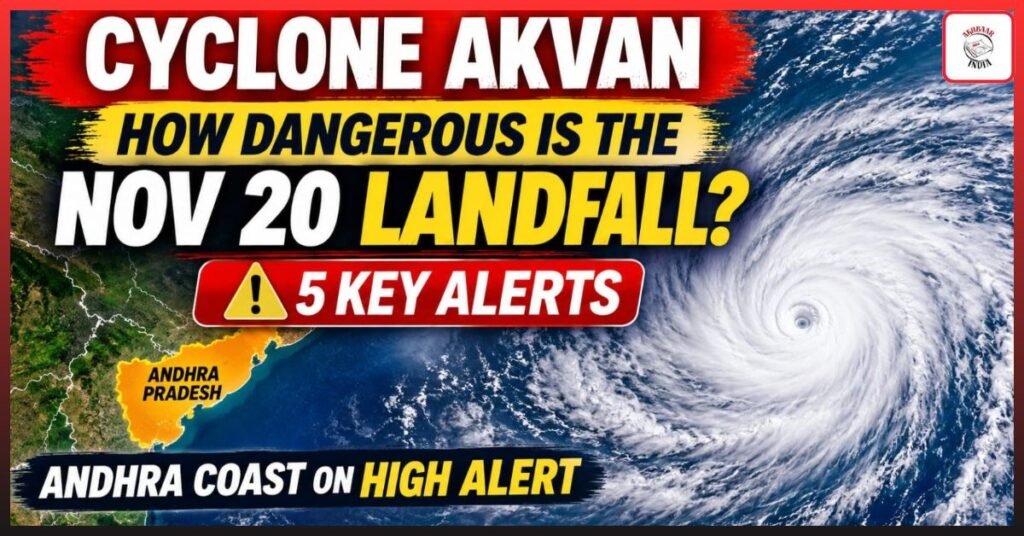
Cyclone Arnab hit southeastern Andhra Pradesh on Wednesday, October 28, as a very severe cyclonic storm, with winds reaching up to 135 km/h, as reported by the India Meteorological Department (IMD).
Torrential rainfall was recorded in parts of Andhra Pradesh and Odisha, with rainfall reaching nearly 30 centimetres in some locations. The storm subsequently weakened into a deep depression.
Around 50,000 people were moved to safer locations in Andhra Pradesh, while another 48,000 were evacuated in neighbouring Odisha.
The impact was significant:
Extreme Weather Reaches Northern India
The impact of Cyclone Arnab was not limited to southern India.
Rain and a sudden chill gripped northern India, with Delhi recording its coldest October day in four years. The Safdarjung weather station recorded a maximum temperature of 25.4°C, which was 5.6 degrees below normal.
The IMD issued red and orange alerts for thunderstorms across Delhi-NCR, Uttar Pradesh and other northern regions. Meanwhile, heavy rainfall affected West Bengal, Jharkhand and Andhra Pradesh, while Odisha faced severe flooding.
In Nepal, authorities also warned of heavy rain, lightning and thunderstorms, advising tourists to avoid high-altitude and Himalayan areas.
Nepal’s Continuing Struggle with Floods
Nepal continues to recover from devastating flash floods in August 2026 that killed more than 1,400 people and left thousands missing.
Further flooding was reported earlier in October in northern Nepal, highlighting the continuing vulnerability of Himalayan communities. Authorities have warned about possible road and air travel disruptions during periods of extreme weather.
These repeated Himalayan disasters remind us that environmental risks do not stop at geographical boundaries.
What Do These Himalayan Disasters Teach Us?
Nature provides us with everything we need to survive, but it also has limits.
Unplanned development, deforestation, pollution and excessive exploitation of natural resources require serious attention. Governments and communities must prioritise sustainable construction, forest conservation, scientific monitoring and effective disaster management.
The biggest lesson is simple: We cannot keep exploiting nature and expect no consequences.
At Akhbaar India, we believe that understanding today’s events is the first step towards a better tomorrow. Keep visiting us for more important news, environmental updates and stories that help us understand the world around us. Because sometimes, the biggest warnings are the ones we choose to ignore.
Frequently Asked Questions
Disclaimer: This article is published for informational purposes only. Readers are advised to verify details from official sources before making any decisions. The website is not responsible for any loss or damage arising from the use of this information.